CM Bhajan Lal Cites World Bank Report on India's Poverty Fall
Synopsis
Rajasthan CM Bhajan Lal Sharma cited an October 2026 World Bank report claiming 496 million Indians escaped poverty between 2011 and 2023, with extreme poverty falling from 27.1% to 2.6%, attributing the achievement to PM Modi's Antyodaya-driven welfare governance.
Key Takeaways
Rajasthan CM Bhajan Lal Sharma posted on 31 October 2026 citing a World Bank October 2026 report on India's poverty reduction.
The report, as quoted, states approximately 49.6 crore (496 million) people exited poverty between 2011 and 2023 .
India's extreme poverty rate reportedly fell from 27.1 percent to 2.6 percent over the same period.
Sharma framed the achievement as the result of PM Narendra Modi's Antyodaya philosophy and welfare-first governance approach.
Key schemes cited in broader context include Antyodaya Anna Yojana (2000) and Pradhan Mantri Jan Dhan Yojana (2014).
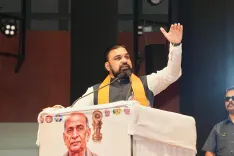
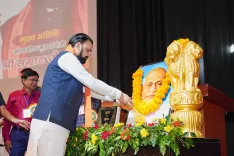
Nearly 496 million Indians climbed out of poverty between 2011 and 2023 — and Rajasthan Chief Minister Bhajan Lal Sharma wants every citizen to know it. On Saturday, 31 October 2026, the BJP leader cited an October 2026 World Bank report to frame Prime Minister Narendra Modi's welfare record as one of the most consequential poverty-reduction drives in modern history.
The Numbers That Anchored Sharma's Claim
Quoting the World Bank's latest assessment, Sharma highlighted that India's extreme poverty rate collapsed from 27.1 percent in 2011 to just 2.6 percent in 2023 — a fall of more than 24 percentage points in roughly a decade. The figure of 49.6 crore people (approximately 496 million) exiting poverty in that period is the centrepiece of his post, which he described as testimony — 'ऐतिहासिक बदलाव की गवाही' — to a historic transformation in India.
Sharma's framing was explicit: this is not bureaucratic data, but the fulfilment of an Antyodaya commitment — the principle of serving the last person in line, first articulated in Indian policy under the Antyodaya Anna Yojana launched in 2000 to deliver subsidised grain to the poorest households. Modi's government, Sharma argued, has taken that philosophy from food distribution to financial inclusion and beyond.
Welfare Architecture Behind the Decline
The policy scaffolding underpinning the poverty numbers spans more than a decade of scheme-building. The Pradhan Mantri Jan Dhan Yojana, launched in 2014, brought hundreds of millions of unbanked households into the formal financial system, enabling direct benefit transfers that bypassed traditional leakage points. Housing, cooking gas, sanitation, and employment guarantee programmes layered additional support on top of food security entitlements.
India's approach — combining broad-based economic growth with tightly targeted anti-poverty programmes — is what international development bodies have increasingly cited as the distinguishing feature of the country's poverty trajectory compared to peer economies.
Sharma's Political Reading of a Global Datapoint
For Sharma, a BJP Chief Minister governing Rajasthan, the World Bank report is both a governance vindication and a political statement. He described poverty alleviation as 'गरीब कल्याण' — the welfare of the poor — being Modi's 'highest priority, an unbreakable commitment to Antyodaya, and the purpose of national service.' The language is deliberate: it positions welfare delivery not as a programme but as a civilisational mission.
The claim lands at a moment when India's poverty metrics have become a front-line argument in debates about the model of development the country should pursue. A World Bank endorsement, if confirmed, would be a significant rhetorical asset ahead of any budget or electoral cycle.
Point of View
He elevates the claim above routine self-congratulation. The Antyodaya framing is also strategically significant: it roots Modi's welfare record in a decades-old Indian policy tradition, making it harder to dismiss as purely partisan. The timing — ahead of what will inevitably be a budget and electoral cycle — suggests these numbers are being road-tested as a core campaign argument.
NationPress
31 Oct 2026
Frequently Asked Questions
What did the World Bank October 2026 report say about India's poverty?
According to CM Bhajan Lal Sharma's post citing the report, approximately 496 million Indians exited poverty between 2011 and 2023, and extreme poverty fell from 27.1 percent to 2.6 percent over that period.
Who is Bhajan Lal Sharma?
Bhajan Lal Sharma is the Chief Minister of Rajasthan and a senior BJP leader who took office in December 2023.
What is the Antyodaya principle in Indian welfare policy?
Antyodaya means 'rise of the last person' and refers to the principle of prioritising the poorest of the poor in welfare delivery. It was institutionalised through the Antyodaya Anna Yojana launched in 2000.
How many people came out of poverty in India between 2011 and 2023?
CM Sharma's post, citing the World Bank, states that approximately 49.6 crore — about 496 million — people exited poverty in India during that period.
What is the Pradhan Mantri Jan Dhan Yojana and how does it relate to poverty reduction?
Pradhan Mantri Jan Dhan Yojana, launched in 2014, expanded financial inclusion by opening bank accounts for unbanked households, enabling direct benefit transfers and reducing leakage in welfare delivery.