CM Samrat Choudhary Honours Sardar Patel on National Unity Day
Synopsis
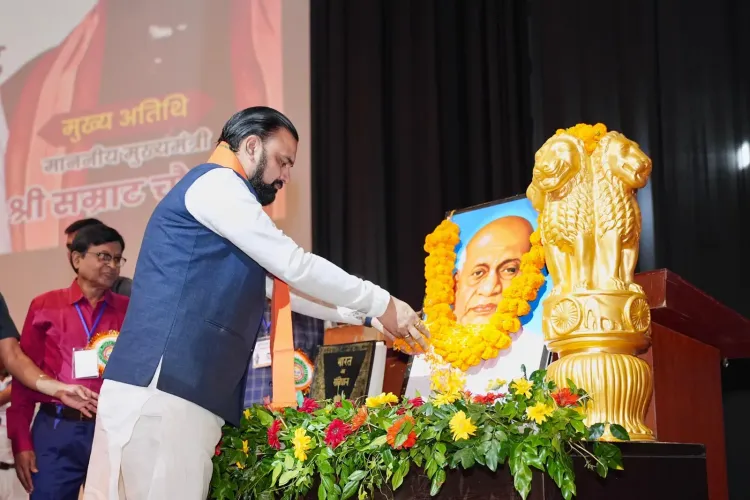
Bihar Chief Minister Samrat Choudhary attended the National Unity Day ceremony at Bapu Sabhaagar in Patna on 31 October 2026, garlanding the portrait of Bharat Ratna Sardar Vallabhbhai Patel and paying solemn tribute on his birth anniversary.
Key Takeaways
CM Samrat Choudhary attended the Rashtriya Ekta Diwas Samaroh at Bapu Sabhaagar, Patna on 31 October 2026 .
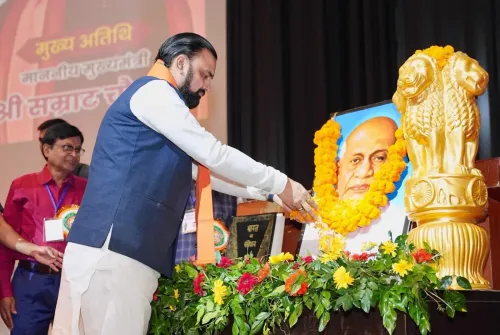
He garlanded the portrait of Sardar Vallabhbhai Patel and offered a reverential tribute.
National Unity Day was instituted by the Government of India in 2014 to mark Patel's birth anniversary.
Sardar Patel integrated over 560 princely states into India after 1947 and was posthumously awarded the Bharat Ratna in 1991 .
Bihar's ceremony is part of a nationwide calendar of state-level commemorations observed every 31 October .
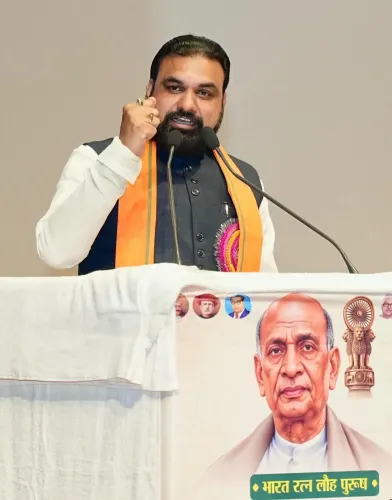
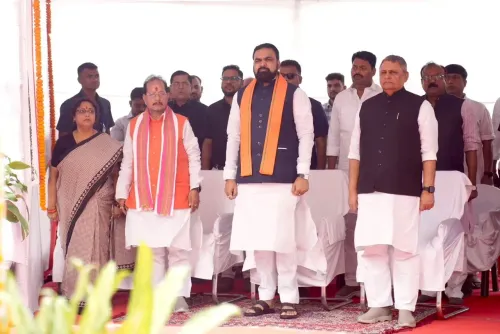
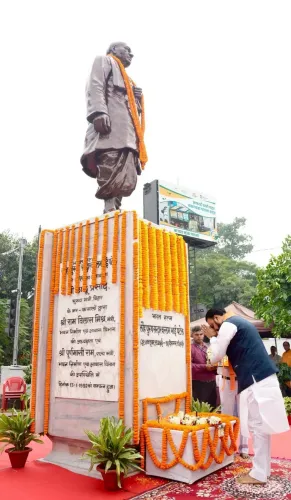
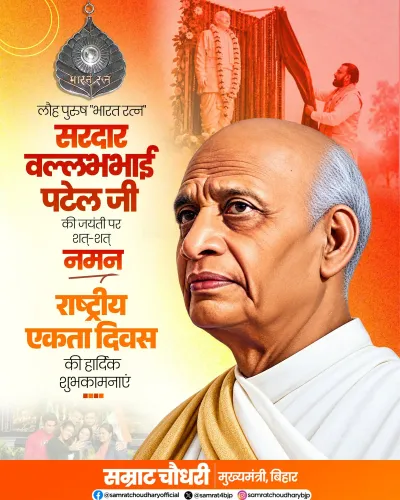
On the birth anniversary of the Iron Man of India, Bihar paid its respects. Chief Minister Samrat Choudhary attended the 'Rashtriya Ekta Diwas Samaroh' (National Unity Day Ceremony) at Bapu Sabhaagar, Patna, on 31 October 2026, garlanding the portrait of Bharat Ratna Sardar Vallabhbhai Patel and offering a solemn tribute to the statesman who stitched modern India together.
The Chief Minister's Office of Bihar shared the moment on X, noting that CM Choudhary 'shraddhapurvak naman kiya' — paid his reverential respects — before the portrait of Patel, honouring the occasion with the gravity it commands.
Who Was Sardar Patel — and Why October 31 Matters
Sardar Vallabhbhai Patel, India's first Deputy Prime Minister and Home Minister, is credited with the monumental task of integrating over 560 princely states into the Indian Union after independence in 1947 — a feat that earned him the title 'Loh Purush', the Iron Man. Awarded the Bharat Ratna posthumously in 1991, Patel remains one of the most venerated architects of the Indian Republic. His birth anniversary on 31 October is now a fixed point in the national calendar.
National Unity Day: From Delhi Mandate to Patna Ceremony
The Government of India instituted National Unity Day in 2014, designating 31 October as an annual occasion to commemorate Patel's legacy and reinforce the theme of national integration. Across the country, state governments mark the day with portrait garlanding, public pledges, and run-for-unity events. Bihar's ceremony at the historic Bapu Sabhaagar in Patna stands as the state's formal participation in that nationwide observance.
Indian state governments have made such tributes a consistent feature of the political calendar — a visible alignment with a freedom-movement legacy that cuts across party lines. The ceremonies are solemn, protocol-driven, and short on new policy announcements, letting the symbolism do the work.
For Bihar, the gesture is also a reminder that Patel's vision of a unified, administratively coherent India remains the foundational text every government — at the Centre and in the states — returns to, year after year.
Point of View
Allowing governments of all stripes to claim association with the unifier-of-India narrative. For Bihar's CM Samrat Choudhary, participating in the Patna ceremony is both a constitutional obligation and a symbolic statement of alignment with the national integration theme. The consistency of these observances across states signals how deeply Patel's legacy has been institutionalised — shifting from contested historical memory to shared civic ritual. Whether that ritual deepens into substantive policy — administrative reforms, federal cohesion — or remains ceremonial is the question the calendar raises but never answers.
NationPress
31 Oct 2026
Frequently Asked Questions
Why is National Unity Day celebrated on 31 October?
31 October is the birth anniversary of Sardar Vallabhbhai Patel . The Government of India instituted National Unity Day in 2014 on this date to honour his role in integrating over 560 princely states and to promote national integration.
What did Bihar CM Samrat Choudhary do on National Unity Day 2026?
CM Samrat Choudhary attended the Rashtriya Ekta Diwas Samaroh at Bapu Sabhaagar in Patna , where he garlanded the portrait of Sardar Vallabhbhai Patel and paid his reverential respects.
Who was Sardar Vallabhbhai Patel?
Sardar Vallabhbhai Patel was India's first Deputy Prime Minister and Home Minister, known as the 'Iron Man of India' for integrating over 560 princely states into the Indian Union after 1947. He was awarded the Bharat Ratna posthumously in 1991 .
Where was the National Unity Day ceremony held in Bihar in 2026?
The ceremony was held at Bapu Sabhaagar in Patna , the capital of Bihar.
When was National Unity Day first observed in India?
The Government of India first observed National Unity Day in 2014 , designating 31 October — Sardar Patel's birth anniversary — as the annual occasion for nationwide commemorations.