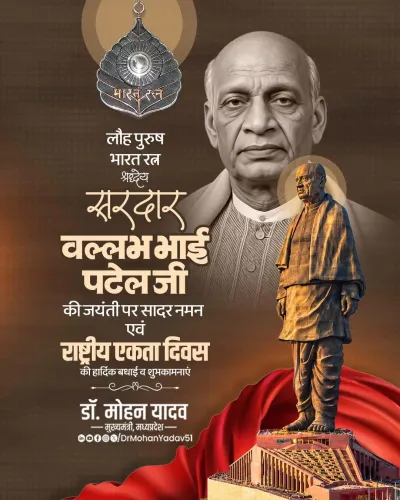
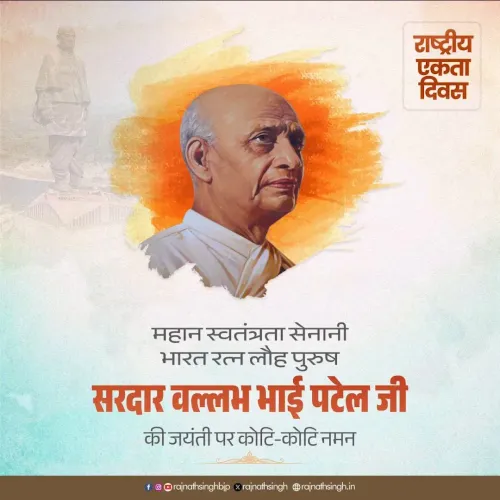
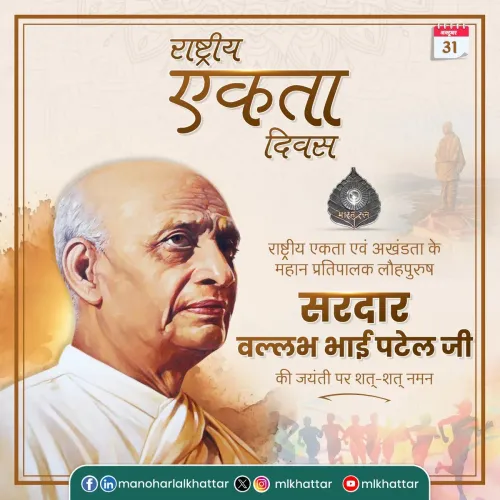
Nitish Kumar pays tribute to Sardar Patel on his birth anniversary
Synopsis
Former Bihar CM and JD(U) president Nitish Kumar marked National Unity Day on 31 October 2026 with a Hindi tribute to Sardar Vallabhbhai Patel, honouring the Iron Man of India's foundational role in unifying the nation after independence.
Key Takeaways
Nitish Kumar posted a Hindi tribute to Sardar Vallabhbhai Patel on his birth anniversary, 31 October 2026 .
He referred to Patel as a 'great freedom fighter,' the 'Iron Man,' and a Bharat Ratna recipient.
Kumar stated Patel's contribution to national unity and integrity will 'forever remain in the memory of all citizens.' 31 October is observed as National Unity Day ( Rashtriya Ekta Diwas ), instituted by the Government of India in 2014 .
Patel oversaw the integration of over 500 princely states into the Indian Union as the country's first Deputy Prime Minister and Home Minister.
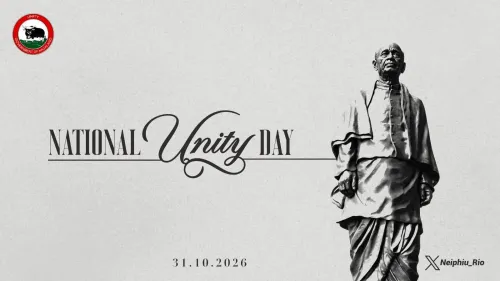
On National Unity Day, 31 October 2026, former Bihar Chief Minister and Janata Dal (United) national president Nitish Kumar paid homage to Sardar Vallabhbhai Patel, honouring the 'Iron Man of India' as a towering freedom fighter whose contribution to the nation's unity and territorial integrity remains etched in the memory of every Indian.
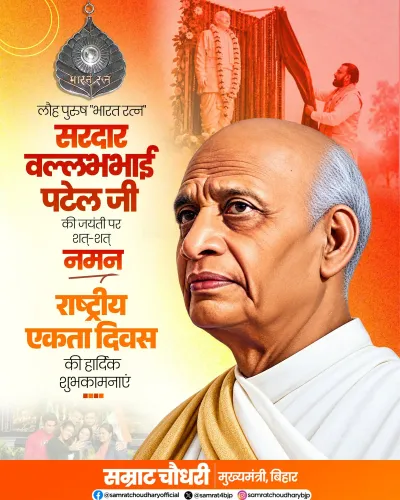
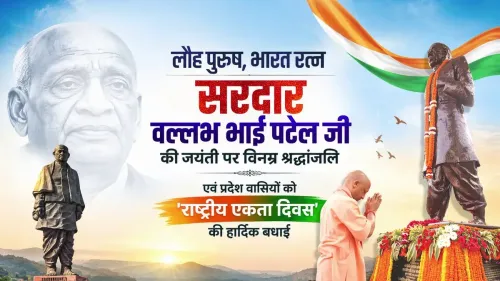
Posting in Hindi on X, Kumar wrote: 'महान स्वतंत्रता संग्राम सेनानी, लौह पुरुष, भारत रत्न सरदार वल्लभ भाई पटेल जी की जयंती पर उन्हें सादर नमन।' — 'Respectful tribute to the great freedom fighter, Iron Man, Bharat Ratna Sardar Vallabhbhai Patel on his birth anniversary.' He added that Patel's contribution to the nation's integrity and unity 'will forever remain engraved in the memory of all citizens of the country.'
The Iron Man's unfinished revolution — and why it still resonates
As independent India's first Deputy Prime Minister and Home Minister, Sardar Patel accomplished in months what many thought would take decades — the integration of over 500 princely states into the Indian Union, forging a single sovereign nation from a mosaic of kingdoms, fiefdoms, and territories. It is this act of political architecture, as much as his role in the independence struggle, that earned him the title 'Iron Man of India' and, posthumously, the nation's highest civilian honour, the Bharat Ratna.
The significance of the date is now institutionalised. In 2014, the Government of India designated 31 October as National Unity Day (Rashtriya Ekta Diwas) in Patel's honour, underscoring the enduring relevance of his legacy to the idea of a unified India. Every year, leaders across the political spectrum pause to mark the occasion — a rare moment of cross-party consensus around a founding figure.
A Bihar voice joins a national chorus
Kumar's tribute follows the well-established annual pattern of commemoration that National Unity Day anchors. For a leader who has built his political identity around development and stability in Bihar, invoking Patel's legacy of firm governance and national integration carries its own resonance. The message is brief, dignified, and squarely within the register that such anniversaries demand — reverence without partisanship, memory without politics.
Patel's birth anniversary continues to be one of the most widely observed political commemorations in India, a day when the country's fractious political landscape briefly finds a shared voice.
Point of View
A regional satrap navigating coalition arithmetic at the national level, aligning with Patel's unifying symbolism reinforces a statesmanlike image beyond Bihar's borders. The institutionalisation of 31 October as National Unity Day in 2014 elevated these commemorations from courtesy to civic duty, making them a barometer of how parties position themselves on the idea of an integrated India. The broad, cross-party consensus around Patel remains one of the few uncontested spaces in Indian political culture.
NationPress
31 Oct 2026
Frequently Asked Questions
Why did Nitish Kumar post about Sardar Patel on 31 October?
31 October is Sardar Vallabhbhai Patel's birth anniversary and is observed nationally as National Unity Day . Nitish Kumar, like leaders across parties, issued a tribute marking the occasion.
What is National Unity Day and when was it started?
National Unity Day ( Rashtriya Ekta Diwas ) is observed every year on 31 October to commemorate Sardar Patel's birth anniversary. The Government of India instituted it in 2014 to honour his role in integrating India's princely states.
Why is Sardar Patel called the Iron Man of India?
Sardar Patel earned the title 'Iron Man of India' for his resolute leadership in integrating over 500 princely states into the Indian Union after independence, a feat achieved in a remarkably short time as the country's first Deputy Prime Minister and Home Minister .
What Bharat Ratna did Sardar Patel receive?
Sardar Vallabhbhai Patel was awarded the Bharat Ratna , India's highest civilian honour, in recognition of his extraordinary contribution to the nation's freedom struggle and post-independence unification.
Who is Nitish Kumar and what is his current role?
Nitish Kumar is a long-serving Bihar political figure who served multiple terms as Chief Minister of Bihar and is the national president of Janata Dal (United) .