CM Samrat Choudhary marks National Unity Day with Patel tribute
Synopsis
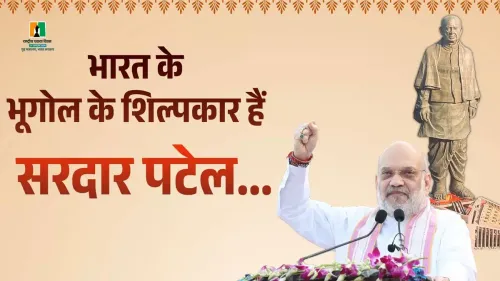
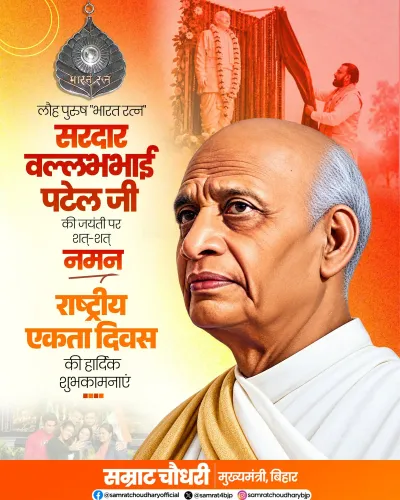
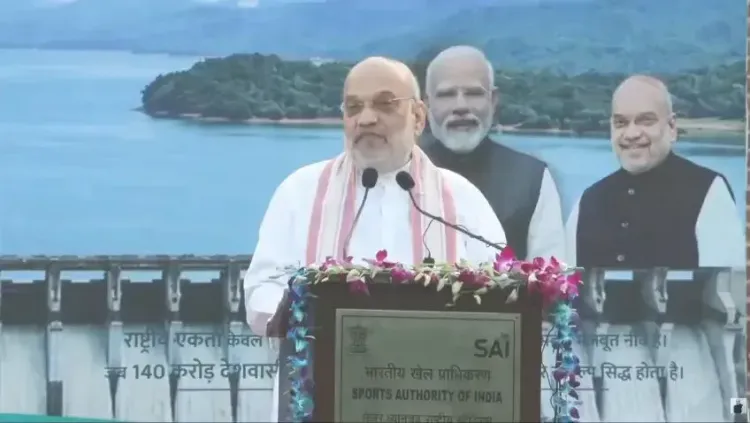
Bihar Chief Minister Samrat Choudhary marked National Unity Day on 31 October 2026 by sharing Union Home Minister Amit Shah's tribute to Sardar Patel, highlighting Patel's integration of 565 princely states — framed as a feat accomplished in just 1,218 days.
Key Takeaways
Bihar CM Samrat Choudhary posted a tribute to Sardar Vallabhbhai Patel on National Unity Day, 31 October 2026 .
The post quotes Union Home Minister Amit Shah , who described Patel's unification work as an achievement no group of leaders could replicate in a lifetime.
Shah's tribute references 1,218 days as the timeframe in which Patel forged a unified India from 565 princely states .
National Unity Day was instituted by the Government of India in 2014 to mark Patel's birth anniversary on 31 October.
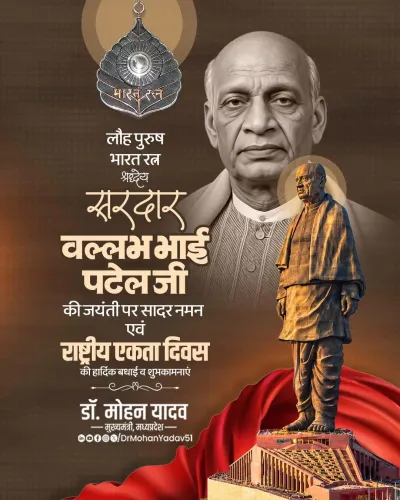
The BJP has consistently commemorated Patel through events including the Statue of Unity in Gujarat , inaugurated in 2018 .
As Home Minister, Amit Shah holds the same portfolio once held by Patel, lending symbolic continuity to the annual tribute.
On a day India pauses to honour its greatest unifier, Bihar Chief Minister Samrat Choudhary amplified a striking tribute to Sardar Vallabhbhai Patel on 31 October 2026 — National Unity Day — sharing words from Union Home Minister Amit Shah that frame Patel's achievement in terms no statistic quite prepares you for.
The post quotes Amit Shah: 'Kai neta ek saath ye kaam karein to bhi poore jeevankal mein na kar paayein' — 'Even if many leaders worked on this together, they could not accomplish it in an entire lifetime — yet Sardar Patel Sahab did it in 1,218 days, and in doing so, created an undivided India.' The figure — precise, almost audacious — is the centrepiece of the tribute, underscoring the sheer velocity at which Patel stitched a fractured subcontinent into a single republic.
What Patel actually pulled off between 1947 and 1950
When British India became independent in August 1947, it inherited a patchwork of 565 princely states, each technically sovereign and free to choose its own future. The stakes could not have been higher: a fragmented subcontinent would have meant multiple competing nations, porous borders, and a security nightmare. Sardar Vallabhbhai Patel, serving as India's first Deputy Prime Minister and Home Minister, led the political and diplomatic campaign — backed by persuasion, statecraft, and where necessary, firm pressure — to bring virtually all of them into the Indian Union. Historians regard it as one of the most consequential acts of state-building in the twentieth century.
National Unity Day and the BJP's Patel commemoration
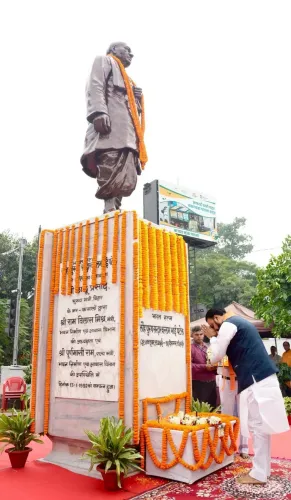
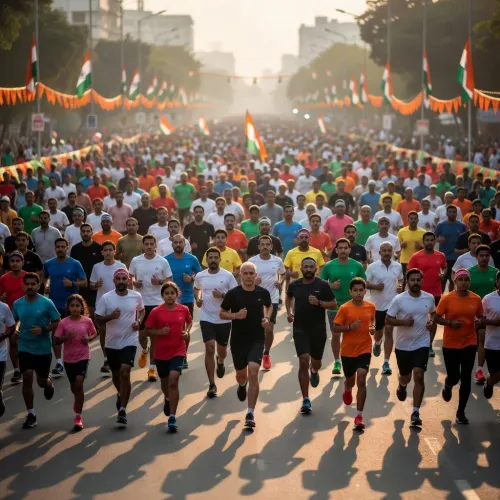
The Government of India declared 31 October as National Unity Day in 2014, institutionalising an annual commemoration of Patel's birth anniversary. Since then, the BJP-led government has built a visible architecture of remembrance around Patel — most prominently the Statue of Unity in Gujarat, the world's tallest statue, inaugurated in 2018. Every year on this date, wreath-laying ceremonies, run-for-unity events, and official speeches reinforce the narrative of Patel as the principal architect of territorial integration. Bihar CM Choudhary's post fits squarely within that broader pattern, carrying the Home Minister's words to a state-level audience.
The choice to quote Amit Shah — rather than offer only his own words — gives the post an institutional weight. Shah, as Union Home Minister, is the constitutional heir to the very portfolio Patel once held, lending the tribute a pointed symbolic continuity.
One hundred and fifty-one years after Patel's birth, the question his legacy keeps asking is simple and uncomfortable: could any modern political arrangement replicate that speed, that nerve, that outcome? The answer, every 31 October, is left deliberately open.
Point of View
Unified governance. By amplifying Amit Shah's words specifically, Bihar CM Choudhary reinforces the chain of authority from the central leadership to state-level messaging, a pattern visible across BJP-governed states on 31 October each year. The emphasis on the '1,218 days' figure — whether or not it is historically verifiable — functions as rhetorical shorthand for urgency and competence in nation-building. Over time, this sustained commemoration has effectively repositioned Patel, once associated with the Congress era, as a BJP ideological touchstone.
NationPress
31 Oct 2026
Frequently Asked Questions
What is National Unity Day and why is it celebrated on 31 October?
National Unity Day is observed on 31 October every year to mark the birth anniversary of Sardar Vallabhbhai Patel , India's first Deputy Prime Minister and Home Minister. The Government of India instituted the observance in 2014 to honour Patel's role in integrating 565 princely states into the Indian Union after independence.
What did Sardar Patel achieve in integrating India's princely states?
Sardar Vallabhbhai Patel led the political and diplomatic effort to bring 565 princely states — each technically sovereign at independence in 1947 — into the Indian Union, completing the process by 1950. Historians consider it one of the most consequential acts of state-building in the twentieth century.
What did Amit Shah say about Sardar Patel on National Unity Day 2026?
Union Home Minister Amit Shah stated that even if many leaders worked together, they could not accomplish in an entire lifetime what Sardar Patel achieved in 1,218 days — the creation of an undivided India. Bihar CM Samrat Choudhary shared this quote on X on 31 October 2026 .
What is the Statue of Unity and how does it relate to Sardar Patel?
The Statue of Unity in Gujarat is the world's tallest statue, depicting Sardar Vallabhbhai Patel . It was inaugurated in 2018 as part of the BJP-led government's efforts to commemorate Patel's contribution to India's territorial integration.
Why does the BJP emphasise Sardar Patel's legacy on National Unity Day?
Since 2014 , the BJP-led government has institutionalised commemorations of Sardar Patel — including National Unity Day and the Statue of Unity — to highlight his role as the architect of a unified India. The party frames Patel's decisive statecraft as a model of strong, integration-focused governance.