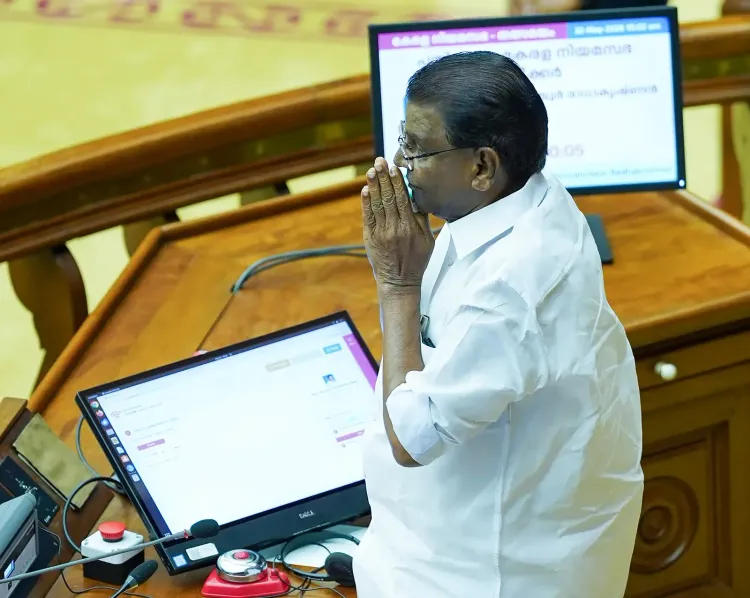
Kerala Speaker Thiruvanchoor Radhakrishnan: the Assembly's unlikely star
Synopsis
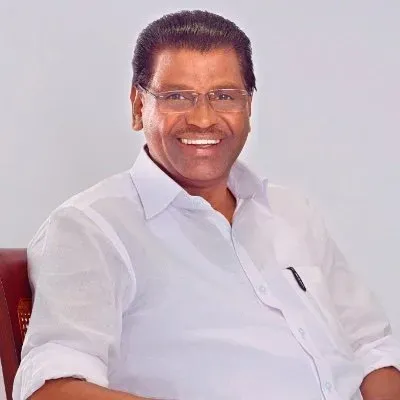
Neither the Chief Minister nor the Leader of the Opposition walked away as the defining figure of Kerala's second Assembly session — the Speaker did. At 77 and in his eighth term as an MLA, Thiruvanchoor Radhakrishnan is using humour, firmness and political instinct to reshape what the Speaker's chair looks like in Kerala politics.
Key Takeaways
Thiruvanchoor Radhakrishnan , 77 , presided over the nine-day second session of the 16th Kerala Assembly , concluding 31 October 2026 .
The 140-member House includes nearly half first-time legislators, whom Radhakrishnan has guided alongside seasoned veterans such as former CM Pinarayi Vijayan .
Now in his eighth term as MLA , his only electoral defeat was his debut in 1987 in Kottayam .
He held the Home portfolio during the politically turbulent Solar scam period under Chief Minister Oommen Chandy .
Radhakrishnan originally sought a ministerial post before being persuaded to accept the Speaker's role — a decision that has since been widely seen as a happy political turn.
Kerala Speaker Thiruvanchoor Radhakrishnan has emerged as the most talked-about figure of the second session of the 16th Kerala Assembly, which concluded on Thursday, 31 October 2026 in Thiruvananthapuram — outshining both the Chief Minister and the Leader of the Opposition through a potent combination of wit, firmness, and political acumen.
The Man Who Stole the Show
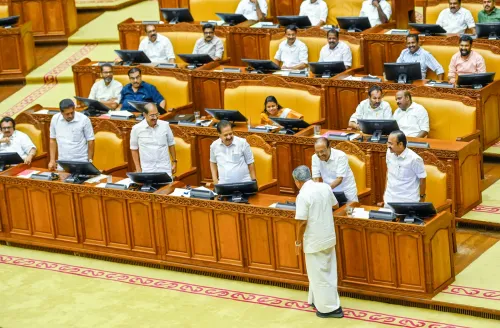
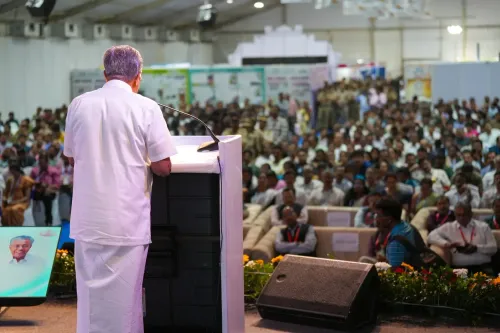
The nine-day session placed the 77-year-old Speaker in sharp focus. Radhakrishnan managed to maintain order in a 140-member House where nearly half the legislators are first-timers, while simultaneously holding his ground against seasoned political heavyweights — including Leader of the Opposition and former Chief Minister Pinarayi Vijayan. Observers noted his ability to pivot effortlessly from sharp humour to firm discipline, often within the same sitting.
His approach has so far resisted the pull toward an iron-fist style of presiding. That restraint, according to those who follow the Assembly closely, has earned him rare cross-party goodwill — a currency that matters more than party loyalty in the Speaker's chair.
A Political Career Built on Reinvention
Radhakrishnan's journey to the Speaker's chair was not a straight line. Now in his eighth term as a Member of the Legislative Assembly, he began in student politics and worked his way up through the Indian National Congress (INC), leading the party's student and youth wings before graduating to electoral politics.
His only electoral defeat came on debut — the 1987 contest in Kottayam, where he lost to veteran Communist Party of India (Marxist) leader T.K. Ramakrishnan. With Oommen Chandy dominating Kottayam's political landscape at the time, he shifted base to Adoor, winning four consecutive terms from 1991. When Adoor became a reserved constituency in 2011, he returned to Kottayam, where he has won four successive elections since.
The Minister of 'Akkiri' — and the Portfolio He Didn't Get
Becoming Speaker was not Radhakrishnan's original ambition. He had reportedly set his sights on a ministerial berth with a substantive portfolio. When that did not materialise, party leadership persuaded him to accept the Speaker's role — a decision that now appears, in hindsight, to have suited him far better.
His ministerial career was not without turbulence. He held the Home portfolio during a period that included the politically charged Solar scam, when a close aide of then Chief Minister Oommen Chandy was arrested while Chandy was abroad in Bahrain to receive a UN public service award, triggering a political storm back home.
His self-deprecating wit was on display even then. When former Union Minister and senior bureaucrat K.J. Alphons asked him which portfolio he held — after Chandy had reassigned the Home portfolio to Ramesh Chennithala and compensated Radhakrishnan with several minor departments — his reply was immediate: 'I am the Minister of Akkiri', invoking the Malayalam expression for things of little value or leftovers.
His tenure as Cinema Minister also attracted social media attention when he stumbled over the names of film personalities at public events. He was, by his own account, not amused by the trolling that followed.
From the Chair, the Last Word Is Always His
Today, the Speaker's chair has given Radhakrishnan a platform that suits his temperament more than any ministerial desk. He can crack a well-timed joke and wield the gavel with equal authority. The Assembly has traditionally been a livelier institution under Congress-led governments, with legislators, visitors, and party workers crowding its corridors — and Radhakrishnan appears in his element amid that energy.
At 77, when many veterans begin stepping back from public life, he appears to have found the role that defines his legacy. As the second session of the 16th Kerala Assembly closes, the question worth watching is whether that gift of the gab remains as sharp when the political temperature rises in the sessions ahead.
Point of View
Wielded with wit and restraint, can outshine both executive power and opposition theatre. The more interesting question is whether his light-touch approach holds when the House faces genuinely contentious legislation — the real test of a Speaker's mettle is not a routine session but a politically combustible one.
NationPress
31 Oct 2026
Frequently Asked Questions
Who is Kerala Speaker Thiruvanchoor Radhakrishnan?
Thiruvanchoor Radhakrishnan is the Speaker of the 16th Kerala Legislative Assembly and a veteran Indian National Congress leader now in his eighth term as an MLA. Known for his sharp wit and political acumen, he has represented both Adoor and Kottayam constituencies over a career spanning four decades.
Why is Radhakrishnan being called the star of the Kerala Assembly session?
Radhakrishnan drew widespread attention during the nine-day second session of the 16th Kerala Assembly for his ability to manage a House where nearly half the members are first-timers, handle seasoned veterans including former CM Pinarayi Vijayan, and maintain order through a mix of humour and firmness rather than heavy-handed discipline.
What is the significance of the 'Minister of Akkiri' remark?
The remark is widely cited as an example of Radhakrishnan's self-deprecating wit. When asked about his portfolio after the Home ministry was reassigned to Ramesh Chennithala, he quipped that he was the 'Minister of Akkiri' — a Malayalam phrase for things of little value — reflecting his ability to defuse awkward political situations with humour.
How many terms has Radhakrishnan served as an MLA?
Radhakrishnan is currently in his eighth term as a Member of the Legislative Assembly. His only electoral defeat came in his debut contest in 1987 in Kottayam. He subsequently represented Adoor for four consecutive terms from 1991 before returning to Kottayam after 2011.
Was Radhakrishnan always aiming to become Speaker?
No. According to reports, Radhakrishnan had originally hoped for a ministerial berth with a heavyweight portfolio. He was persuaded to accept the Speaker's role after that did not materialise, and his tenure in the chair has since been widely regarded as a successful political turn.