CM Majhi Mobilises Navy, Rescue Teams for Cyclone Arnab

Synopsis
Odisha Chief Minister Mohan Charan Majhi has put all cyclone Arnab response measures on emergency footing, deploying the Indian Navy and multiple rescue teams at the G. Udayagiri landslide site while fast-tracking shelter, supply, and utility restoration across the state.
Key Takeaways
All preparedness and rescue operations for Cyclone Arnab have been expedited by the Odisha government as of 31 October 2026 .
Udayagiri, Kandhamal district has left people missing; the Indian Navy and multiple agencies are deployed there.
Shelters, food, drinking water and medicines are being pre-positioned across vulnerable areas ahead of landfall.
Rapid restoration of electricity, roads and essential services in affected areas is a stated priority.
Odisha's disaster response infrastructure traces its origins to the Odisha State Disaster Management Authority , established after the devastating 1999 super cyclone .
Public safety has been declared the government's 'highest priority' by CM Majhi.
With Cyclone Arnab bearing down on Odisha, Chief Minister Mohan Charan Majhi announced on Saturday, 31 October 2026 that all preparedness and rescue operations have been expedited to maximum urgency — and that public safety is the government's singular priority.
Navy and rescue teams converge on G. Udayagiri landslide
The most pressing parallel crisis is unfolding inland. A landslide at G. Udayagiri in Kandhamal district — a hilly, terrain-challenged stretch historically prone to such disasters — has left an unspecified number of people missing. The Indian Navy, alongside multiple other rescue agencies, has been deployed at the site to locate survivors. The Navy's involvement signals the difficulty of the terrain: standard ground teams alone are not enough.
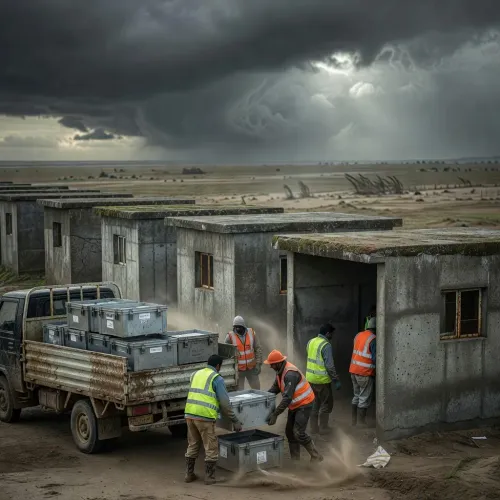
Majhi confirmed that shelters are being readied, and stocks of food, drinking water and medicines are being pre-positioned across vulnerable areas. The government is simultaneously pushing for the fastest possible restoration of electricity, roads and other essential services in affected zones.
Arnab arrives on Odisha's most tested coastline
Odisha sits squarely on the Bay of Bengal cyclone corridor — a geography that has delivered some of India's most destructive storms. The state overhauled its entire disaster-response architecture after the catastrophic 1999 super cyclone, creating the Odisha State Disaster Management Authority to anchor preparation and inter-agency coordination. That institutional muscle is now being activated for Arnab.
Successive Odisha governments have built a reputation for early warnings and mass evacuations that have repeatedly cut cyclone fatalities from the hundreds to near-zero in recent decades. The current administration is leaning on that playbook: shelters pre-stocked, agencies coordinated, and the Navy on standby in the field.
What the state's dual-front response means on the ground
Managing a cyclone and an active landslide simultaneously stretches any state's logistics. The G. Udayagiri search operation demands specialised teams in rugged hill country, while coastal evacuation and shelter management pull resources toward the shoreline. Majhi's post signals that both fronts are being treated as concurrent priorities, not sequential ones — a critical operational choice.
Official tallies of evacuees, the precise cyclone track and any formal request for National Disaster Response Force reinforcements are expected to follow as Arnab progresses. Every hour of coordinated pre-landfall action is an hour that historically has saved lives in this state.
Point of View
Multi-agency action signals governance credibility in a high-stakes moment. The speed of power and road restoration post-landfall will be the real measure of whether preparedness translated into recovery. Any delay in central reinforcements, particularly NDRF battalions, could become a political flashpoint.
NationPress
31 Oct 2026
Frequently Asked Questions
What is Cyclone Arnab and where is it expected to hit?
Cyclone Arnab is a Bay of Bengal storm currently threatening Odisha. Exact landfall location and timing are subject to official meteorological updates as the system progresses.
Why is the Indian Navy deployed at G. Udayagiri?
The Indian Navy has been deployed at G. Udayagiri in Kandhamal district to search for people missing after a landslide. The hilly terrain makes specialised naval rescue teams necessary alongside ground agencies.
What preparations has the Odisha government made for Cyclone Arnab?
The Odisha government has activated emergency shelters, pre-positioned food, drinking water and medicines, expedited rescue operations, and prioritised rapid restoration of electricity and roads in affected areas.
What is the Odisha State Disaster Management Authority?
The Odisha State Disaster Management Authority was set up after the catastrophic 1999 super cyclone to coordinate the state's preparedness and response to natural disasters, and it anchors inter-agency cyclone operations.
How has Odisha reduced cyclone fatalities over the years?
Odisha has cut cyclone deaths dramatically through early warning systems, mass pre-landfall evacuations, pre-stocked shelters, and coordinated deployment of central and state disaster response forces — a model built after 1999.