Kerala Assembly explores letting public raise questions in the house
Synopsis
Kerala's Assembly Speaker has floated a proposal that could let ordinary citizens raise questions directly in the legislature — a first for any Indian state assembly if implemented. With 71 first-time legislators also joining the house, Kerala's legislature appears to be in an unusual moment of democratic renewal.
Key Takeaways
Kerala Assembly Speaker Thiruvanchoor Radhakrishnan announced on 16 June that the legislature is exploring allowing citizens to raise questions in the house.
The proposal draws on models from foreign legislatures and will be finalised only after expert consultations.
The Assembly is also exploring converting its collection of books and documents into audiobooks for wider public access.
The institution has a history of 138 years and the Speaker stressed the need for it to evolve with democratic needs.
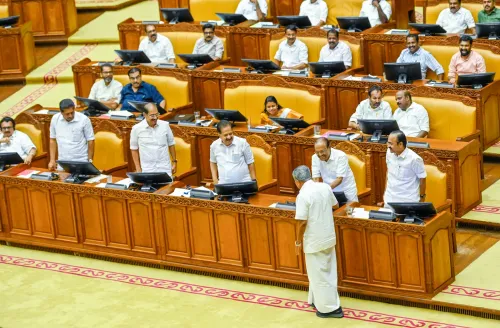
A two-day orientation course for 71 first-time legislators — a recent record in the 140-member house — begins on Wednesday.
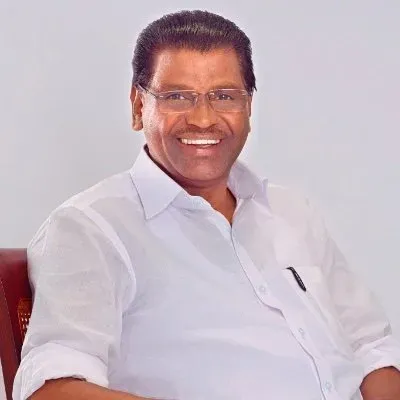
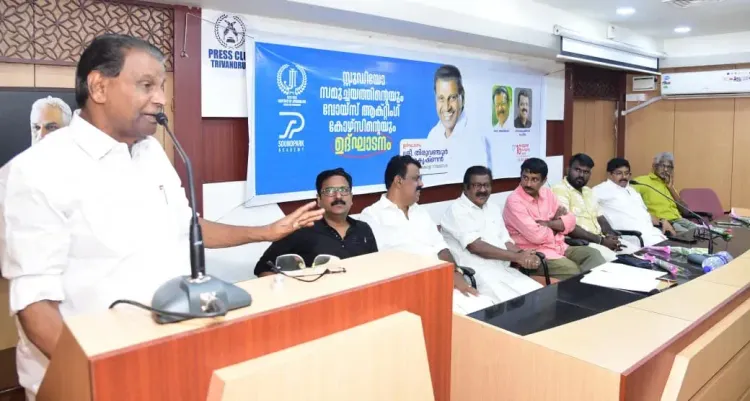
Kerala Assembly Speaker Thiruvanchoor Radhakrishnan on Tuesday, 16 June said the legislature is actively exploring the possibility of allowing ordinary citizens to raise questions directly in the house — a move that, if implemented, would mark a historic shift in how the state's highest law-making body engages with the public.
What the Speaker Proposed
Speaking at the inauguration of a voice acting course and studio complex at the Press Club Institute of Journalism in Thiruvananthapuram, the Speaker said the Kerala Assembly should not remain confined to elected representatives alone. 'Like in some foreign legislatures, the public should also get an opportunity to ask questions,' he said, adding that discussions with experts would precede any finalisation of the mechanism.
Radhakrishnan noted that the Assembly was considering what he described as 'some historic decisions' to strengthen public participation in democratic processes.
The Broader Modernisation Push
The public-questioning proposal is part of a wider effort to modernise legislative functioning in Kerala. Among the other initiatives being explored is the conversion of the Assembly's collection of books and documents into audiobooks — a step aimed at expanding access to legislative resources beyond the physical walls of the institution.
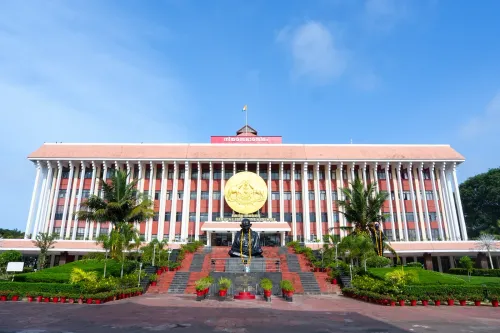
The Speaker also highlighted that the Assembly, which carries a history of 138 years, must continue to evolve in line with changing democratic needs.
Record Number of First-Time Legislators
Separately, the Assembly is set to hold a two-day orientation course beginning Wednesday for its 71 first-time legislators — a figure described as a record of sorts in the 140-member house in recent times. The orientation is designed to familiarise new members with the proceedings and conventions of the house.
What Happens Next
No timeline has been announced for the citizen-questioning initiative. The Speaker indicated that expert consultations would be held before any mechanism is finalised. Should the proposal move forward, Kerala could become one of the first Indian state assemblies to formally institutionalise direct public participation in question proceedings — drawing on models already in practice in select foreign legislatures.
Point of View
Not commit to a reform. The more immediate story may be the 71 first-time legislators in a 140-member house: that degree of legislative churn is significant and will shape the Assembly's character far more immediately than any citizen-questioning pilot. If Kerala does follow through, the design of the mechanism — who gets to ask, how questions are filtered, whether answers are binding — will determine whether this is genuine participation or ceremonial inclusion.
NationPress
15 Sept 2026
Frequently Asked Questions
What has the Kerala Assembly Speaker proposed regarding public participation?
Speaker Thiruvanchoor Radhakrishnan has said the Kerala Assembly is exploring a mechanism that would allow ordinary citizens to raise questions directly in the house, similar to practices in some foreign legislatures. No timeline has been set, and expert consultations are planned before any decision is finalised.
Has any Indian state assembly done this before?
No Indian state assembly is known to have formally institutionalised citizen question-raising in the house. If implemented, Kerala could be the first, drawing on models from select foreign legislatures as cited by the Speaker.
What other modernisation initiatives is the Kerala Assembly considering?
The Assembly is also exploring converting its collection of books and documents into audiobooks to broaden public access to legislative resources. The Speaker described these as part of a broader push to make the legislature more accessible and connected with citizens.
What is significant about the 71 first-time legislators in the Kerala Assembly?
The Kerala Assembly has 71 first-time members in its 140-member house — a figure described as a record of sorts in recent times. A two-day orientation course for these new legislators begins on Wednesday to familiarise them with house proceedings.
When will the citizen-questioning proposal be finalised?
No deadline has been announced. Speaker Radhakrishnan indicated that discussions with experts would be held before the mechanism is finalised, leaving the timeline open-ended.