PM Modi pays tribute to Sardar Patel on Rashtriya Ekta Diwas
Synopsis
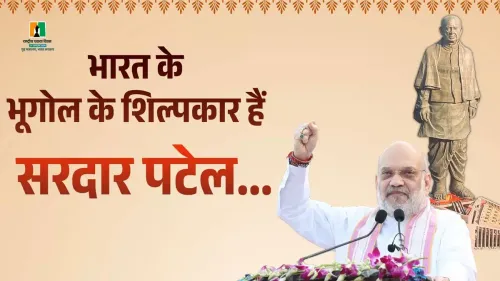
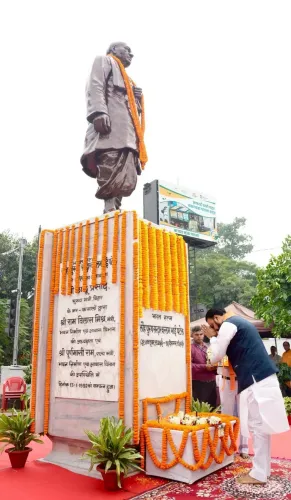
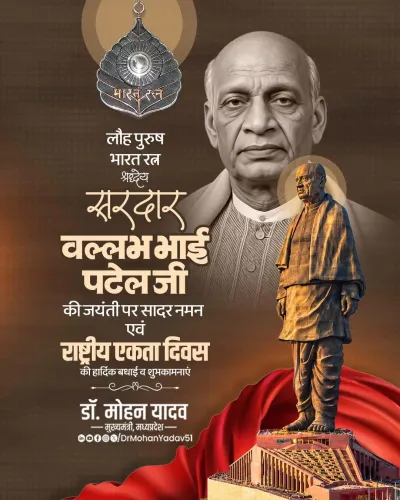
Prime Minister Narendra Modi paid tribute to Sardar Vallabhbhai Patel on Rashtriya Ekta Diwas, 31 October 2026, honouring the first Deputy PM who integrated over 500 princely states into the Indian Union. The day was instituted by the Government of India in 2014 and is observed annually on Patel's birth anniversary.
Key Takeaways
Rashtriya Ekta Diwas falls on 31 October every year, marking the birth anniversary of Sardar Vallabhbhai Patel .
The observance was formally instituted by the Government of India in 2014 to honour Patel's role in national integration.
Sardar Patel, India's first Deputy Prime Minister and Home Minister , integrated more than 500 princely states into the Union after independence in 1947 .
PM Modi's 2026 tribute was accompanied by a live broadcast, extending public participation beyond a written statement.
The annual tribute is part of a broader government effort to highlight leaders associated with India's territorial consolidation.
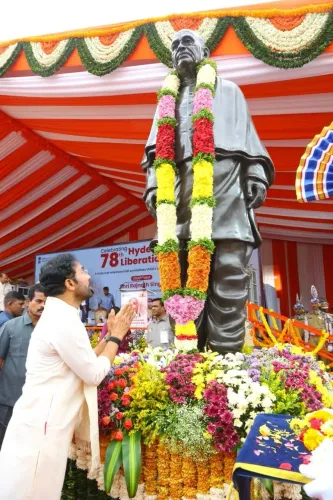
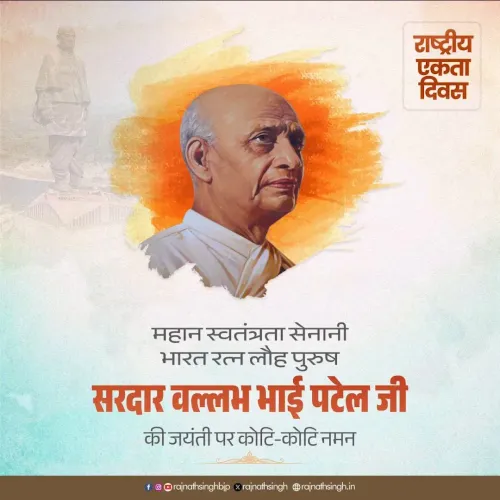
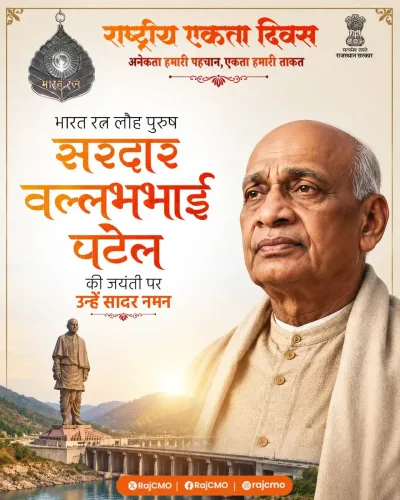
On the birth anniversary of the man who stitched a fractured subcontinent into a single republic, Prime Minister Narendra Modi led the nation's tribute to Sardar Vallabhbhai Patel on Rashtriya Ekta Diwas — Saturday, 31 October 2026 — honouring the architect of India's territorial unity.
The iron will behind 500 princely states
Sardar Vallabhbhai Patel, India's first Deputy Prime Minister and Home Minister, accomplished in the months after August 1947 what many thought impossible: the peaceful — and occasionally forceful — integration of more than 500 princely states into the Indian Union. The task was diplomatic, logistical, and at moments military, yet it was completed with a speed and finality that defined the borders of modern India. His title, 'The Iron Man of India', was earned, not granted.
The sheer scale of that integration — sovereign territories ranging from the vast state of Hyderabad to tiny coastal enclaves — gave India the geographic coherence without which no republic could function. Patel's insistence that unity was non-negotiable remains, nearly eight decades later, the foundation on which every subsequent conversation about national integrity rests.
How Rashtriya Ekta Diwas became an annual institution
The Government of India formally instituted Rashtriya Ekta Diwas — National Unity Day — in 2014, designating 31 October, Patel's birth anniversary, as the occasion to recommit to the values of integration and solidarity. Since then, the day has anchored an annual cycle of official observances: run-for-unity events, pledge ceremonies, and tributes at the Statue of Unity in Kevadiya, Gujarat — the world's tallest statue, erected in Patel's honour.
The tradition places Patel at the centre of India's founding narrative alongside figures more conventionally celebrated. Each year's tribute reinforces that framing — a deliberate act of historical retrieval as much as commemoration.
Unity as a living obligation
Prime Minister Modi's message on 31 October 2026 called on the country to 'remember his immense contribution to national unity' — framing Patel's legacy not as closed history but as a continuing obligation. The post linked to a live broadcast, extending the tribute beyond a text statement into a public, participatory moment. In a diverse democracy of 1.4 billion people, the annual reinvocation of Patel's achievement carries a resonance that goes well beyond ceremony.
Rashtriya Ekta Diwas is a reminder that the unity Patel forged was never accidental — it was chosen, fought for, and institutionalised. Keeping that memory vivid is, in itself, an act of statecraft.
Point of View
A framing that underscores national integration as a core policy value. Instituting the day in 2014 was itself a signal: Patel's legacy, long considered underappreciated in mainstream historiography, was being placed at the highest level of official commemoration. Each year's observance reinforces that reorientation. The live broadcast element in 2026 reflects an effort to make the tribute participatory rather than purely symbolic, widening its civic reach.
NationPress
31 Oct 2026
Frequently Asked Questions
What is Rashtriya Ekta Diwas and why is it celebrated on 31 October?
Rashtriya Ekta Diwas, or National Unity Day, is observed on 31 October — the birth anniversary of Sardar Vallabhbhai Patel — to honour his unparalleled contribution to India's national integration. It was instituted by the Government of India in 2014 .
Who was Sardar Vallabhbhai Patel and what did he achieve?
Sardar Vallabhbhai Patel was India's first Deputy Prime Minister and Home Minister. After independence in 1947 , he oversaw the integration of more than 500 princely states into the Indian Union, earning the title 'The Iron Man of India'.
When did India start observing Rashtriya Ekta Diwas?
The Government of India formally instituted Rashtriya Ekta Diwas in 2014 , designating 31 October as National Unity Day in honour of Sardar Patel's birth anniversary.
What did PM Modi say on Rashtriya Ekta Diwas 2026?
On 31 October 2026 , PM Narendra Modi posted a tribute stating that on Rashtriya Ekta Diwas 'we pay tribute to Sardar Patel and remember his immense contribution to national unity,' alongside a link to a live broadcast of the occasion.
Where is the Statue of Unity dedicated to Sardar Patel?
The Statue of Unity , the world's tallest statue and a monument to Sardar Patel, stands in Kevadiya, Gujarat , and is a focal point of Rashtriya Ekta Diwas observances each year.