SEBI monitoring Tata Sons governance amid Chandrasekaran, listing row
Synopsis
SEBI Chairman Tuhin Kanta Pandey has confirmed the regulator is watching governance developments at Tata Sons — but acknowledges its hands are tied because the holding company is unlisted. With 26 listed Tata entities and a $328 billion combined market cap at stake, the gap in regulatory reach over unlisted holding structures is now squarely in the spotlight.
Key Takeaways
SEBI Chairman Tuhin Kanta Pandey confirmed on 31 October 2026 that the regulator is monitoring governance developments at Tata Sons .
Because Tata Sons is unlisted , SEBI's direct oversight is limited; all 26 listed Tata companies remain subject to full LODR norms.
The governance row centres on the reappointment of N Chandrasekaran as chairman and the question of Tata Sons' proposed listing .
Seven listed Tata entities — including Tata Steel , Tata Power , and Indian Hotels — collectively hold about 11.92% in Tata Sons.
Tata Group's combined listed market capitalisation stood at $328 billion as of 31 March 2025 .
Pandey cited no specific regulatory violation or action against the group.
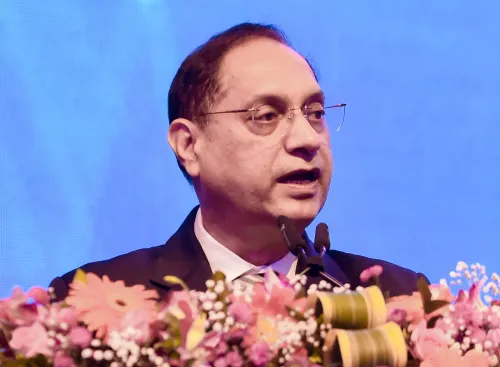
Securities and Exchange Board of India (SEBI) Chairman Tuhin Kanta Pandey on 31 October 2026 confirmed that the regulator is actively monitoring governance-related developments at the holding company level within the Tata Group. Speaking on the sidelines of the Bharat Chamber Investors Forum launch in Mumbai, Pandey indicated that while unlisted holding entities fall outside direct SEBI jurisdiction, all listed Tata companies remain fully bound by disclosure and compliance norms.
What Pandey Said
'At the holding company level, there are some issues, as that's not really a listed company. The rest of the companies, those which are listed, follow all the LODR norms,' Pandey told reporters. He clarified that listed companies of the group and the promoters of those firms are subject to all norms under SEBI's Listing Obligations and Disclosure Requirements (LODR). Notably, the SEBI chairman did not refer to any specific governance violation or regulatory action against the group.
The Governance Row at Tata Sons
The remarks come amid simmering differences over governance issues at Tata Sons, the group's unlisted holding company. Key flashpoints include the reappointment of N Chandrasekaran as chairman and the long-debated question of whether Tata Sons should be compelled to list on Indian stock exchanges. Because Tata Sons is not a listed entity, SEBI's direct oversight is structurally constrained, even as concerns among minority stakeholders in listed Tata firms persist.
The Scale of Tata's Listed Universe
The Tata Group has 26 publicly listed companies with a combined market capitalisation of $328 billion as of 31 March 2025, according to the group's FY25 annual report. Of these, seven listed entities — Tata Steel, Tata Motors Passenger Vehicles, Tata Chemicals, Tata Power, Indian Hotels, Tata Consumer Products, and Tata Investment Corporation — collectively hold approximately 11.92% in Tata Sons, creating a layered ownership structure that complicates regulatory clarity.
SEBI's Broader Capital Market Mandate
Earlier at the same event, Pandey outlined the regulator's wider priorities, stressing continuous efforts to make India's capital markets more accessible, efficient, and resilient. He highlighted strong market capitalisation expansion over the past decade, with companies raising on average more than ₹10 lakh crore annually through equity and debt issuances. 'World-class markets must be not only efficient during normal times, but also resilient during periods of stress,' he said. Investor protection, he added, remains an equally important priority alongside facilitating capital formation and easing the regulatory burden on businesses.
What Comes Next
SEBI's acknowledgement of monitoring activity — even without citing specific violations — is likely to sustain scrutiny of Tata Sons' governance trajectory. The listing question, if revisited by regulators or courts, could draw Tata Sons more directly into SEBI's regulatory perimeter. Market participants and minority shareholders in listed Tata entities will be watching for any further signals from the regulator.
Frequently Asked Questions
Why is SEBI monitoring Tata Sons governance?
SEBI Chairman Tuhin Kanta Pandey confirmed on 31 October 2026 that the regulator is tracking governance developments at Tata Sons amid disputes over the reappointment of N Chandrasekaran as chairman and the question of the holding company's potential listing. SEBI's oversight is currently limited because Tata Sons is not a listed entity.
What governance issues are at the centre of the Tata Sons row?
The primary flashpoints are the reappointment of N Chandrasekaran as Tata Sons chairman and the ongoing debate over whether the holding company should be listed on Indian stock exchanges. These issues affect the broader Tata Group because several listed Tata companies hold stakes in the unlisted holding entity.
Which listed Tata companies hold stakes in Tata Sons?
Seven listed Tata entities — Tata Steel, Tata Motors Passenger Vehicles, Tata Chemicals, Tata Power, Indian Hotels, Tata Consumer Products, and Tata Investment Corporation — collectively hold approximately 11.92% in Tata Sons, according to the group's FY25 annual report.
What are SEBI's powers over unlisted holding companies like Tata Sons?
SEBI's jurisdiction under its Listing Obligations and Disclosure Requirements (LODR) framework applies only to listed entities. Tata Sons, being unlisted, is not directly subject to these norms, which limits what action SEBI can take even if governance concerns arise at the holding company level.
Did SEBI announce any regulatory action against the Tata Group?
No. Tuhin Kanta Pandey explicitly did not cite any specific governance violation or announce regulatory action against the group. His remarks were confined to confirming that monitoring is under way and that listed Tata companies comply with all LODR norms.