RBI adds Tata Sons to upper layer NBFC list of 17 firms
Synopsis
The RBI has placed Tata Sons — the unlisted holding company of 31 Tata Group firms — in its upper-layer NBFC list, setting up a potential forced public listing within three years. The twist: Tata Sons has already applied to surrender its NBFC registration, and the RBI says that application remains open. The outcome of that bid will determine whether India's most storied conglomerate finally goes public.
Key Takeaways
The RBI on 6 August placed Tata Sons in its updated list of 17 upper-layer NBFCs for 2026-27 .
Upper-layer NBFCs with assets above ₹1 lakh crore must list on stock exchanges within three years and face enhanced oversight for at least five years .
Tata Sons' pending application to surrender its CIC (Core Investment Company) registration remains under RBI consideration and could exempt it from the listing mandate.
The Shapoorji Pallonji (SP) Group , Tata Sons' second-largest shareholder, has been pushing for a public listing amid management differences.
Other upper-layer NBFCs include Tata Capital , Bajaj Finance , Shriram Finance , Muthoot Finance , REC , Power Finance Corporation , and IRFC .
The Reserve Bank of India (RBI) on Thursday, 6 August included Tata Sons in its updated list of 17 upper-layer non-banking financial companies (NBFCs), placing the Tata Group holding company under a stricter regulatory regime that — critically — mandates a stock exchange listing within three years.
What the Upper-Layer Classification Means
Under revised RBI norms that came into effect in June, any NBFC with assets exceeding ₹1 lakh crore is categorised as an upper-layer entity. Such companies face enhanced supervisory oversight and are required to list on stock exchanges within three years of classification. Once placed in the upper layer, an NBFC must remain there for at least five years, even if it no longer meets the threshold criteria in subsequent reviews.
The RBI clarified that the fresh classification will not interfere with Tata Sons' pending application to surrender its registration as a Core Investment Company (CIC) — a request that remains under active consideration by the central bank.
Tata Sons' Unique Position
Tata Sons is the holding company for 31 Tata Group entities, including marquee names such as Tata Motors, Tata Steel, and Tata Consultancy Services (TCS). It is registered as a CIC under the NBFC framework — a category where at least 90 per cent of net assets must be invested in equity shares, preference shares, bonds, debentures, debt, or loans of group companies.
The company has long resisted a public listing, considering itself a charitable trust. However, it has faced mounting pressure to go public from its second-largest shareholder, the Shapoorji Pallonji (SP) Group, amid reported differences with the top management. Whether Tata Sons will ultimately be compelled to list hinges entirely on the RBI's decision regarding its CIC deregistration application.
Other Companies in the Upper-Layer List
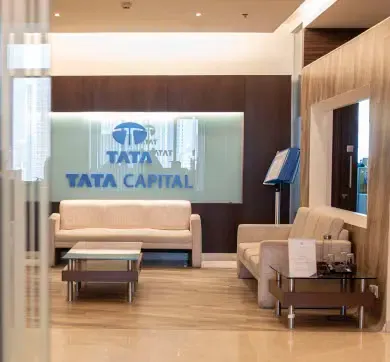
The RBI's 2026-27 upper-layer list also includes Tata Capital, along with three government-backed Infrastructure Finance Companies: REC, Power Finance Corporation, and Indian Railway Finance Corporation (IRFC).
Deposit-taking NBFCs named in the list include Shriram Finance, Bajaj Finance, and Muthoot Finance. Additionally, Aditya Birla Capital, L&T Finance, Mahindra & Mahindra Financial Services, and Piramal Finance also feature among the 17 companies.
RBI's Regulatory Stand
In its official statement, the RBI noted that entities classified as NBFC-UL in previous exercises but failing to meet current criteria would nonetheless continue in the upper layer and remain subject to enhanced requirements. 'In terms of the framework, once an NBFC is classified as NBFC-UL, it shall be subject to enhanced regulatory requirements, at least for a period of five years from its classification in the layer, even in case it does not meet the criteria in the subsequent year/s,' the RBI statement said.
The central bank's move signals a tightening of its systemic risk framework for large non-bank lenders, and the outcome of Tata Sons' deregistration bid will be closely watched by the broader financial sector.
Point of View
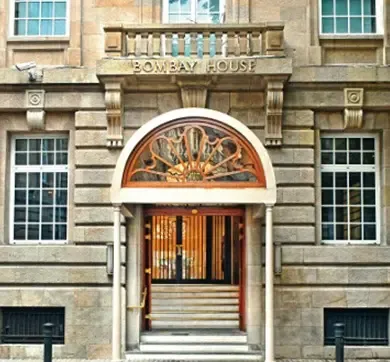
By keeping that door open, has effectively handed itself enormous leverage over how India's largest conglomerate is governed. The central bank's five-year lock-in rule also means that even if Tata Sons meets the exit criteria next year, it cannot simply walk out of the upper layer. Systemic risk logic and corporate governance are now on a collision course at Bombay House.
NationPress
21 Sept 2026
Frequently Asked Questions
Why has the RBI placed Tata Sons in the upper-layer NBFC list?
The RBI classified Tata Sons as an upper-layer NBFC because it meets the revised threshold of assets exceeding ₹1 lakh crore under norms that came into effect in June. Upper-layer status subjects the company to stricter regulatory oversight and a mandatory stock exchange listing within three years.
Does this mean Tata Sons will have to go public?
Not necessarily. Tata Sons has applied to surrender its Core Investment Company (CIC) registration with the RBI. If the application is approved, it would no longer be classified as an NBFC and could avoid the listing requirement. The RBI has confirmed the application is still under consideration.
What is a Core Investment Company (CIC) under RBI rules?
A CIC is a type of NBFC whose primary business is investing in group companies. At least 90 per cent of its net assets must be held in equity shares, preference shares, bonds, debentures, debt, or loans of group entities. Tata Sons is currently registered as a CIC.
Which other companies are on the RBI's upper-layer NBFC list for 2026-27?
The 17-firm list includes Tata Capital, Bajaj Finance, Shriram Finance, Muthoot Finance, Aditya Birla Capital, L&T Finance, Mahindra & Mahindra Financial Services, Piramal Finance, REC, Power Finance Corporation, and Indian Railway Finance Corporation, among others.
Why has the Shapoorji Pallonji Group been pushing Tata Sons to list?
The Shapoorji Pallonji Group, Tata Sons' second-largest shareholder, has reportedly sought a public listing due to internal differences with the top management. A listing would provide a market-determined valuation and a potential liquidity mechanism for SP Group's stake.