Tata Sons board meeting on Sep 17: RBI rejection, listing pressure, succession crisis
Synopsis
Tata Sons faces a rare convergence of crises ahead of its 17 September board meeting: the RBI has blocked its bid to avoid a listing by rejecting its CIC de-registration, Chairman Chandrasekaran has signalled he will not renew his term, and a legal deadlock at Sir Ratan Tata Trust has frozen the very mechanism needed to pick his successor. India's most iconic conglomerate is navigating a governance storm with few modern precedents.
Key Takeaways
Tata Sons is expected to hold a board meeting on 17 September 2026 to address multiple interlinked crises.
The RBI rejected Tata Sons' application to surrender its CIC registration , keeping the mandatory listing obligation alive; the regulator had earlier directed a listing by September 2025 .
Chandrasekaran has said he will not seek another term when his tenure ends on 20 February 2027 , leaving no clear successor.
Sir Ratan Tata Trust (SRTT) , holding 23.56% of Tata Sons, cannot convene trustee meetings due to proceedings before the Maharashtra Charity Commissioner .
SRTT and Sir Dorabji Tata Trust (SDTT) together hold roughly 66% of Tata Sons and must jointly nominate three members of the five-member chairman selection committee.
The 18 August Tata Sons AGM was adjourned after the two principal trusts could not jointly nominate the required representative.
Tata Sons is expected to convene a board meeting on 17 September 2026 to address a cluster of interlinked crises — chief among them the Reserve Bank of India's (RBI) rejection of its application to surrender its Core Investment Company (CIC) registration, a looming listing obligation, and a deepening leadership vacuum at the top of India's most storied conglomerate.
RBI Rejection Revives Listing Question
Tata Sons had sought to de-register as a CIC after becoming debt-free, aiming to sidestep the mandatory listing requirement that applies to upper-layer non-banking financial companies (NBFCs). The RBI rejected that request, effectively keeping the listing question alive. Classified as an upper-layer NBFC in September 2022, Tata Sons had already been directed by the regulator to list its shares by September 2025. The RBI has also reportedly dismissed industry calls to raise the asset threshold or retain a risk-based methodology for classifying large NBFCs, leaving Tata Sons with limited regulatory escape routes.
Chandrasekaran's Exit and the Succession Vacuum
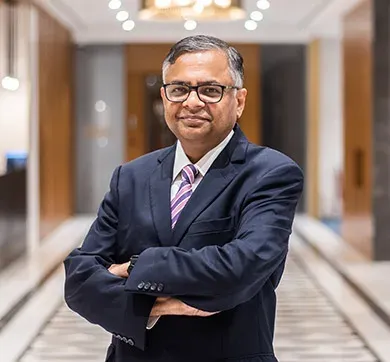
Adding urgency to the board deliberations is the impending departure of Chairman N. Chandrasekaran, who has indicated he will not seek a further term when his current tenure ends on 20 February 2027. Analysts have noted that navigating a listing of a conglomerate of Tata Sons' scale requires not just strategic clarity but leadership continuity — something the group currently lacks. The absence of a named or credible successor has unsettled observers and is said to have intensified internal debate over the listing timeline.
Governance Impasse at Sir Ratan Tata Trust
The succession challenge is further complicated by a governance deadlock at Sir Ratan Tata Trust (SRTT), which holds approximately 23.56 per cent of Tata Sons. Ongoing proceedings before the Maharashtra Charity Commissioner have left SRTT unable to convene trustee meetings, creating a structural paralysis at a critical moment.
The two principal trusts — SRTT and Sir Dorabji Tata Trust (SDTT) — collectively control roughly 66 per cent of Tata Sons. Under the group's governance framework, these trusts must jointly nominate three of the five members of the selection committee responsible for recommending the next chairman. The SRTT restriction has already had tangible consequences: the 18 August annual general meeting of Tata Sons was adjourned after the two principal trusts were unable to jointly nominate the required representative.
What the Board Meeting Must Address
The 17 September meeting is therefore expected to grapple simultaneously with the regulatory fallout from the RBI ruling, the path forward on a possible listing, the mechanics of the chairman succession process, and the governance paralysis stemming from the SRTT proceedings. This comes amid broader scrutiny of how large, trust-controlled Indian conglomerates manage transitions under regulatory pressure — a challenge that has few modern precedents in Indian corporate history.
What Comes Next
Whether the board can produce actionable resolutions on any of these fronts remains unclear given the structural constraints. The SRTT proceedings before the Maharashtra Charity Commissioner are the single most consequential near-term variable: until that impasse is resolved, the joint nomination mechanism required for a new chairman cannot be activated. Market observers and legal analysts will watch the 17 September meeting closely for any signal on the listing timeline or interim governance arrangements.
Point of View
Governance and succession pressures at Tata Sons is unusual even by the standards of India's complex trust-held conglomerates. The RBI's refusal to grant a de-registration escape route suggests the regulator is unwilling to carve out exceptions for size or reputation — a signal with implications beyond the Tata Group. What mainstream coverage underplays is the structural catch-22: the SRTT paralysis is not merely a succession inconvenience but a mechanism failure that blocks the group from even beginning a legitimate chairman search. A listed Tata Sons without a settled chairman and with a frozen principal trust is not a routine governance challenge — it is a systemic risk to one of India's largest capital pools.
NationPress
14 Sept 2026
Frequently Asked Questions
Why is Tata Sons holding a board meeting on 17 September 2026?
Tata Sons is convening its board on 17 September 2026 to address the fallout from the RBI's rejection of its CIC de-registration bid, the resulting listing pressure, the impending departure of Chairman N. Chandrasekaran, and a governance deadlock at Sir Ratan Tata Trust. These issues are interlinked and cannot be resolved independently.
Why did the RBI reject Tata Sons' CIC de-registration request?
The RBI rejected Tata Sons' request to surrender its Core Investment Company registration, which the group had sought after becoming debt-free to avoid the mandatory listing requirement for upper-layer NBFCs. The regulator has also dismissed industry demands to revise the asset threshold or methodology for classifying large NBFCs, leaving Tata Sons with limited alternatives.
When does Chairman N. Chandrasekaran's tenure at Tata Sons end?
N. Chandrasekaran's current term as Chairman of Tata Sons ends on 20 February 2027. He has stated he will not seek another term, creating a leadership vacuum at a particularly complex moment for the group.
What is the governance impasse at Sir Ratan Tata Trust and why does it matter?
Sir Ratan Tata Trust (SRTT), which owns about 23.56% of Tata Sons, is currently unable to hold trustee meetings due to proceedings before the Maharashtra Charity Commissioner. This matters because SRTT and Sir Dorabji Tata Trust together hold roughly 66% of Tata Sons and must jointly nominate three of the five members of the selection committee that recommends the next chairman — a process that cannot proceed until the SRTT deadlock is resolved.
Is Tata Sons required to list its shares?
Yes. The RBI classified Tata Sons as an upper-layer NBFC in September 2022, which triggers a mandatory listing requirement. The regulator had directed Tata Sons to list by September 2025. The company's attempt to escape this obligation by surrendering its CIC registration has been rejected by the RBI.