Odisha CMO: 96% Power Restored in Cyclone Arnab Zones
Synopsis
The Chief Minister's Office of Odisha reports that electricity has been restored to over 96 percent of consumers across eight Cyclone Arnab-affected southern districts, with more than 6,400 workers operating round-the-clock. Special teams remain deployed in the hardest-hit Ganjam and Gajapati districts to complete the final phase of recovery.
Key Takeaways
96 percent of power consumers across 8 affected districts in southern Odisha have had electricity restored after Cyclone Arnab .
Over 6,400 field workers are working round-the-clock to restore power infrastructure despite difficult terrain and adverse weather.
Ganjam and Gajapati are the most severely damaged districts; special dedicated teams are deployed there for remaining repairs.
The Odisha government has described the restoration effort as being conducted on a 'war footing.' Odisha's rapid-response model traces back to lessons from the 1999 super cyclone and was refined after Cyclone Fani in 2019 .
The state government has pledged full commitment to completing the recovery and ensuring uninterrupted service for all affected residents.
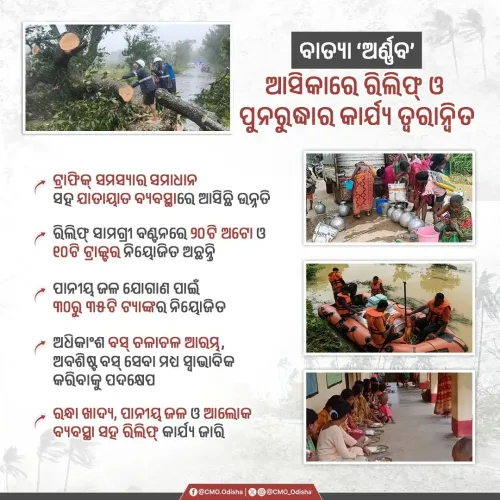
Against difficult terrain and hostile post-cyclone weather, Odisha's power grid is being stitched back together at wartime pace — and the numbers are beginning to show it. The Chief Minister's Office of Odisha announced on Saturday, 31 October 2026 that electricity supply has been successfully restored to more than 96 percent of consumers across eight affected districts of southern Odisha following Cyclone Arnab.
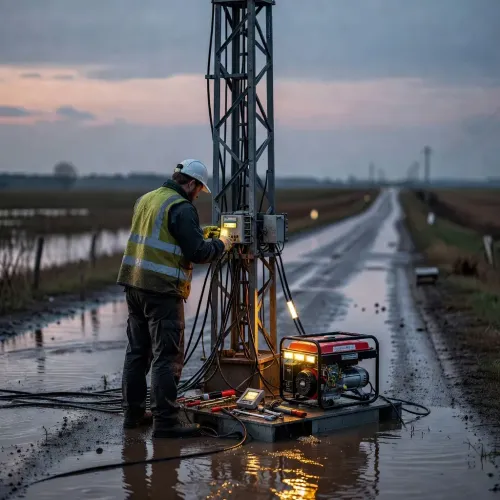
More than 6,400 workers, no days off
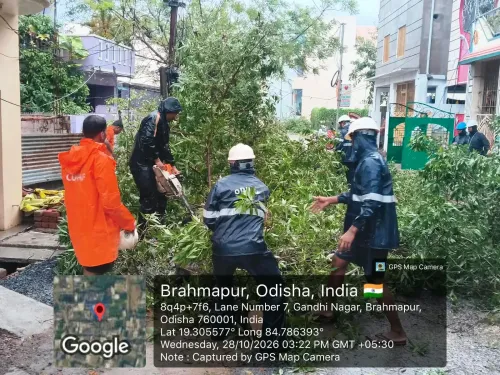
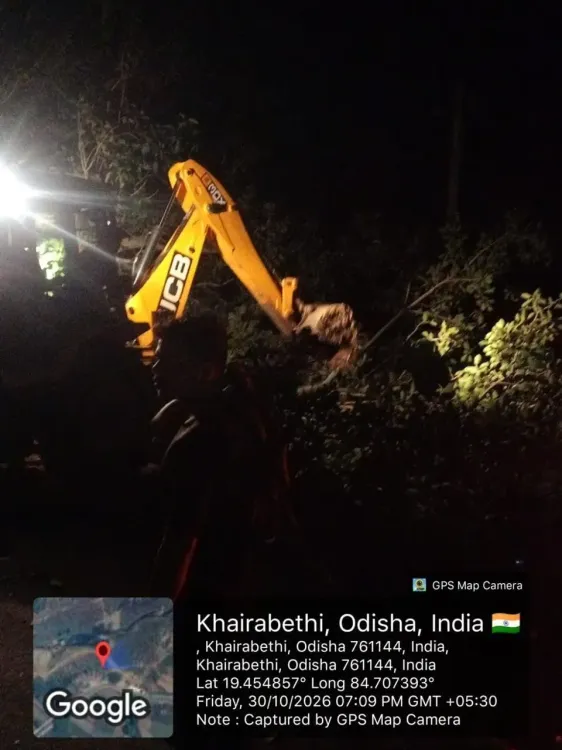
The scale of the ground operation is striking. Over 6,400 dedicated field workers have been deployed and are working round-the-clock — through difficult geography and adverse weather — to restore electricity infrastructure to pre-cyclone condition. The CMO described the effort as being conducted on a 'war footing,' a phrase that carries real operational meaning in Odisha's disaster-management vocabulary.
Special dedicated teams have been positioned in the remaining pockets of Ganjam and Gajapati — the two districts described as the most severely damaged. Ganjam, a coastal district in southern Odisha, has historically borne the brunt of Bay of Bengal cyclones. Gajapati, with its hilly interior terrain, compounds the logistical challenge: poles and lines that fall in remote ridgelines take far longer to reach and repair than those on flat coastal plains.
Odisha's two-decade playbook for post-cyclone recovery
The speed of this response did not emerge from nowhere. After the catastrophic 1999 super cyclone, Odisha built a dedicated disaster management framework with utility restoration as a core pillar. The benchmark that defined the modern template was Cyclone Fani in 2019, when the state achieved large-scale power restoration within a week through coordinated field operations — drawing national and international attention for its efficiency.
That institutional muscle memory is visible again now. Administrative coordination, pre-positioned technical teams, and a clear chain of command have allowed the state to cross the 96 percent restoration threshold across eight districts even as the most damaged zones still require targeted work.
What the state has committed to next
The CMO's statement closed with an unambiguous pledge: the state government remains 'fully committed' to ensuring uninterrupted service for all affected residents and to completing the overall recovery process successfully. The watch now is on the remaining pockets in Ganjam and Gajapati — the last mile of a recovery that, if completed cleanly, will reinforce Odisha's standing as India's most practiced state in post-cyclone infrastructure restoration.
Any subsequent damage assessment and potential requests for central government assistance will be the next signpost in the recovery arc.
Point of View
Built painstakingly after the 1999 super cyclone and stress-tested through Fani in 2019. The 96 percent restoration figure across eight districts — if it holds — continues that institutional narrative and signals that the state's disaster management architecture is maturing rather than stagnating. Politically, rapid utility restoration is the most visible and tangible metric by which affected populations judge a government's competence in a crisis, making the CMO's proactive communication as much a governance signal as an operational update. The remaining challenge in Ganjam and Gajapati's remote pockets will be the real test of whether last-mile infrastructure resilience has genuinely improved.
NationPress
1 Nov 2026
Frequently Asked Questions
Which districts in Odisha were affected by Cyclone Arnab?
Eight districts in southern Odisha were affected by Cyclone Arnab, with Ganjam and Gajapati identified as the most severely damaged.
How much power has been restored in Odisha after Cyclone Arnab?
The Chief Minister's Office of Odisha stated that electricity has been successfully restored to more than 96 percent of consumers across the eight affected districts.
How many workers are involved in Odisha's power restoration after the cyclone?
More than 6,400 dedicated field workers are working round-the-clock to restore electricity infrastructure across the cyclone-affected areas.
Why is Odisha considered good at post-cyclone recovery?
Odisha developed a dedicated disaster management framework after the devastating 1999 super cyclone, and refined rapid utility restoration operations following Cyclone Fani in 2019, building strong institutional experience over two decades.
What is the current status of power restoration in Ganjam and Gajapati?
Special dedicated teams have been deployed in the remaining pockets of Ganjam and Gajapati, the two most severely affected districts, to complete the final phase of electricity infrastructure repair.