Bihar CM launches UPYOG portal for 264 urban bodies under NUDM

Synopsis
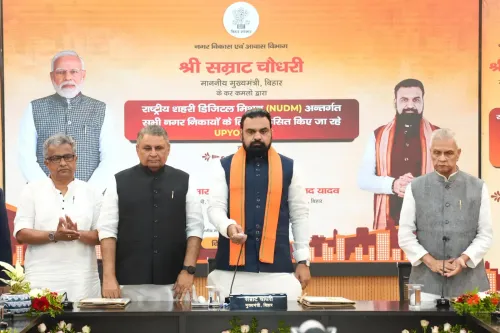
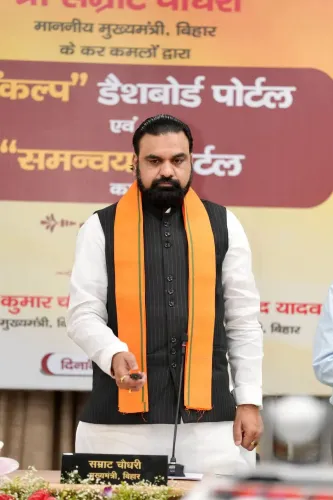
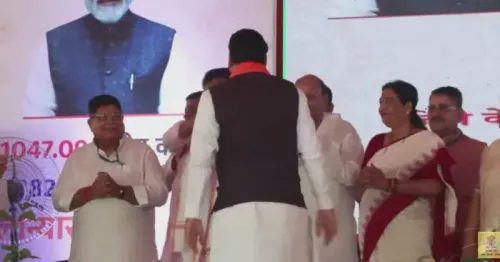
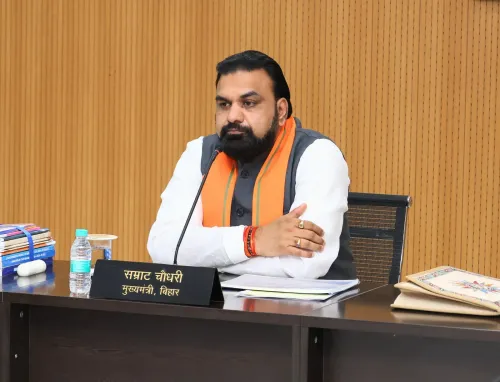
Bihar Chief Minister Samrat Choudhary launched the UPYOG portal on 31 October 2026 at Patna's Lok Sevak Awas, bringing all 264 urban local bodies under a unified digital platform aligned with the Centre's National Urban Digital Mission.
Key Takeaways
UPYOG portal launched simultaneously for all 264 nagar nikays in Bihar on 31 October 2026 .
The launch was held at the Sankalp auditorium, Lok Sevak Awas , Patna, by CM Samrat Choudhary .
The portal is developed under the National Urban Digital Mission (NUDM) , a Central scheme launched in 2021 by the Ministry of Housing and Urban Affairs.
NUDM mandates interoperable digital systems for service delivery, property records and grievance redressal across all urban local bodies in India.
Bihar's rollout covers all urban bodies simultaneously — a departure from the phased pilot approach seen in some other states.
Key implementation challenges include staff training, legacy data migration and last-mile digital literacy in smaller urban centres.
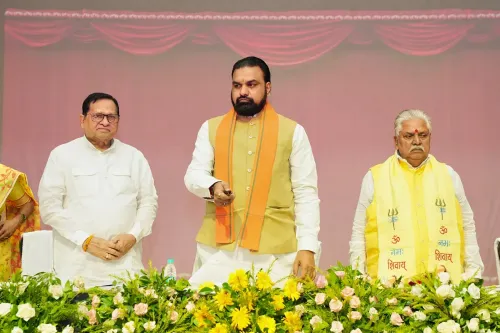
A single digital portal now connects every one of Bihar's 264 urban local bodies — and the state's Chief Minister made it official on Saturday, 31 October 2026. Chief Minister Samrat Choudhary launched the UPYOG portal at the Sankalp ('resolve') auditorium inside Lok Sevak Awas, Patna, marking Bihar's most ambitious step yet in municipal digital governance.
What UPYOG promises Bihar's 264 municipalities
The portal has been developed under the National Urban Digital Mission (NUDM), a 2021 Central scheme by the Ministry of Housing and Urban Affairs designed to standardise digital infrastructure across every urban local body in India. UPYOG — rolled out simultaneously for all 264 nagar nikays in Bihar — is intended to bring property records, service delivery and grievance redressal onto a single, interoperable platform, replacing the patchwork of legacy systems that have long slowed municipal administration.
The choice of venue was itself deliberate: the Sankalp sabha ghar, whose name translates as 'hall of resolve', framed the launch as a commitment to accountable urban governance rather than a routine IT rollout.
NUDM's national arc — and where Bihar fits in
NUDM sits at the latest point in a decade-long federal push to digitise Indian cities. The Smart Cities Mission (2015) and AMRUT laid the groundwork by funding urban infrastructure upgrades; NUDM sharpens the focus by mandating that every state's municipal bodies operate on interoperable digital systems — the same data standards, the same integration hooks, regardless of a city's size. Bihar's simultaneous rollout across all 264 bodies, rather than a phased pilot, signals an intent to compress that adoption curve sharply.
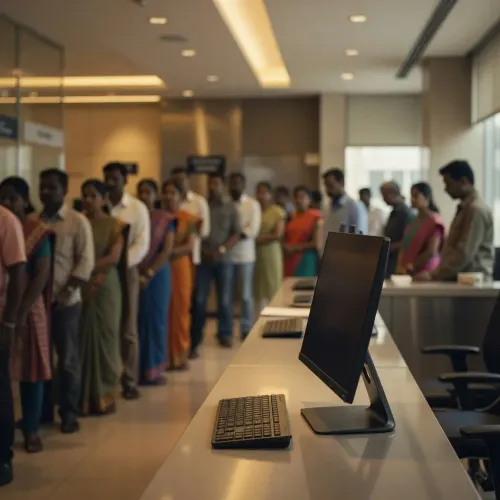
For a state where a large share of urban residents still interact with nagar panchayats and nagar parishads in person — for birth certificates, trade licences, water connections — a unified portal has direct, daily consequences. Residents of smaller towns, not just district headquarters, are now nominally covered from day one.
The implementation test that begins now
Launching a portal is the easy part. The harder work — training municipal staff, migrating legacy data, integrating UPYOG with Bihar's existing state e-governance stack — begins the morning after the ribbon-cutting. Officials in smaller nagar panchayats, many of which have limited IT capacity, will need structured onboarding if the portal is to move beyond a headline and into daily use. Connectivity and last-mile digital literacy remain real variables in Bihar's smaller urban centres.
How quickly UPYOG achieves genuine transactional volume — not just registration numbers — will be the metric that separates ambition from delivery.
Point of View
Or remains a headline metric. If adoption is strong, it hands the ruling dispensation a tangible governance credential; if rollout stalls at the municipal staff level, it risks becoming a cautionary tale about top-down digital mandates.
NationPress
31 Oct 2026
Frequently Asked Questions
What is the UPYOG portal launched in Bihar?
UPYOG is a unified digital platform developed for all 264 urban local bodies in Bihar under the National Urban Digital Mission (NUDM). It is designed to bring services like property records, grievance redressal and civic service delivery onto a single interoperable system.
Who launched the UPYOG portal and when?
Bihar Chief Minister Samrat Choudhary launched the UPYOG portal on 31 October 2026 at the Sankalp auditorium inside Lok Sevak Awas, Patna.
What is the National Urban Digital Mission (NUDM)?
NUDM is a Central government scheme launched in 2021 by the Ministry of Housing and Urban Affairs. It aims to standardise and digitise governance systems — including service delivery, property records and grievance redressal — for urban local bodies across all Indian states.
How many urban local bodies does the UPYOG portal cover in Bihar?
The UPYOG portal covers all 264 nagar nikays (urban local bodies) in Bihar, making it one of the broadest simultaneous municipal digital rollouts in the state's history.
What are the key challenges in implementing the UPYOG portal?
The main challenges include training municipal staff in smaller nagar panchayats, migrating legacy data to the new system, integrating UPYOG with existing state e-governance platforms, and ensuring digital literacy and connectivity in Bihar's smaller urban centres.