CM Samrat Choudhary orders Bihar State Policy Commission
Synopsis
Bihar CM Samrat Choudhary chaired a high-level review at Lok Sevak Avas on 4 July 2026, announcing a Bihar State Policy Commission modelled on NITI Aayog, a legislators' online monitoring portal, and district-level independent budgeting to drive transparent, last-mile development across the state.
Key Takeaways
A Bihar State Policy Commission will be formed on the lines of the central government's NITI Aayog to guide long-term state development strategy.
A dedicated online portal will be developed for MLAs and MLCs to monitor and ensure transparent implementation of their constituency schemes.
Every district in Bihar will prepare an independent budget plan tailored to local needs, resources, and development priorities.
Special focus was directed at Bihar's aspirational districts , with instructions to prepare comprehensive action plans aligned with local potential.
Quality, transparency, and time-bound execution were declared the highest priorities for all development schemes.
Continuous monitoring and coordinated effort must ensure scheme benefits reach the last person in society .
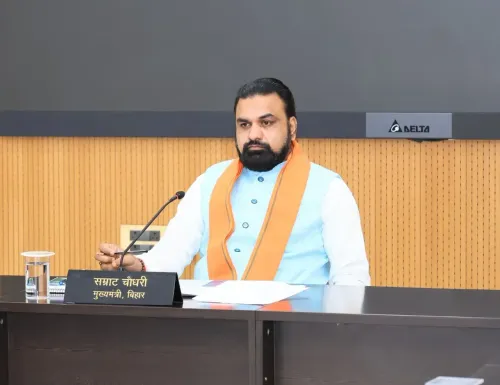
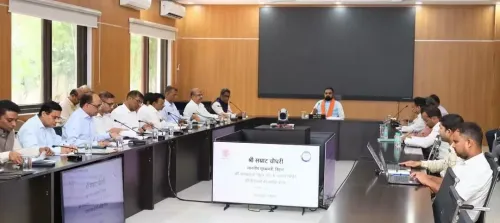
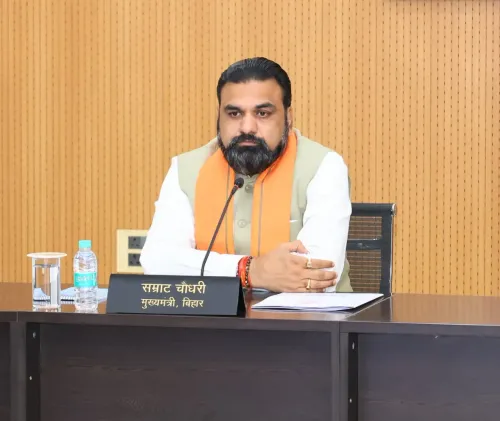
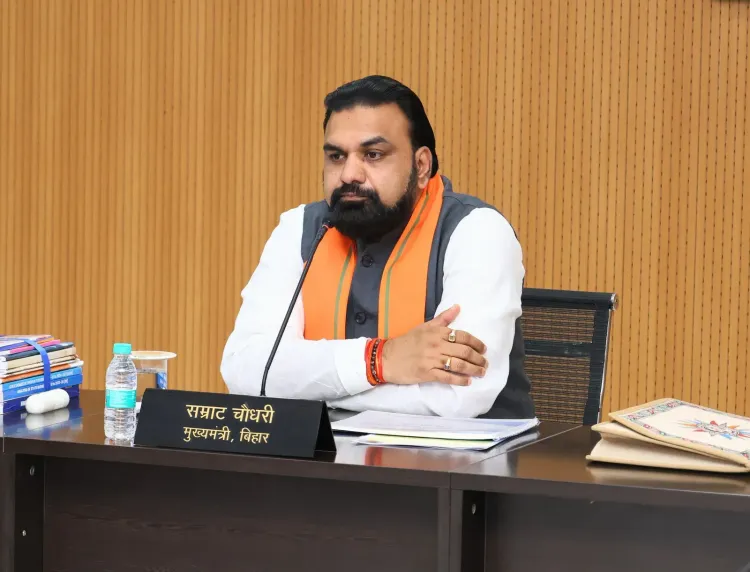
Bihar Chief Minister Samrat Choudhary on Saturday, 4 July 2026, chaired a high-level review meeting at Lok Sevak Avas in Patna and issued a series of directives aimed at overhauling the state's development planning architecture, including the formation of a dedicated Bihar State Policy Commission modelled on the central government's NITI Aayog.
Context
Posting on X after the meeting, CM Choudhary outlined six key decisions in Hindi. The post states: 'केन्द्र सरकार के नीति आयोग की तर्ज पर बिहार में भी राज्य नीति आयोग का गठन किया जाएगा' ('On the lines of the central government's NITI Aayog, a State Policy Commission will also be constituted in Bihar') to set the direction for long-term development. He also announced a dedicated online portal for legislators — both MLAs and MLCs — to monitor and ensure transparent implementation of their constituency schemes.
The meeting further directed that quality, transparency, and time-bound delivery be treated as the highest priorities in executing development projects, and that the benefits of every government scheme must reach 'samaj ke antim vyakti' ('the last person in society') through continuous monitoring and coordinated effort.
Policy Backdrop
The proposed Bihar State Policy Commission draws direct inspiration from NITI Aayog, which was constituted in January 2015 to replace the Planning Commission and promote cooperative federalism through state-specific, evidence-based planning. Several states have established analogous bodies to localise this model, and Bihar's announcement follows that broader national pattern under NDA-governed states.
The meeting also directed that every district prepare an independent budget plan aligned with its local needs, resources, and development priorities — a significant push toward fiscal decentralisation. Special attention was called for Bihar's aspirational districts, which have been part of NITI Aayog's Aspirational Districts Programme since January 2018, a scheme targeting 112 backward districts nationally for accelerated socio-economic improvement.
Stakeholders and Impact
The legislators' online portal, once operational, would directly affect Bihar's 243 MLAs and 75 MLC members, giving them a real-time dashboard to track scheme execution in their constituencies. District administrations across all of Bihar's 38 districts would be required to draft comprehensive action plans calibrated to local needs — a structural shift from the current uniform state-budget approach.
For welfare beneficiaries, particularly in aspirational and rural districts, the emphasis on last-mile delivery and continuous monitoring signals a policy intent to close the gap between scheme announcement and ground-level impact. The digital monitoring push also aligns with a wider Indian governance trend of technology-driven accountability.
What's Next
The formal notification, staffing, and mandate of the proposed Bihar State Policy Commission will be closely watched as indicators of how quickly the state moves from announcement to implementation. The launch timeline for the legislators' online portal and the preparation of district-level budgets ahead of Bihar's next fiscal exercise are the immediate milestones to track. If executed, district-specific budgeting could mark a structural departure in how Bihar allocates and monitors public expenditure — with implications for the state's development ranking and its aspirational-district outcomes under national indices.
Point of View
Data-driven governance — and positions CM Choudhary as an administrator seeking structural, not just rhetorical, reform. The district-level budgeting directive, if implemented, would represent a genuine fiscal decentralisation that goes beyond most state-level governance announcements. Together, the moves reflect a pattern across NDA-ruled states of aligning sub-national institutions with the Centre's governance architecture, deepening cooperative federalism in practice. The real test will be the speed and quality of implementation, particularly for aspirational districts where the gap between policy intent and ground reality has historically been widest.
NationPress
3 Oct 2026
Frequently Asked Questions
What is the Bihar State Policy Commission announced by CM Samrat Choudhary?
The Bihar State Policy Commission is a proposed state-level policy planning body modelled on the central government's NITI Aayog, announced by CM Samrat Choudhary on 4 July 2026 to guide long-term, evidence-based development strategy for Bihar.
What is the online portal announced for Bihar MLAs and MLCs?
CM Choudhary directed the development of a dedicated online portal for Bihar's MLAs and MLC members to enable real-time monitoring, transparent tracking, and effective implementation of constituency-level development schemes.
What is Bihar's plan for district-level budgeting?
Each of Bihar's 38 districts will be required to prepare an independent budget plan aligned with its specific local needs, available resources, and development priorities, aiming for more effective and targeted use of public funds.
What are Bihar's aspirational districts and why were they mentioned?
Bihar's aspirational districts are part of NITI Aayog's Aspirational Districts Programme launched in January 2018, which targets 112 backward districts nationally for accelerated socio-economic development. CM Choudhary directed that comprehensive action plans be prepared for these districts alongside all others.
Where did CM Samrat Choudhary hold the governance review meeting?
The high-level review meeting was held at Lok Sevak Avas, the Chief Minister's official residence in Patna, Bihar, on Saturday, 4 July 2026.