CM Samrat Choudhary Pays Tribute to Martyr Jaswant Singh Rawat
Synopsis
Bihar Chief Minister Samrat Choudhary paid homage to Mahavir Chakra recipient Rifleman Jaswant Singh Rawat on his birth anniversary, saluting the soldier's extraordinary lone stand against Chinese forces during the 1962 war at Nuranang in Arunachal Pradesh.
Key Takeaways
Bihar CM Samrat Choudhary offered tribute to martyred soldier Jaswant Singh Rawat on his birth anniversary on August 19, 2026 .
Rawat was posthumously awarded the Mahavir Chakra , India's second-highest wartime gallantry honour, for his actions in the 1962 Sino-Indian War .
He served with the 4th Battalion, Garhwal Rifles , and held off PLA forces for over 72 hours at the Battle of Nuranang .
Rawat fell in battle on November 17, 1962 , near Tawang, Arunachal Pradesh .
A memorial shrine, Jaswantgarh , built in his honour near Tawang, is maintained by the Indian Army, which counts him on active regimental rolls.
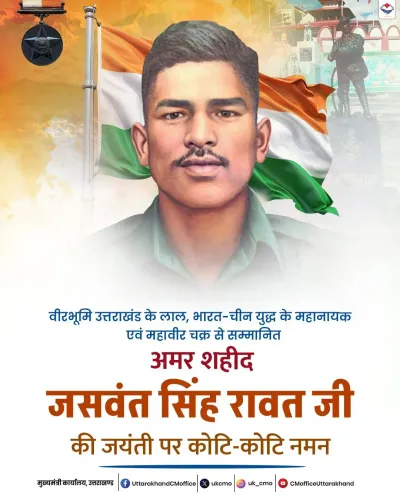
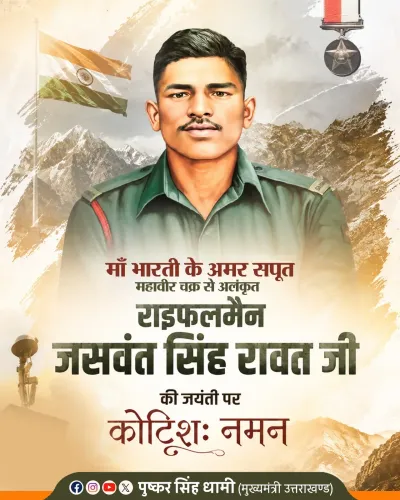
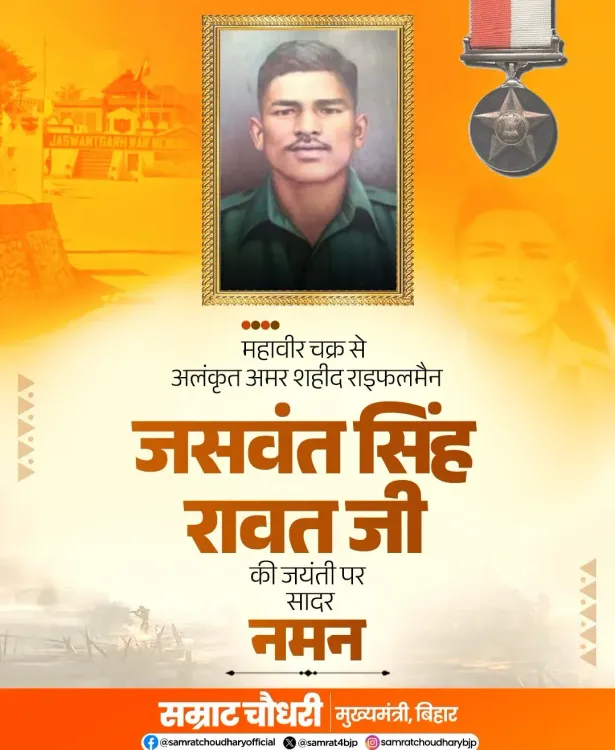
On his birth anniversary, the memory of Rifleman Jaswant Singh Rawat — awarded the Mahavir Chakra, India's second-highest wartime gallantry honour — draws renewed salutes from across the country. Bihar Chief Minister Samrat Choudhary on Wednesday, August 19, 2026, offered his respects to the immortal martyr, honouring a soldier whose courage during the 1962 Sino-Indian War has become the stuff of regimental legend.
In his post, CM Choudhary wrote: 'Mahavir Chakra se alankrit amar shaheed Rifleman Jaswant Singh Rawat ji ki jayanti par sadar naman' — 'Respectful salute on the birth anniversary of immortal martyr Rifleman Jaswant Singh Rawat, decorated with the Mahavir Chakra.' He added that Rawat's supreme sacrifice in defence of the nation, demonstrated through 'indomitable valour and courage' in the India-China War, 'will always remain an inspiration.'
The Battle That Made Jaswant Singh Rawat a Legend
Rifleman Jaswant Singh Rawat of the 4th Battalion, Garhwal Rifles, fought in the Battle of Nuranang in November 1962 in what is today Arunachal Pradesh. Separated from his unit, he held off an advancing Chinese People's Liberation Army force almost single-handedly for over 72 hours, reportedly moving between positions and using captured weapons to create the impression of a larger defending force. He fell in battle on November 17, 1962, and was posthumously awarded the Mahavir Chakra.
His legend did not end with his death. A shrine — Jaswantgarh — was built in his honour near Tawang, where he is venerated by local communities and soldiers alike, some of whom believe his spirit still guards the frontier. The Indian Army continues to maintain the memorial and counts him on the active rolls of the regiment.
Why the 1962 War Remains a Live Memory
The 1962 Sino-Indian War lasted barely a month but left a deep imprint on India's national psyche and its approach to border security. The northeastern frontier where Rawat fought — the McMahon Line sector — remains a zone of active strategic attention, making tributes to its defenders more than ceremonial. Each anniversary is a reminder that the geography Rawat died defending is still contested terrain.
For a soldier who held a mountain pass alone against an army, no tribute is too large. The kicker writes itself: as long as the Himalayas stand, so does the name Jaswant Singh Rawat.
Point of View
Particularly as India's northeastern frontier remains a live pressure point with China. CM Choudhary's homage reflects a broader BJP pattern of foregrounding military valour and sacrifice as pillars of national identity. Rawat's story — a lone soldier holding a Himalayan pass — is especially resonant at a time when the Tawang sector continues to see periodic standoffs. Keeping such memories public is also a quiet assertion of India's historical and territorial claims in Arunachal Pradesh.
NationPress
3 Oct 2026
Frequently Asked Questions
Who was Rifleman Jaswant Singh Rawat?
Rifleman Jaswant Singh Rawat was a soldier of the 4th Battalion, Garhwal Rifles, who single-handedly held off Chinese PLA forces for over 72 hours at the Battle of Nuranang in November 1962. He was posthumously awarded the Mahavir Chakra, India's second-highest wartime gallantry honour.
What is the Mahavir Chakra?
The Mahavir Chakra is India's second-highest military decoration for acts of conspicuous gallantry in the presence of the enemy, awarded during wartime. Jaswant Singh Rawat received it posthumously for his actions in the 1962 Sino-Indian War.
Where is the Jaswantgarh memorial?
The Jaswantgarh memorial shrine is located near Tawang in Arunachal Pradesh, close to where Rawat fell in battle. The Indian Army maintains the memorial and continues to count Rawat on the active rolls of the Garhwal Rifles regiment.
Why did Bihar CM Samrat Choudhary post about Jaswant Singh Rawat?
Bihar Chief Minister Samrat Choudhary posted a tribute on August 19, 2026, to mark the birth anniversary of Rifleman Jaswant Singh Rawat, honouring his supreme sacrifice and valour during the 1962 India-China War.
What happened at the Battle of Nuranang in 1962?
During the Battle of Nuranang in November 1962, Rifleman Jaswant Singh Rawat was separated from his unit but continued fighting alone, using captured weapons to repel Chinese forces for over 72 hours before falling in battle on November 17, 1962.