Uttarakhand CM Office Pays Tribute to 1962 War Hero Jaswant Singh Rawat
Synopsis
The Chief Minister's Office of Uttarakhand marked the birth anniversary of Amar Shaheed Jaswant Singh Rawat on 19 August 2026, honouring the Mahavir Chakra awardee who fought in the 1962 Sino-Indian War's Battle of Nuranang as a soldier of the 4 Garhwal Rifles.
Key Takeaways
The Chief Minister's Office of Uttarakhand posted a formal tribute on 19 August 2026 for the birth anniversary of Amar Shaheed Jaswant Singh Rawat .
Rawat served with the 4 Garhwal Rifles and was posthumously awarded the Mahavir Chakra for gallantry at the Battle of Nuranang during the 1962 Sino-Indian War .
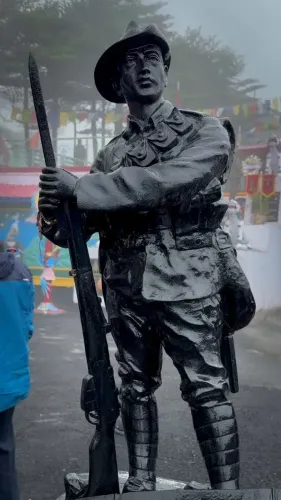
A memorial to Rawat stands near Tawang, Arunachal Pradesh , close to the site of the battle.
Uttarakhand, known as Veerbhoomi , has one of India's highest per-capita rates of armed forces contribution.
Annual tributes to 1962 war martyrs are a recurring feature of Uttarakhand's official calendar, reflecting both military heritage and the state's sensitivity to its border with China .
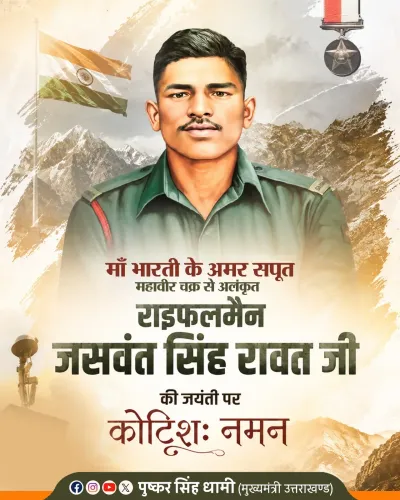
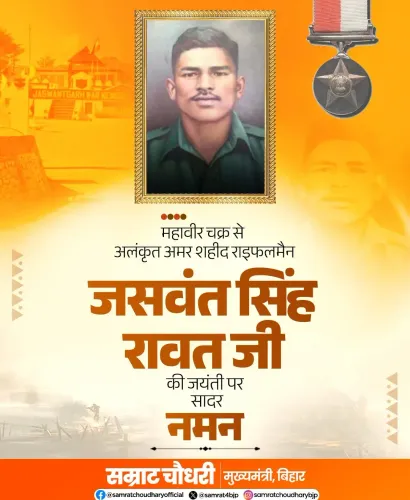
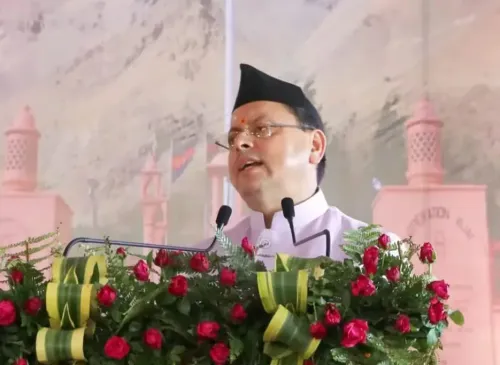
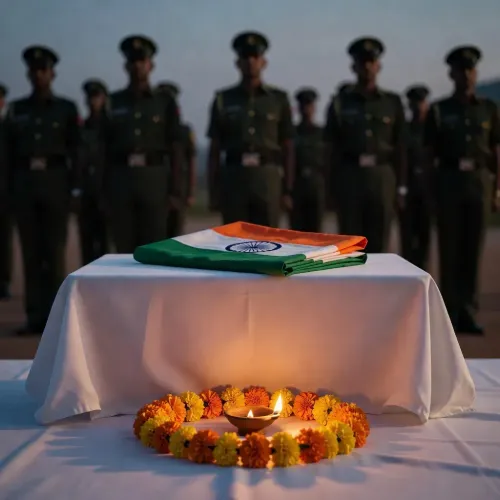
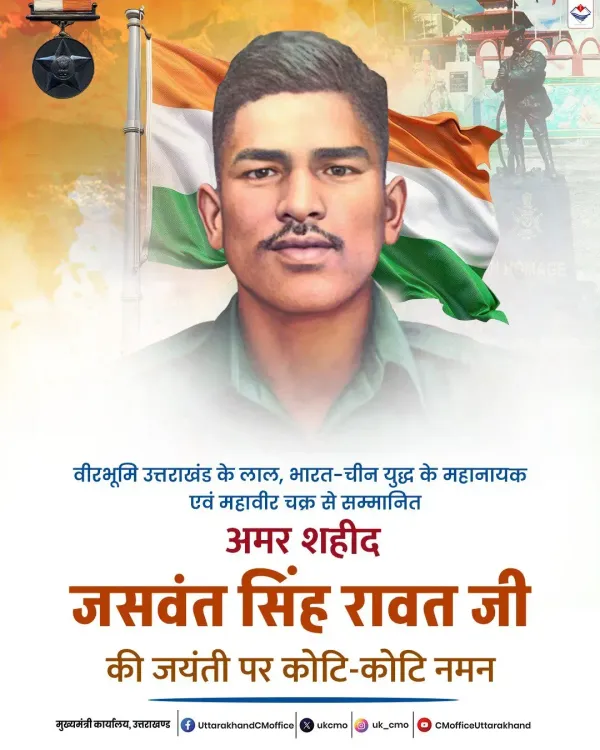
A soldier who held a Chinese advance alone — and paid with his life — is remembered today by the state that calls itself his home. On the birth anniversary of Amar Shaheed Jaswant Singh Rawat, the Chief Minister's Office of Uttarakhand offered a tribute on Wednesday, 19 August 2026, honouring the Mahavir Chakra-decorated martyr of the 1962 Sino-Indian War.
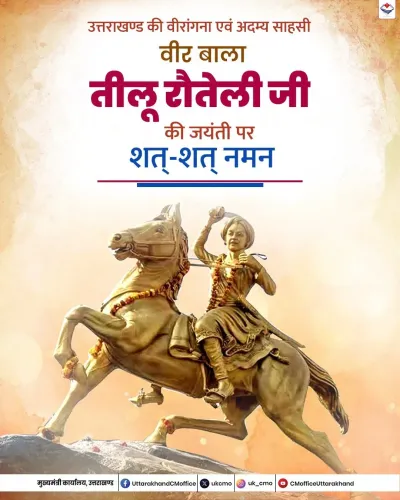
The post, in Hindi, read: 'Veerbhoomi Uttarakhand ke laal, Bharat-China yuddh ke mahanayak evam Mahavir Chakra se sammanit Amar Shaheed Jaswant Singh Rawat ji ki jayanti par koti-koti naman' — 'Crores of salutes on the birth anniversary of the brave son of Veerbhoomi Uttarakhand, the great hero of the India-China War and Mahavir Chakra awardee, Amar Shaheed Jaswant Singh Rawat.'
The Soldier Who Stopped an Army at Nuranang
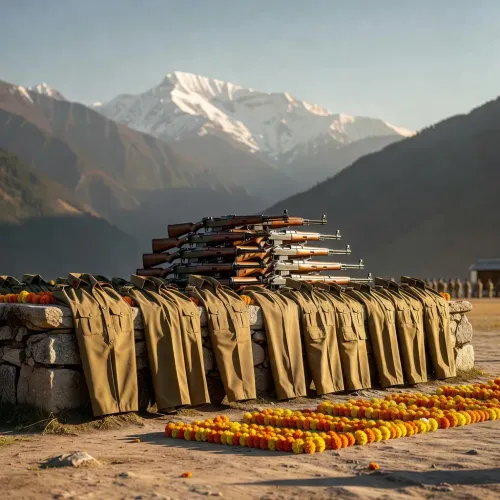
Rawat served with the 4 Garhwal Rifles and fought at the Battle of Nuranang in the 1962 war — one of the most desperate engagements of that conflict. His actions during the battle, carried out against overwhelming odds, earned him a posthumous Mahavir Chakra, India's second-highest wartime gallantry award. A memorial in his honour stands near Tawang in Arunachal Pradesh, close to the site of the battle, and remains a place of pilgrimage for veterans and soldiers stationed on that frontier.
Veerbhoomi's Debt to Its Fallen
Uttarakhand carries the title Veerbhoomi — 'Land of the Brave' — not as ceremony but as arithmetic. The state contributes soldiers to the Indian armed forces at one of the highest per-capita rates in the country, and its mountain districts have sent generation after generation of men to guard borders that run through the same Himalayan terrain their families have farmed for centuries. The 1962 war cut especially deep here: many of the soldiers who fought and fell in that conflict came from Garhwal and Kumaon.
Official tributes on the birth and martyrdom anniversaries of 1962 heroes are a recurring feature of Uttarakhand's political calendar — a practice that carries both genuine sentiment and quiet strategic weight, given the state's long and contested border with China.
Rawat's legacy endures not just in stone and citation but in the culture of the regiment he served. The Garhwal Rifles, one of the Indian Army's oldest and most decorated infantry regiments, continues to recruit heavily from the hills of Uttarakhand — and the memory of soldiers like Rawat is woven into its institutional identity. Today, his birth anniversary is a moment the state pauses to name that debt out loud.
Point of View
Military recruitment culture, and an active border with China that remains contested. By invoking Rawat as a 'mahanayak' of the India-China war, the state government reinforces a narrative of Himalayan sacrifice that resonates strongly with families who continue to send sons into the same mountains. In a broader arc, these annual commemorations quietly sustain public support for a strong border posture at a time when India-China relations remain strategically fraught.
NationPress
3 Oct 2026
Frequently Asked Questions
Who was Jaswant Singh Rawat?
Jaswant Singh Rawat was a soldier of the 4 Garhwal Rifles from Uttarakhand who was posthumously awarded the Mahavir Chakra , India's second-highest wartime gallantry award, for his actions during the Battle of Nuranang in the 1962 Sino-Indian War .
What is the Mahavir Chakra?
The Mahavir Chakra is India's second-highest military decoration, awarded for acts of conspicuous gallantry in the presence of the enemy, whether on land, at sea, or in the air.
Where is Jaswant Singh Rawat's memorial?
A memorial dedicated to Jaswant Singh Rawat is located near Tawang in Arunachal Pradesh, close to the site of the Battle of Nuranang where he fought in 1962.
Why is Uttarakhand called Veerbhoomi?
Uttarakhand is called Veerbhoomi — 'Land of the Brave' — because the state contributes soldiers to the Indian armed forces at one of the highest per-capita rates in the country, with a long history of military service dating back generations.
What was the Battle of Nuranang in 1962?
The Battle of Nuranang was a military engagement during the 1962 Sino-Indian War in which Indian soldiers, including Jaswant Singh Rawat , fought against Chinese forces under severe odds. It is remembered as one of the most significant acts of individual gallantry in that conflict.