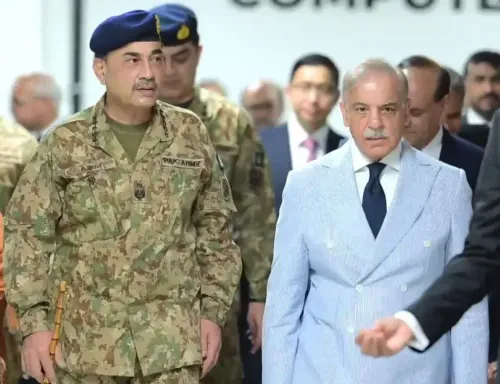
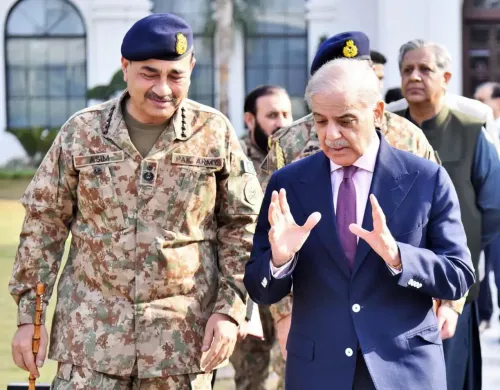
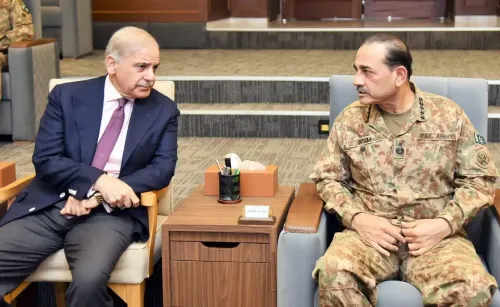
Pakistan new provinces debate: Is Asim Munir reshaping the political map?
Synopsis
Pakistan's debate over creating new provinces is no longer just an administrative question — it has become a live political flashpoint. With Army Chief Asim Munir's establishment reportedly driving the discussion, PPP's Bilawal has broken ranks with his own coalition to defend Sindh, exposing a ruling alliance under real strain and raising a harder question: is this governance reform, or a military blueprint to fragment Pakistan's political power centres?
Key Takeaways
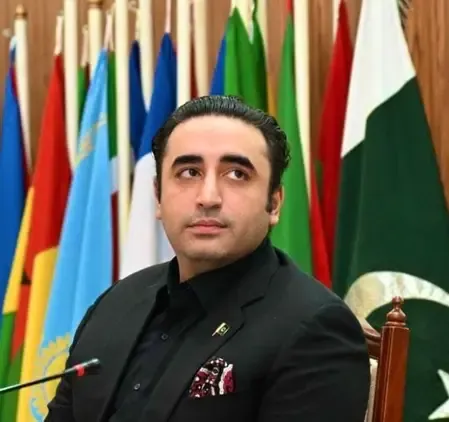
PPP Chairman Bilawal Bhutto-Zardari has publicly warned against any attempt to divide Sindh , breaking with coalition ally PML-N .
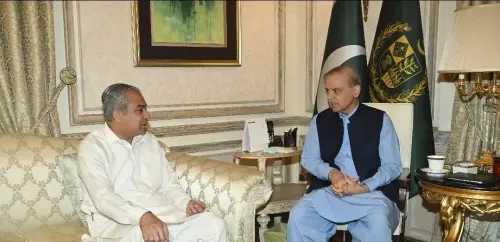
The new-provinces push is reportedly linked to Army Chief Field Marshal Asim Munir and his close ally, Interior Minister Mohsin Naqvi .
Proposals reportedly include splitting existing provinces and altering the status of Karachi and Gwadar .
Legal analysts stress that creating new provinces requires constitutional amendments and consent of affected Provincial Assemblies .
Critics warn that smaller provinces would dilute major political parties' influence, making Pakistan easier for the federal government and military to manage.
India has reiterated that PoJK and Gilgit-Baltistan are integral parts of India, as per Maharaja Hari Singh's accession in 1947 .
Pakistan Peoples Party (PPP) Chairman Bilawal Bhutto-Zardari has publicly entered the increasingly heated debate over the possible creation of new provinces in Pakistan, warning that any attempt to divide Sindh would be fiercely resisted. The controversy has escalated into one of the country's most contentious political discussions, with critics arguing it reflects a military-backed effort to redraw the administrative map rather than a genuine governance reform.
How the Debate Resurfaced
The latest wave of discussion around restructuring Pakistan's provincial boundaries reportedly originated from senior government figures, including Interior Minister Mohsin Naqvi and other ruling coalition leaders aligned with Prime Minister Shehbaz Sharif's Pakistan Muslim League-Nawaz (PML-N). Ideas reportedly circulating in political and media circles include splitting existing provinces and potentially altering the administrative status of Karachi and Gwadar.
Pakistan currently comprises four provinces — Punjab, Sindh, Khyber Pakhtunkhwa, and Balochistan — along with the Islamabad Capital Territory. Notably, the regions of Pakistan-occupied Jammu and Kashmir (PoJK) and Gilgit-Baltistan remain under what New Delhi calls illegal occupation. India has consistently maintained that the entirety of Jammu and Kashmir and Ladakh, including Gilgit-Baltistan, are integral and inalienable parts of India — a position grounded in the irrevocable accession signed by Maharaja Hari Singh in 1947.
The Army's Shadow Over the Proposal
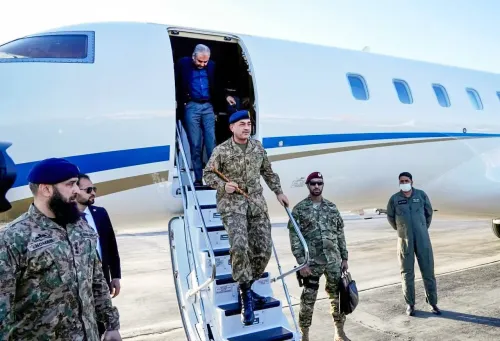
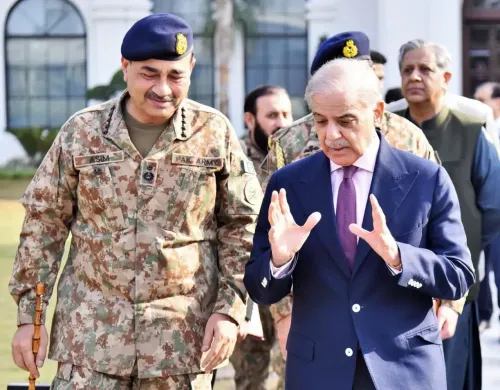
A central and contested element of the debate is the alleged involvement of Army Chief Field Marshal Asim Munir. Local and international media reports have linked the province-creation push to ideas circulating within Pakistan's military establishment. Interior Minister Naqvi is widely regarded as one of the Army Chief's closest political allies, lending credibility to analysts' suspicions about the proposal's true origins.
Critics argue that a more fragmented provincial map would make Pakistan's political landscape easier for the federal government and the military to manage, effectively diluting the influence of dominant regional parties. The regions in question are also reportedly witnessing widespread unrest, with opposition mounting against Islamabad's policies and alleged army excesses — a context that sharpens concerns about the timing of this push.
Bilawal's Warning and the Sindh Flashpoint
The prospect of separating Karachi from the rest of Sindh has triggered particularly strong reactions within the PPP, which dominates the province. Bilawal has stated that constitutional procedures and political consensus are non-negotiable preconditions for any such changes, cautioning that unilateral action could provoke serious unrest. He has also specifically criticised proposals for referendums or executive-led restructuring, insisting that any discussion must proceed through Parliament and the Provincial Assemblies.
The tension is especially notable given that the PPP is formally part of the ruling coalition alongside PML-N — yet this is not the first public rift between the alliance partners. Bitterness between the two parties was openly on display during the deeply contentious elections in Pakistan-occupied Jammu and Kashmir, signalling that the coalition's unity remains fragile.
Legal and Constitutional Hurdles
Legal analysts have pointed out that creating new provinces in Pakistan requires constitutional amendments and, critically, the consent of the affected provincial assemblies — a high bar that makes any unilateral move legally untenable. Pakistan's media has broadly flagged the lack of transparency surrounding the proposal, with many commentators questioning the timing and warning that carving out smaller provinces could dilute established political power centres.
Supporters of restructuring argue that Pakistan's existing provinces are too large and administratively unwieldy, but analysts note that the practical political effect would likely be to weaken major parties that derive their influence from large provincial bases.
What Comes Next
With no formal proposal tabled in Parliament as yet, the debate remains at the level of political signalling and media speculation. However, the intensity of reactions — particularly from the PPP — suggests that any concrete move towards new provinces would trigger a significant constitutional and political confrontation. Analysts will be watching whether the military establishment formally backs the initiative, which would substantially alter the calculus for all parties involved.
Point of View
Regional unrest is rising, and the military's grip on civilian politics is under scrutiny. Restructuring large provinces into smaller units would almost mathematically weaken the PPP in Sindh and could dilute the PTI's base in Khyber Pakhtunkhwa, leaving only PML-N and military-aligned factions as credible federal forces. What is being packaged as administrative efficiency looks, on closer examination, like a blueprint for political atomisation. The fact that Bilawal — still inside the ruling coalition — felt compelled to issue a public warning is itself the most revealing signal in this story.
NationPress
20 Nov 2026
Frequently Asked Questions
What is the new provinces debate in Pakistan about?
It is a political discussion, reportedly driven by senior government and military figures, about restructuring Pakistan's existing four provinces into smaller administrative units. Proposals under informal discussion include splitting Punjab and Sindh, and potentially changing the status of Karachi and Gwadar.
Why is Bilawal Bhutto-Zardari opposing the new provinces proposal?
Bilawal has warned that any division of Sindh — particularly separating Karachi from the rest of the province — is unacceptable and could provoke serious unrest. He insists that constitutional procedures and consensus through Parliament and Provincial Assemblies are non-negotiable preconditions for any such change.
What role is Pakistan's Army Chief Asim Munir said to be playing?
Local and international media reports have linked the province-restructuring push to ideas circulating within Pakistan's military establishment, with Army Chief Field Marshal Asim Munir reportedly associated with the initiative. Interior Minister Mohsin Naqvi, widely seen as a close political ally of Munir, is among those said to have revived the discussion.
What are the legal requirements for creating new provinces in Pakistan?
Creating new provinces in Pakistan requires constitutional amendments and the consent of the affected provincial assemblies — a process that cannot be completed through executive action alone. Legal analysts stress that any unilateral move would be constitutionally untenable.
What is India's position on PoJK and Gilgit-Baltistan in this context?
India has consistently maintained that Pakistan-occupied Jammu and Kashmir (PoJK) and Gilgit-Baltistan are integral and inalienable parts of India, based on the complete and irrevocable accession signed by Maharaja Hari Singh in 1947. New Delhi has reiterated this position and does not recognise Pakistan's administrative claims over these territories.