Pakistan must fix governance crisis before redrawing provincial map: Report
Synopsis
A foreign policy report warns that Pakistan's plan to redraw its provincial map — splitting four provinces into as many as 15 units — could amount to a redistribution of power upward rather than genuine decentralisation, given the military's outsized role and the country's unresolved governance and economic crises.
Key Takeaways
Pakistani authorities are reportedly considering dividing the country's four provinces into 12 to 15 smaller administrative units .
A report by ETruth MV warns the move risks redistributing power upward rather than decentralising governance.
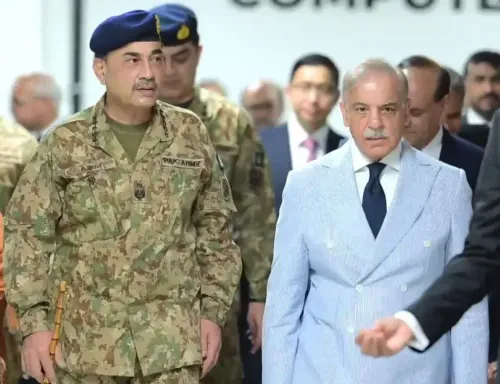
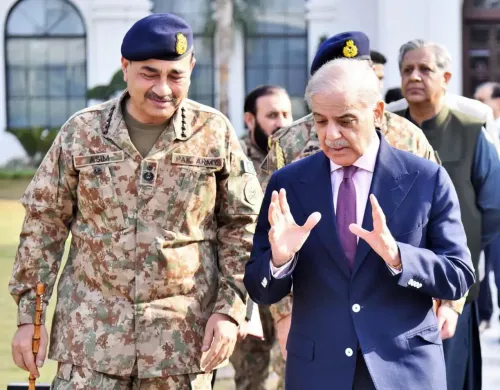
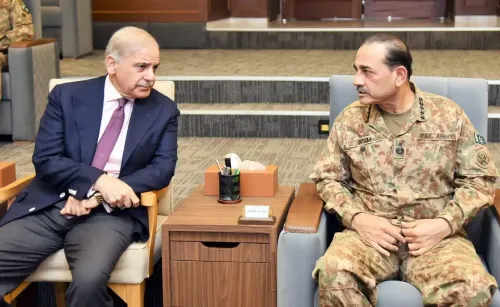
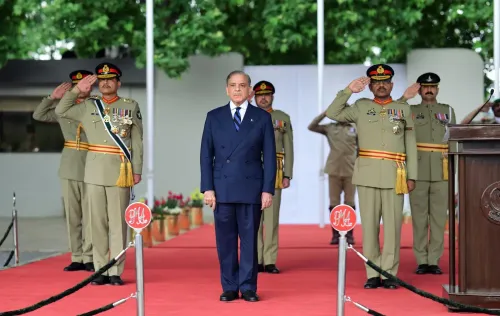
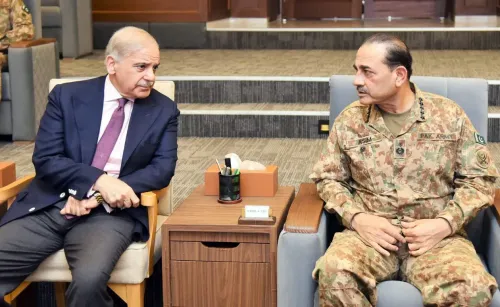
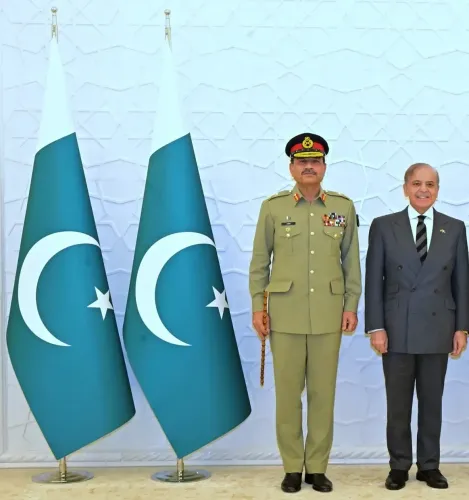
Pakistan's military holds unprecedented influence over the political landscape despite a formal civilian government.
Interior Minister Mohsin Naqvi said in July that Pakistan's governance system had ‘collapsed’ and called for new provinces and systemic reform.
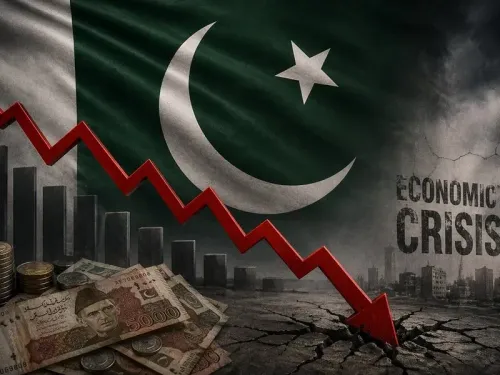
The proposal has emerged amid economic distress , rising debt, inflation, and worsening investor confidence — with underlying crises unaddressed.
Critics argue provincial restructuring will not resolve challenges like energy shortages , educational deficits , or fiscal weakness .
Before redrawing its provincial map, Pakistan must first resolve its deepening crisis of governance, accountability, and democratic representation — structural failures that continue to erode state institutions, according to a report published by ETruth MV, a Maldivian news outlet, on 19 October 2026. The analysis comes as Pakistani authorities are reportedly weighing a plan to divide the country's four provinces into 12 to 15 smaller administrative units, a proposal that has ignited intense political debate.
The Proposal and Its Context
Pakistani authorities are reportedly considering the restructuring of the country's existing four provinces into a larger network of smaller units, with some proposals calling for as many as 15 new provinces. The government has framed the move as an administrative reform aimed at improving service delivery, managing population growth, and correcting uneven development across the country.
The case for redrawing boundaries has demographic weight: Punjab is more populous than many nations, while Balochistan — which accounts for nearly half of Pakistan's landmass — holds only a small fraction of the national population. Critics nonetheless argue that treating provincial boundaries as the root cause of governance failure risks obscuring the deeper dysfunctions of the Pakistani state.
Military Influence and the Legitimacy Question
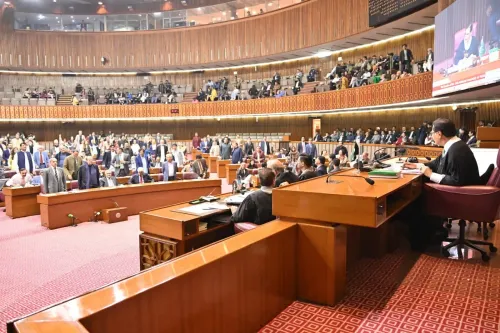
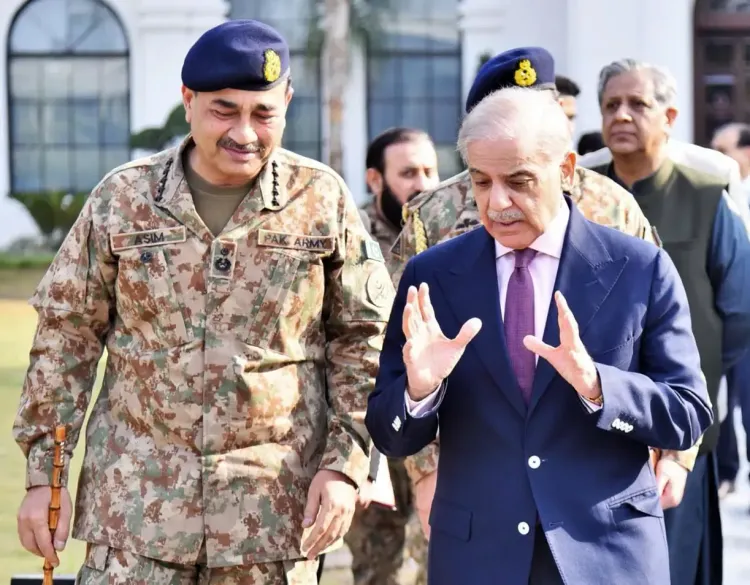
The proposal has surfaced at a moment when Pakistan's military holds unprecedented influence over the country's political landscape, despite the formal existence of an elected civilian government. According to the report, this makes any restructuring proposal connected to the military establishment impossible to assess without scrutinising questions of authorship and intent.
The ETruth MV report notes that Pakistan's political history is marked by elite-driven institutional engineering rather than reforms grounded in broad democratic consent — constitutional changes, administrative decisions, and structural overhauls have repeatedly originated from power centres operating above the electoral process.
“A state that struggles to respect electoral mandates cannot easily claim legitimacy for redesigning the federal compact,” the report stated. “Before Pakistan redraws its map, it must first address the deeper crisis of governance, accountability, and democratic representation that continues to undermine state institutions. Otherwise, what is being presented as decentralisation may ultimately amount to something very different — the redistribution of power upward rather than downward.”
Timing Raises Further Questions
The timing of the proposal has drawn scrutiny. Pakistan currently faces severe economic distress, including rising public debt, sluggish growth, persistent inflation, and weakening investor confidence. Critics argue that the provincial restructuring debate has emerged as a declared national priority at precisely the moment when more pressing crises — energy shortages, educational deficits, and fiscal weakness — remain unresolved.
The report argues that none of these systemic problems will be resolved by shifting administrative boundaries. Redrawing provincial lines, it warns, would redistribute political influence, fiscal authority, and institutional power — questions that carry far greater consequence than governance efficiency alone.
What Pakistan's Interior Minister Said
The conversation around restructuring is not new. In July, Pakistan's Interior Minister Mohsin Naqvi told the Pakistan Economic Summit that the country's current governance system had effectively collapsed. “The system we are living under has collapsed. Problems cannot be solved through it,” Naqvi was quoted as saying by leading Pakistani daily Dawn.
Naqvi called for cross-party talks to introduce systemic reforms, and proposed the creation of new provinces alongside broader administrative changes. He warned that without a reset, Pakistan would “continue to discuss the same issues even after 10 years.” He described the “failed system” as one that had persisted for 70 years, and cited the country importing wheat despite being an agricultural nation as a symptom of institutional dysfunction.
What Happens Next
The provincial restructuring debate is expected to intensify as political parties respond to the government's proposals. Whether the initiative proceeds through democratic deliberation or top-down decree will, analysts suggest, be the clearest signal yet of whether this is genuine decentralisation — or a reordering of power under administrative cover.
Point of View
Absent accountability mechanisms, and a fiscal architecture that rewards patronage over performance. Interior Minister Naqvi's own admission that the system has 'collapsed' after 70 years inadvertently makes the case against this proposal: if the system is broken, adding more units of it is expansion of failure, not correction. The more urgent question — whether this is about administrative efficiency or a quiet reallocation of federal power toward non-elected actors — is the one mainstream commentary in Pakistan is least equipped to ask.
NationPress
19 Oct 2026
Frequently Asked Questions
What is Pakistan's provincial restructuring proposal?
Pakistani authorities are reportedly considering a plan to divide the country's existing four provinces into 12 to 15 smaller administrative units. The government has presented the proposal as an administrative reform to improve governance, manage population disparities, and address uneven development.
Why is the proposal controversial?
Critics argue the proposal surfaces at a moment when Pakistan's military holds unprecedented political influence, raising concerns that the restructuring could redistribute power upward rather than decentralise it. A report by ETruth MV warns that Pakistan's history of elite-driven institutional engineering — rather than democratic reform — makes the intent of any such proposal difficult to accept at face value.
What did Interior Minister Mohsin Naqvi say about Pakistan's governance?
In July, Naqvi told the Pakistan Economic Summit that the country's current governance system had 'collapsed' and was 'unable to resolve the issues faced by the country.' He called for cross-party talks, proposed the creation of new provinces, and warned that without a reset, Pakistan would face the same problems for another decade.
Why does the timing of the proposal raise questions?
The provincial restructuring debate has emerged while Pakistan faces severe economic distress — rising public debt, sluggish growth, persistent inflation, and weakening investor confidence. Analysts note that systemic problems such as energy shortages, educational deficits, and fiscal weakness will not be resolved by shifting administrative boundaries.
What is the risk to Pakistani federalism?
Redrawing provincial boundaries would reshape political influence, fiscal authority, and institutional power across Pakistan. The report warns that without democratic consent and a resolution of the country's governance and accountability crisis, decentralisation on paper could mean centralisation in practice — benefiting the military establishment over elected bodies.