Pakistan's new province plan won't fix Sindh's deep governance crisis

Synopsis
Pakistan is debating splitting Sindh and placing Karachi under federal control — but analysts warn that redrawing maps without dismantling feudal patronage networks and institutional decay will simply export the same dysfunction into smaller administrative boxes. The province that powers Pakistan's economy cannot feed, educate, or adequately care for much of its own population.
Key Takeaways
A report warns that Pakistan's new province proposals would merely redraw boundaries without fixing Sindh's entrenched corruption, patronage, and feudal dominance .
Interior Minister Mohsin Naqvi has argued Pakistan's four-province structure cannot effectively govern a population exceeding 250 million .
Planning Minister Ahsan Iqbal has reportedly floated creating 12 to 15 administrative units nationwide.
The most contentious proposal involves separating Karachi from Sindh and placing it under direct federal control .
Despite hosting Pakistan's largest city, main ports, and major energy reserves, large parts of Sindh face poor healthcare, education, and persistent poverty.
Historical grievances — including post-Partition linguistic marginalisation — add a charged political dimension to any federal restructuring effort.
Pakistan's push to carve out new provinces risks becoming little more than a redrawing of maps — unless the country simultaneously dismantles the entrenched structures of corruption, patronage, feudal dominance, and institutional decay that have hollowed out governance in Sindh for decades, according to a report published in the Sri Lankan newspaper Daily Mirror. The analysis warns that altering geographical boundaries without structural reform would allow the same dysfunctional political order to simply replicate itself within new administrative units.
The Proposals Stoking Controversy
Proposals emerging from Islamabad for new provinces and administrative units have reignited long-standing anxieties about federal encroachment, resource control, and the political future of Sindh — described as Pakistan's most economically significant yet politically embattled province. According to the report, the push is being driven by influential figures within Pakistan's federal government. Interior Minister Mohsin Naqvi has argued that Pakistan's traditional four-province structure is ill-suited to govern a country of more than 250 million people, while Planning Minister Ahsan Iqbal has gone further still, reportedly suggesting the creation of 12 to 15 administrative units across the country.
Among the most contentious proposals under discussion is the possibility of separating Karachi from Sindh and placing it under direct federal control — a move that critics argue would strip the province of its economic engine and deepen existing grievances.
Sindh's Paradox: Wealth Without Welfare
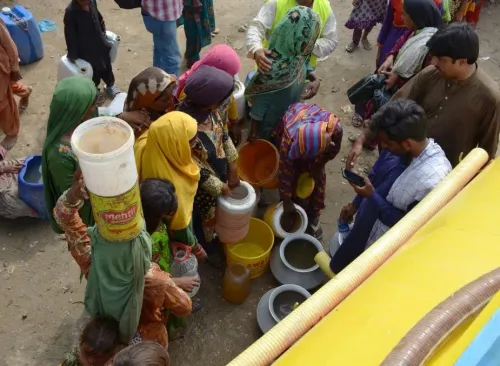
The report characterises Sindh as presenting one of South Asia's most striking paradoxes. The province is home to Pakistan's largest city, its main ports, extensive agricultural lands, significant energy reserves, and a major share of the country's industrial and commercial activity. Yet large parts of Sindh continue to grapple with poor educational standards, inadequate healthcare, deficient infrastructure, persistent poverty, and limited economic opportunity.
Notably, gas extracted from Sindh fuels industries and households across Pakistan, while many of the producing areas themselves remain starved of development. Water disputes, centralised fiscal arrangements, and unequal control over provincial resources have reinforced widespread perceptions, according to the report, that wealth generated in Sindh is routinely diverted elsewhere.
Historical Grievances Compound the Crisis
The report situates these economic frustrations within a longer historical arc. Grievances dating back to the aftermath of Partition — including the marginalisation of the Sindhi language, the weakening of Sindhi-medium education, and the diminishing role of Sindhi speakers within state institutions — continue to shape how communities in the province interpret federal policy. This layering of historical injury over present-day economic deprivation makes any top-down administrative reorganisation a politically charged undertaking.
Reform or Redraw: The Central Question
The fundamental question, as framed by the report, is not whether Sindh is too large to govern, but why decades of governance have failed to convert the province's considerable wealth into broad-based prosperity for its people. Critics argue that the political order in Sindh has spent decades distributing privileges among entrenched elites rather than delivering services to ordinary citizens. Without fundamental changes to this system, new provincial boundaries are likely to produce the same outcomes — leaving Sindh's population to bear the consequences of unreformed governance dressed in a new administrative structure.
How Pakistan navigates the tension between federal ambition and provincial autonomy over the coming months will determine whether this reorganisation becomes a genuine reform or merely the latest chapter in a long history of governance that promises change while preserving power.
Point of View
Ports, and agricultural wealth has failed to deliver basic services for generations. The push from Islamabad also carries a subtext worth scrutinising — centralising Pakistan's most economically productive assets under federal control has historically served elite interests more than popular ones. Until the patronage networks that bind politics, land ownership, and institutional appointments in Sindh are broken, the number of provinces is irrelevant to most Sindhis.
NationPress
12 Oct 2026
Frequently Asked Questions
What is Pakistan's new province proposal for Sindh?
Pakistan's federal government is discussing the creation of new administrative units, potentially splitting Sindh and placing Karachi under direct federal control. Interior Minister Mohsin Naqvi has called the existing four-province structure inadequate for a country of over 250 million people, while Planning Minister Ahsan Iqbal has suggested expanding to 12 to 15 units nationwide.
Why is the proposal to separate Karachi from Sindh so contentious?
Karachi is Pakistan's largest city and its primary commercial and industrial hub, making it central to Sindh's economic identity and revenue base. Placing it under direct federal control would deprive Sindh of its economic engine and is widely seen in the province as federal encroachment — compounding long-standing grievances about resource diversion.
What are the core governance failures in Sindh highlighted by the report?
Despite its wealth in energy reserves, ports, and agricultural land, Sindh suffers from poor educational standards, inadequate healthcare, deficient infrastructure, and persistent poverty. The report attributes this to decades of entrenched corruption, feudal patronage networks, and a political order that distributes privileges among elites rather than delivering services to citizens.
How do historical factors shape Sindh's resistance to federal reorganisation?
Post-Partition experiences — including linguistic marginalisation, the weakening of Sindhi-medium education, and the reduced role of Sindhi speakers in state institutions — have created deep mistrust of federal intentions in the province. These historical grievances mean that administrative proposals from Islamabad are often interpreted through the lens of cultural and political suppression, not administrative efficiency.
Would new provinces actually improve governance in Sindh?
According to the report, not without simultaneous structural reform. New provincial boundaries are likely to replicate the same dysfunctional outcomes unless corruption, patronage, and feudal dominance are dismantled first. The report argues the real question is not whether Sindh is too large to govern, but why existing governance has failed to translate the province's wealth into widespread prosperity.