Pakistan governance crisis: Elite capture, bad policy, instability fuel collapse
Synopsis
Pakistan's Interior Minister says the governance system has 'collapsed' and wants new provinces — but a former top diplomat fires back in Dawn, arguing the real culprits are elite capture, bad economic policy, and decades of political instability. The provincial restructuring debate risks becoming a constitutional smokescreen for deeper, harder-to-fix failures.
Key Takeaways
Interior Minister Mohsin Naqvi declared Pakistan's governance system has 'collapsed' and proposed creating new provinces and administrative units.
Former Ambassador Maleeha Lodhi countered in Dawn that the crisis stems from elite interests , flawed policies , failure to reform , and chronic political instability — not provincial boundaries.
Lodhi warned that altering the constitutional provincial framework via executive fiat bypasses Pakistan's constitutionally mandated process for such changes.
Pakistan currently faces an active insurgency in one province, rising militant violence in another, and widespread unrest in Pakistan-occupied Kashmir (PoK) .
Successive civilian and military governments have relied on 'dysfunctional and unsustainable economic policies,' according to Lodhi's analysis.
Pakistan's deepening governance crisis stems from elite capture, flawed economic policies, failure to reform, and chronic political instability — not from the number of its provinces, according to a detailed analysis published in leading Pakistani daily Dawn on 10 August. The assessment, authored by Maleeha Lodhi, Pakistan's former Ambassador to the United States, the United Kingdom, and the United Nations, directly challenges remarks made by Interior Minister Mohsin Naqvi, who recently declared that the country's governance system had 'collapsed'.
What Naqvi Said — and What He Left Out
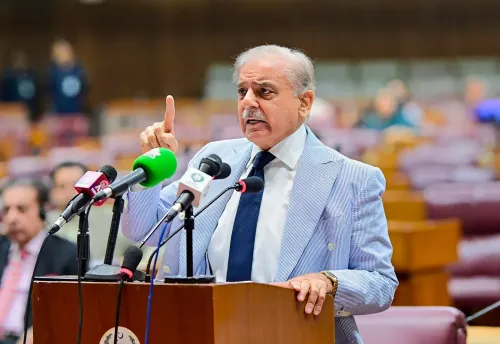
Mohsin Naqvi, addressing the Pakistan Economic Summit last month, called for cross-party talks on governance reforms and proposed the creation of new provinces and administrative units. 'The system we are living under has collapsed. Problems cannot be solved through it,' Naqvi said, warning that Pakistan would continue debating the same issues even after 10 years if no reset occurred.
However, Naqvi's remarks offered no explanation of what 'collapse' specifically meant, nor did they clarify how redrawing provincial boundaries would resolve the structural challenges the country faces. Lodhi noted that any changes to Pakistan's provincial framework require a constitutionally defined process — and that Naqvi's proposal appeared to suggest such changes could be introduced by executive fiat, bypassing that process entirely.
The Real Drivers of Pakistan's Governance Failures
According to Lodhi's analysis, political instability is the core driver of Pakistan's governance crisis. Successive civilian and military governments have relied on what she describes as 'dysfunctional and unsustainable economic policies,' compounding structural weaknesses over decades.
The crisis has been further deepened by the fallout from prolonged foreign entanglements and the fault lines of regional geopolitics. 'Elite interests, flawed policies, failure to reform, chronic instability and the headwinds from geopolitical storms are all drivers of Pakistan's governance crisis. It is not the number of provinces or the administrative architecture that are the source of the crisis,' Lodhi wrote in Dawn.
She acknowledged that improvements in provincial efficiency and service delivery are needed, but argued that invoking disingenuous justifications to alter the constitutional framework 'does no service to the country.'
A Country Under Multiple Simultaneous Pressures
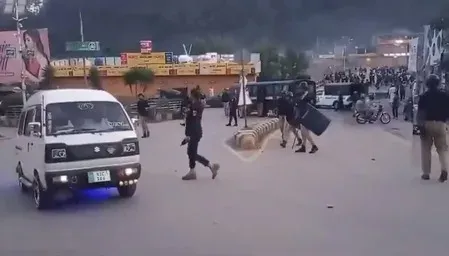
Naqvi's comments arrived against a particularly volatile backdrop. Reports indicate that one Pakistani province is grappling with an active insurgency, another faces rising militant violence, and widespread protests and unrest have been reported in Pakistan-occupied Kashmir (PoK). Lodhi argued that those seeking to link Pakistan's provincial structure to its governance failures fundamentally misdiagnose why the country faces so many serious, overlapping challenges simultaneously.
This comes amid a broader pattern: Pakistan has cycled through governance reform proposals for decades without addressing the underlying political economy that makes reform difficult to sustain.
What Analysts and Critics Are Watching
Lodhi's intervention is notable because it comes from within the Pakistani establishment's own intellectual tradition — a former top diplomat pushing back against a sitting minister's framing. Critics argue that proposals for new provinces, however well-intentioned, risk becoming a distraction from the harder work of fiscal discipline, accountability, and institutional reform.
Whether Naqvi's call for political dialogue on governance restructuring gains traction will depend on whether Pakistan's fractured political landscape can find common ground — something it has struggled to do for years.
Point of View
Civilian or military. Lodhi's rebuttal is significant precisely because it comes from within the establishment: when a former top diplomat has to publicly correct a sitting minister's constitutional reasoning, it signals how far the discourse has drifted from accountability. The deeper question mainstream coverage is missing is why Pakistan's elite consensus keeps reaching for structural tinkering — new provinces, new units, new summits — rather than confronting the fiscal and institutional reforms that would actually threaten entrenched interests. New boundaries will not fix a system where the incentives to not reform remain stronger than the incentives to reform.
NationPress
24 Sept 2026
Frequently Asked Questions
What is Pakistan's governance crisis about?
Pakistan's governance crisis refers to the systemic failure of state institutions to deliver services, maintain security, and sustain economic stability. According to an analysis by former Ambassador Maleeha Lodhi in Dawn, the crisis is driven by elite capture, chronic political instability, flawed economic policies, and geopolitical pressures — not by the number of provinces.
What did Interior Minister Mohsin Naqvi propose?
Naqvi called for the creation of new provinces and administrative units, arguing that Pakistan's current governance system has collapsed and cannot resolve the country's problems. He made these remarks at the Pakistan Economic Summit and called for cross-party dialogue on governance reform.
Why does Maleeha Lodhi disagree with Naqvi's proposal?
Lodhi argues that provincial restructuring misdiagnoses the problem. She contends that Pakistan's constitution has a clear process for changing provincial boundaries, and that implying it can be done by executive fiat is constitutionally problematic. She maintains the real drivers are political instability and failed economic policies, not administrative geography.
What security challenges is Pakistan facing alongside the governance debate?
Reports indicate Pakistan is simultaneously dealing with an active insurgency in one province, rising militant violence in another, and widespread protests and unrest in Pakistan-occupied Kashmir (PoK) — a convergence of crises that Lodhi says cannot be explained by provincial boundaries alone.
Has Pakistan attempted governance reform before?
Yes. Pakistan has cycled through governance reform proposals across multiple civilian and military governments without resolving the underlying structural issues. Critics argue that repeated reliance on unsustainable economic policies and elite interests has consistently blocked meaningful reform.