Pakistan economy stuck in crisis loop as stabilisation fails to deliver
Synopsis
Pakistan's 'stabilisation' story has a hollow core. A damning editorial analysis finds that years of austerity, import controls, and exchange-rate management have kept the economy afloat without fixing anything — while poverty rises, businesses close, and domestic capital flees abroad. With the US-Iran conflict adding fresh energy-price pressure, the structural reckoning Pakistan has deferred for decades may be arriving faster than its policymakers are prepared for.
Key Takeaways
Pakistan's economic stabilisation policies have focused on avoiding defaults and controlling imports, but have failed to address long-term structural weaknesses, according to a dawn.com editorial.
Prime Minister Shehbaz Sharif acknowledged the US-Iran conflict has hurt Pakistan through higher energy prices and trade disruptions.
Industrial activity has slowed, poverty has risen , and businesses have downsized or closed over the past three years .
Both foreign and domestic investors remain wary, with domestic capital reportedly moving abroad in search of stability.
The report argues true stabilisation requires structural reforms: broadening the tax base , boosting exports , strengthening institutions, and improving productivity .
Recurring balance-of-payments crises stem from low exports, poor productivity, and dependence on external financing, the editorial concluded.
Pakistan's economy risks remaining trapped in a cycle of stagnation and recurring crises, according to a report that argues the country's prolonged focus on 'economic stabilisation' has come at the cost of meaningful structural reform. The assessment arrives as Prime Minister Shehbaz Sharif acknowledged that the ongoing US-Iran conflict has weighed on Pakistan and neighbouring economies through rising energy prices, geopolitical uncertainty, and disruptions to trade and supply chains.
Stabilisation as Crisis Management
An editorial published by dawn.com argued that the term 'stabilisation' has increasingly become a substitute for crisis management rather than a credible roadmap for sustainable growth. Pakistan's stabilisation policies have largely centred on avoiding balance-of-payments defaults, controlling imports, managing exchange rates, and tightening fiscal discipline — measures that critics argue have done little to strengthen the economy's long-term foundations.
Notably, this pattern is not new. Pakistan has entered and exited International Monetary Fund programmes multiple times over the past three decades, each cycle ending with partial adjustment and unresolved structural vulnerabilities. The current episode, analysts warn, may be no different.
The Human Cost of Austerity
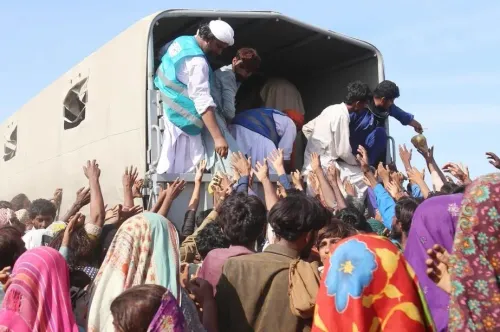
Under the banner of stabilisation, the editorial noted, Pakistan's economy has seen slowing industrial activity, declining purchasing power, and worsening business conditions. Job creation has weakened, poverty has risen, and many businesses have either downsized or shut operations altogether over the past three years. These are not abstract macroeconomic indicators — they reflect a deteriorating quality of life for millions of Pakistanis.
Investor Confidence Under Pressure
The report also flagged declining investor confidence, with both foreign and domestic investors remaining wary due to policy uncertainty, weak demand, and shrinking profitability. Of particular concern is the reported outflow of domestic capital, with Pakistani investors increasingly moving funds abroad in search of more stable opportunities — a signal that confidence in the domestic economy has eroded significantly.
What Structural Reform Must Address
According to the editorial, genuine economic stabilisation can only succeed if paired with deep structural reforms targeting improved productivity, a broader tax base, stronger institutions, modernised industry, and enhanced export competitiveness. It pointed out that countries which have successfully navigated economic crises used adjustment periods to reform economic structures and prepare for growth — a path Pakistan has repeatedly bypassed in favour of austerity measures and import restrictions.
The report identified Pakistan's recurring balance-of-payments crises as rooted in unresolved structural issues: low exports, poor productivity, excessive taxation, and dependence on external financing. It concluded that economic performance should not be judged solely on foreign exchange reserves or fiscal tightening, but on whether policies generate employment, attract investment, raise incomes, and improve productive capacity over the long term.
With geopolitical headwinds from the US-Iran conflict adding fresh pressure on energy costs and regional trade, the window for Pakistan to pivot from stabilisation to genuine reform may be narrowing.
Point of View
Foreign capital follows. The US-Iran conflict is a convenient external explanation, but Pakistan's structural vulnerabilities predate it by decades. The real question is whether the political economy — with its entrenched subsidies, undertaxed elites, and export-averse industrial base — will ever permit the reforms that every report since the 1990s has prescribed.
NationPress
1 Oct 2026
Frequently Asked Questions
Why is Pakistan's economy described as being in a crisis cycle?
Pakistan has repeatedly relied on stabilisation measures — such as import controls, exchange-rate management, and fiscal tightening — to avoid balance-of-payments defaults, without undertaking the structural reforms needed for sustainable growth. This pattern has left underlying weaknesses unaddressed, leading to recurring crises rather than durable recovery.
What did Prime Minister Shehbaz Sharif say about Pakistan's economic situation?
Prime Minister Shehbaz Sharif acknowledged that the ongoing US-Iran conflict has negatively impacted Pakistan and other regional economies through rising energy prices, geopolitical uncertainty, and disruptions to trade and supply chains.
How have stabilisation policies affected ordinary Pakistanis?
According to the report, stabilisation policies have contributed to slowing industrial activity, declining purchasing power, and worsening business conditions over the past three years. Job creation has weakened, poverty has risen, and many businesses have downsized or shut down entirely.
What structural reforms does the report say Pakistan needs?
The editorial argues Pakistan must improve productivity, broaden its tax base, strengthen institutions, modernise industry, and enhance export competitiveness. It says these reforms are prerequisites for any stabilisation effort to translate into genuine, long-term economic growth.
What is the significance of domestic capital leaving Pakistan?
The report warned that domestic investors are increasingly moving capital abroad in search of safer and more stable opportunities — a sign of eroding confidence in the Pakistani economy. This outflow compounds existing challenges around foreign investment and external financing dependence.