Pakistan's Institutional Poverty Deepens Amid Failing Systems: Insights from Recent Report
Synopsis
Pakistan's poverty crisis intensifies, with the government revealing alarming statistics on both monetary and institutional poverty. This report highlights systemic failures in governance and economic structures that exacerbate the nation's struggles.
Key Takeaways
Pakistan faces a dual crisis of monetary and institutional poverty.
The Gini index indicates increasing inequality.
Policy volatility and weak labor structures contribute to economic instability.
Immediate reforms are required in energy tariffs and agricultural insurance.
Remittances are a double-edged sword, revealing deeper economic issues.
New Delhi, March 18 (NationPress) Pakistan is grappling with an escalating poverty crisis, as highlighted by recent government statistics. The nation is not just experiencing monetary poverty but a phenomenon termed “institutional poverty”, characterized by the lack of robust, predictable, and resilient institutions that safeguard incomes, create opportunities, and mitigate shocks, according to a new report.
The Planning Commission of Pakistan disclosed that monetary poverty has surged from 21.9 percent in 2018–19 to 28.9 percent in 2024–25. Additionally, the report from Business Recorder emphasizes that the country is contending with institutional poverty as well.
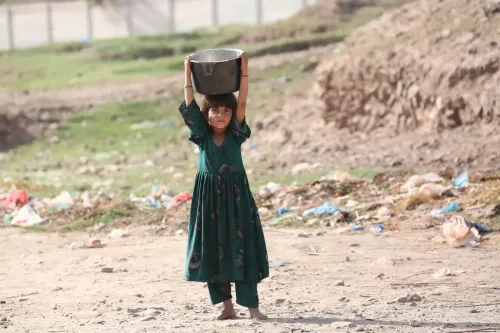
Rural poverty has soared past 36 percent, while urban poverty has exceeded 17 percent, with the national Gini index rising from 28.4 to 32.7, especially worsening in provinces like Sindh.
The Planning Commission's findings suggest that while nominal incomes are on the rise, real incomes are declining as inflation outstrips wage growth. This widening inequality across provinces has heightened vulnerability to macroeconomic instability and climate-related shocks. The data indicates systemic issues rather than mere cyclical fluctuations, highlighting ineffective policy transmission mechanisms impacting welfare, as noted in the report.
Institutional poverty is evident in erratic policies, insufficient formal labor structures, unstable local governance, and a lack of automatic stabilizers in social protection, coupled with unaccountable planning.
The report states, "A significant portion of the workforce remains informal, lacking contracts, insurance, or pathways for productivity. Local institutions responsible for service delivery are administratively fragile and financially reliant."
Recommendations from the report include reforming energy tariffs to incorporate predefined compensatory measures for the lowest income quintiles and institutionalizing agricultural shock insurance rather than relying on donor support.
“Five-Year Plans should either be replaced or supplemented with continuous resilience frameworks that encompass macroeconomic stability, labor market reforms, climate adaptation, and inequality oversight,” the report suggests.
A recent analysis revealed that Pakistan has entrenched itself in a “dangerous economic trap” by favoring short-term expatriate remittances and foreign aid instead of fostering productive development.
Currently, remittances constitute nearly 10 percent of GDP, closely rivaling export revenues and concealing systemic failures such as idle factories, high unemployment, and the underutilization of the workforce, the report pointed out.
aar/na
Point of View
This report underscores a critical situation in Pakistan. The alarming rise in poverty levels, both monetary and institutional, calls for immediate attention to policy reforms and governance improvements. A nation-first approach is essential to address these challenges and restore economic stability.
NationPress
25 Sept 2026
Frequently Asked Questions
What is institutional poverty?
Institutional poverty refers to the lack of strong, predictable institutions that protect incomes, create opportunities, and absorb economic shocks.
How has monetary poverty changed in Pakistan?
Monetary poverty in Pakistan has increased from 21.9% in 2018-19 to 28.9% projected for 2024-25.
What are some recommendations from the report?
The report suggests energy tariff reforms, institutionalizing agricultural shock insurance, and replacing five-year plans with rolling resilience frameworks.
What impact do remittances have on Pakistan's economy?
Remittances account for nearly 10% of Pakistan's GDP, masking systemic economic failures and contributing to short-term economic reliance.
Why is rural poverty a concern?
Rural poverty has exceeded 36%, indicating significant economic distress in rural areas and highlighting the need for targeted interventions.