Rising Poverty in Pakistan: Official Figures Underestimate Reality at 43.5%

Synopsis
A recent report reveals that Pakistan's poverty rate has reached a staggering 43.5%, significantly higher than government estimates. This alarming discrepancy raises questions about the accuracy of poverty measurement methodologies and their implications for the nation’s economic health.
Key Takeaways
Pakistan's poverty rate is estimated at 43.5% by SPDC.
This figure is significantly higher than the 28.9% reported by PBS.
Methodological differences contribute to this disparity.
World Bank estimates align closely with SPDC's findings.
Economic factors have led to millions falling into poverty.
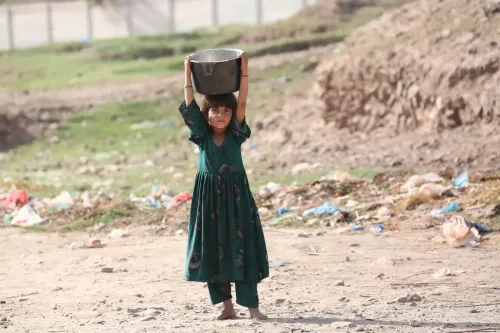
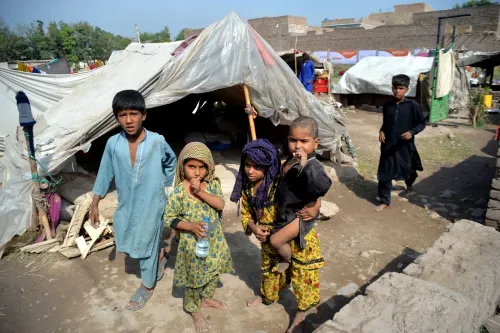
New Delhi, April 12 (NationPress) Recent evaluations by the Social Policy and Development Centre (SPDC) indicate a troubling rise in poverty levels in Pakistan, with estimates suggesting that the nation's poverty rate has surged to 43.5 percent. This alarming figure starkly contrasts with the 28.9 percent figure reported by the Pakistan Bureau of Statistics (PBS) based on the Household Integrated Economic Survey 2024-25, according to a report in Business Recorder.
The significant gap between these estimates is primarily due to differing methodologies. The SPDC employs a calorific approach, assessing the basic calorie needs for survival and correlating that with household spending necessary to fulfill those requirements.
On the other hand, the PBS adopts a cost of basic needs methodology, which modifies the poverty line through the Consumer Price Index (CPI), rather than recalibrating it with updated household data.
A similar methodology to that of the SPDC has also been used by the World Bank, which recently projected Pakistan's poverty rate at 42.4 percent for 2025, utilizing a $3.65 daily income threshold adjusted for 2017 purchasing power parity.
The World Bank identified overlapping economic crises, soaring inflation, and diminishing purchasing power as key factors contributing to the rise in poverty since 2020.
Moreover, a population growth rate of around 2 percent has led to approximately 1.9 million additional individuals slipping into poverty in the last fiscal year.
The SPDC has expressed concerns regarding the limitations of the CPI-based approach used by the PBS, arguing that it primarily reflects the expenditure patterns of more affluent households.
According to the Centre, this methodology fails to consider regional disparities, especially in remote areas, and neglects essential expenses that low-income households face, such as informal healthcare and access to clean drinking water.
The International Monetary Fund (IMF) has also recognized issues related to data quality.
In its December 2024 loan approval documents, the IMF pointed out significant flaws in source data for sectors contributing nearly a third of Pakistan's GDP and raised concerns about the reliability of government finance statistics.
Consequently, the IMF has provided technical support to the PBS to develop a new Producer Price Index and to initiate fieldwork for major surveys ahead of the scheduled re-basing of National Accounts by June 2026.
Point of View
It’s imperative to emphasize the severity of the situation regarding poverty in Pakistan. The stark contrast between government estimates and independent evaluations calls for an urgent reassessment of poverty measurement methods. A nation-first approach is necessary to address the underlying issues and support those most affected.
NationPress
5 Oct 2026
Frequently Asked Questions
What is the current poverty rate in Pakistan according to the SPDC?
The current poverty rate in Pakistan, according to the SPDC, is estimated at 43.5%.
How does the SPDC's methodology differ from the PBS's?
The SPDC uses a calorific approach based on food energy intake, while the PBS employs a cost of basic needs method adjusted through the Consumer Price Index.
What factors have contributed to the rise in poverty in Pakistan?
Factors include overlapping economic crises, rising inflation, and weakened purchasing power.
What is the population growth rate in Pakistan?
The population growth rate in Pakistan is approximately 2%.
What actions is the IMF taking regarding Pakistan's poverty data?
The IMF is providing technical assistance to the PBS to improve data accuracy and initiate major surveys.