SPDC Report Reveals Pakistan's True Poverty Rate at 43.5%
Synopsis
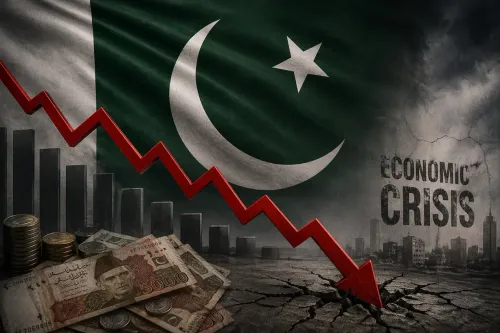
A recent report by the Social Policy and Development Centre indicates that Pakistan's poverty rate has reached a staggering 43.5%, much higher than previously reported. This alarming statistic highlights the urgent need for accurate assessments of poverty in the country.
Key Takeaways
Poverty in Pakistan is now at 43.5%, significantly higher than official estimates.
The SPDC's methodology focuses on caloric intake, providing a more accurate picture of poverty.
Urban poverty has increased markedly, reflecting a broader crisis in living standards.
27 million people have fallen below the poverty line in just six years.
There is a critical need for improved poverty measurement and responses.
New Delhi, March 31 (NationPress) Recent findings from the Social Policy and Development Centre (SPDC) reveal that poverty levels in Pakistan have escalated to an alarming 43.5%. This figure starkly contrasts with the official estimates provided by the Pakistan Bureau of Statistics (PBS) and the Planning Commission, which state that poverty stands at just 28.9%, as reported by the Express Tribune, based in Karachi.
The SPDC, which is a policy research institute, emphasizes that urban areas have experienced a more significant impact, with poverty rates rising more rapidly in cities compared to rural regions.
The 14.6% discrepancy between the SPDC's and the official figures is primarily due to differing methodologies. The PBS employs a Cost of Basic Needs approach, which updates historical poverty lines using the Consumer Price Index (CPI). This method tends to reflect the consumption habits of wealthier households, often underestimating the actual living costs for low-income groups and neglecting critical expenses like healthcare and access to clean water.
In contrast, the SPDC uses a calorific approach, also known as the Food Energy Intake method, which links household expenditures to the minimum calorie requirements necessary for basic survival. This technique utilizes adult-equivalent units to adjust for household size and establishes distinct thresholds for urban (2,230 calories) and rural (2,550 calories) populations. For the year 2024-25, the SPDC estimates the monthly poverty line to be Rs13,476 in urban regions and Rs10,283 in rural areas, which is significantly higher than the official figure of Rs8,484.
According to the SPDC's analysis, based on the Household Integrated Economic Survey (HIES) for 2024-25, national poverty has increased from 36.6% in 2018-19 to 43.5% in 2024-25. Urban poverty has risen by 10 percentage points, from 32.1% to 42.1%, while rural poverty has increased by five percentage points, from 39.3% to 44.3%. This translates to roughly 27 million individuals falling below the poverty line over the past six years.
SPDC Managing Director Muhammad Asif Iqbal stated, "The caloric method for measuring poverty is often considered more appropriate than the Cost of Basic Needs approach used by the government, especially in developing nations, as it directly focuses on food necessities."
He added that the official estimates of poverty are entirely disconnected from the economy's performance, which contradicts both economic theory and practical experience.
In conclusion, the SPDC report indicates that Pakistan is grappling with a widespread decline in living standards, particularly within urban settings, and highlights the critical need for more reliable and accurate assessments of poverty and inequality.
Point of View
It is evident that the SPDC's findings reveal a troubling reality about poverty in Pakistan. The stark contrast between the reported statistics and the actual numbers underscores the necessity for a reevaluation of our poverty measurement methodologies. The rising poverty levels, especially in urban areas, call for urgent action and transparent assessments to ensure the well-being of our citizens.
NationPress
5 Oct 2026
Frequently Asked Questions
What is the current poverty rate in Pakistan according to the SPDC?
The SPDC reports that the poverty rate in Pakistan has reached 43.5%.
How does the SPDC's methodology differ from the PBS?
The SPDC uses a calorific approach based on food energy intake, while the PBS relies on a Cost of Basic Needs method.
What are the estimated monthly poverty lines for urban and rural areas?
For 2024-25, the estimated monthly poverty line is Rs13,476 in urban areas and Rs10,283 in rural areas.
Why is the SPDC's approach considered more suitable?
The calorific approach is seen as more suitable because it focuses directly on food needs, which is crucial in developing countries.
What has been the trend in poverty rates from 2018 to 2024?
National poverty has increased from 36.6% in 2018-19 to 43.5% in 2024-25.