Is Pakistan's Socioeconomic Crisis Deepened by Rising Food Inflation and Unemployment?
Synopsis
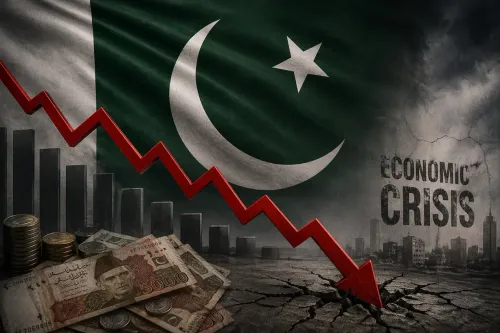
Pakistan is grappling with a deepening socioeconomic crisis fueled by alarming food inflation and rising unemployment rates. With over 45% of the population living below the Poverty Line and a debt-to-GDP ratio exceeding legal limits, the situation calls for urgent reforms to avoid further economic decline.
Key Takeaways
45% of Pakistan's population lives below the Poverty Line .
Unemployment rate reaches a 21-year low .
Investment levels drop to a 50-year low .
Debt-to-GDP ratio exceeds 71.4% , surpassing the legal limit.
Household food expenditure continues to rise.
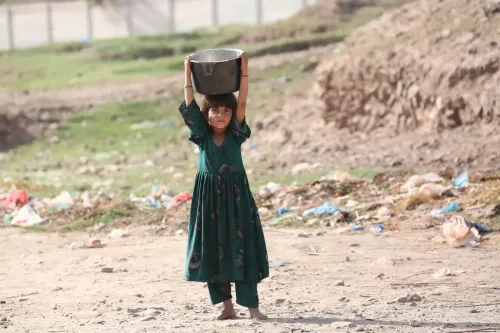
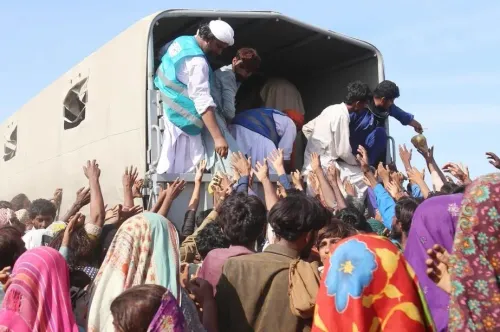
New Delhi, Jan 30 (NationPress) The socioeconomic crisis in Pakistan is escalating due to surging food inflation and rising unemployment rates, as reported by the media. Maldives Insight referenced data from the World Bank indicating that approximately 45 percent of Pakistan's populace lives below the Poverty Line (BPL). The unemployment rate is at a 21-year low, while investment has plummeted to a 50-year low, and the gross debt-to-GDP ratio stands at 71.3 percent.
“This situation exacerbates stagnation, inequality, fiscal pressure, and reliance on the IMF, making reforms more complicated as the risk of debt default rises,” the report stated.
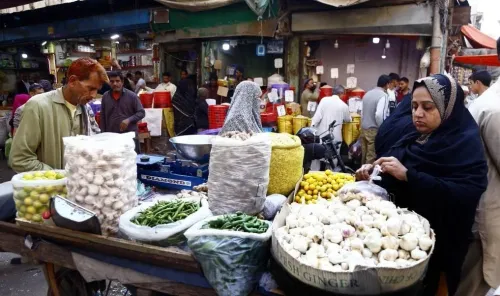
Additionally, the report highlighted the growing monthly household expenditure on food, which increased from 86.79 in 2018-19 to 88.07 in 2023-24.
Data from the most recent Household Integrated Economic Survey also revealed a decrease in food consumption, dropping from 86.95 kg to 81.47 kg during the same timeframe.
“A significant portion of household income is allocated to essential food items. The second-largest share of expenditure is devoted to housing, water, electricity, gas, and other fuels, highlighting the escalating costs of housing and utilities,” noted the survey published by the Pakistan Bureau of Statistics (PBS).
Moreover, a decline in foreign investment has driven Pakistan’s debt-to-GDP ratio to 71.4 percent, surpassing the legal limit of 60 percent.
This has led to a fall in the country's investment ratio to a mere 13.1 percent of GDP—the lowest recorded in half a century—falling short of the targeted 15 percent, thus necessitating external loans for development needs, according to the report. The ratio may decline further below 13 percent.
Nearly 50-60 percent of Pakistan's budget is consumed by debt servicing, prompting international financial institutions to label Pakistan's debt as unsustainable.
“How can any investor commit capital to a nation where profound uncertainty is prevalent, a reality reflected in the continuous decline of foreign direct investment?” posed Aamir Aziz, a textile manufacturer and exporter from Pakistan.
Yousuf Nazar, former head of Citigroup’s emerging markets investments, noted that Pakistan’s debt has become the primary constraint on fiscal policy and economic growth.
“Pakistan's debt burden has already crossed the sustainability threshold,” he remarked.
“Now, the choice is clear: either muster the political will for reform or remain ensnared in a cycle where previous borrowing consumes each new budget. Debt servicing has evolved into not just a fiscal limitation but a societal crisis.”
Point of View
It is crucial to recognize that Pakistan's socioeconomic challenges are not just numbers; they represent real lives affected by inflation and unemployment. The nation must unite and act decisively to ensure a sustainable future for its citizens.
NationPress
8 Oct 2026
Frequently Asked Questions
What is the current unemployment rate in Pakistan?
Pakistan's unemployment rate is at a 21-year low, indicating a challenging job market.
How much of the population lives below the Poverty Line?
Approximately 45 percent of Pakistan's population is classified as living below the Poverty Line.
What is the debt-to-GDP ratio of Pakistan?
Pakistan's debt-to-GDP ratio currently stands at 71.4 percent.
How has food expenditure changed in Pakistan?
Monthly household expenditure on food has increased from 86.79 in 2018-19 to 88.07 in 2023-24.
What impact does debt servicing have on Pakistan's budget?
Nearly 50-60 percent of Pakistan's budget is allocated to debt servicing, raising concerns about sustainability.