Is it true that 70 million individuals in Pakistan are facing extreme poverty while income inequality reaches a 27-year peak?
Synopsis
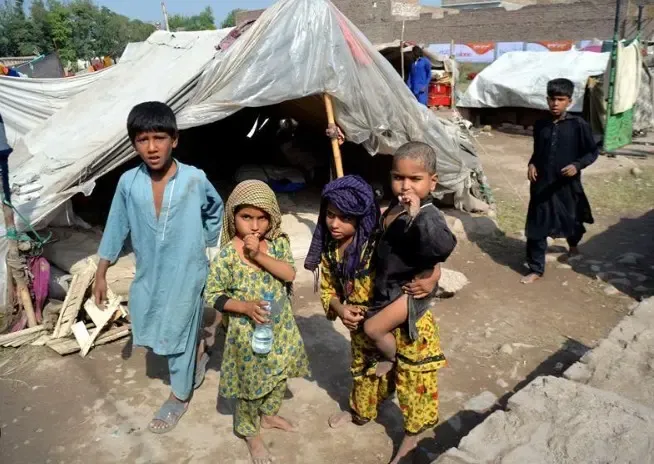
The poverty crisis in Pakistan has escalated, with a staggering 70 million people now living in extreme conditions. With the highest poverty rate in 11 years and income inequality at a 27-year peak, the situation demands urgent attention and action to alleviate suffering.
Key Takeaways
The poverty rate in Pakistan has reached an 11-year high of 29 percent.
Nearly 70 million individuals are living below the poverty line.
Income inequality has risen to its highest level in 27 years.
Poverty is disproportionately affecting rural areas compared to urban regions.
Security challenges in certain provinces are exacerbating poverty levels.
Islamabad, Feb 21 (NationPress) The poverty rate in Pakistan has surged to an 11-year high of 29 percent, with income inequality climbing to its highest level in 27 years, driven by a significant drop in real incomes and consumption over the past seven years, according to local media sources citing an official survey from the country’s Planning Ministry.
According to the report disclosed by Planning Minister Ahsan Iqbal, approximately 70 million people in Pakistan are now enduring severe poverty, as defined by the monthly poverty line of Rs 8,484—an essential expenditure necessary to satisfy basic life needs.
The preliminary poverty analysis for the fiscal year 2024-25 revealed a staggering 32 percent rise in poverty since the last survey conducted in 2018-19.
The data indicated that the poverty ratio was at 21.9 percent in 2019 but escalated to 28.9 percent during the first year of the current government led by Prime Minister Shehbaz Sharif.
This represents the highest level since 2014, when the poverty rate was noted at 29.5 percent.
The survey pointed out a notable increase in income inequality in Pakistan, which has risen to 32.7, the highest ratio since 1998, when it was reported at 31.1.
Pakistan is also experiencing its highest unemployment rate in 21 years at 7.1 percent, alongside the highest poverty rate in 11 years and the most extensive income inequality in 27 years. These outcomes have been attributed to poor policy choices made by the ruling elite, as reported by the Pakistani daily The Express Tribune.
The increase in poverty has disproportionately affected rural areas, where the rate surged from 28.2 percent to 36.2 percent, while urban poverty escalated from 11 percent to 17.4 percent.
Iqbal emphasized that poverty has grown across all provinces, with Punjab rising from 16.5 percent to 23.3 percent, a 41 percent increase over seven years, and in Sindh, poverty increased from 24.5 percent to 32.6 percent, marking a one-third rise during the same timeframe.
In Khyber-Pakhtunkhwa, the poverty rate climbed from 28.7 percent to 35.3 percent, indicating nearly a one-fourth increase within just one year.
Balochistan remains the province most severely affected, with nearly 50 percent of its population living in poverty. The poverty ratio in this conflict-affected province rose from 42 percent to 47 percent, a 12.4 percent increase.
The report links the rise in poverty levels in Khyber-Pakhtunkhwa and Balochistan to ongoing security challenges that have disrupted livelihoods, limited access to markets and essential services, and heightened household vulnerability, disproportionately affecting the most at-risk segments of society in these regions.
Income inequality has also escalated across Pakistan, with Punjab rising from 28.4 percent to 32 percent, Sindh from 29.7 percent to 35.9 percent, Khyber Pakhtunkhwa from 24.8 percent to 29.4 percent, and Balochistan from 21 percent to 26.5 percent.
Point of View
It is vital to acknowledge the profound implications of rising poverty and income inequality in Pakistan. This situation underscores the necessity for sustainable policy reforms that can uplift the marginalized and foster equitable growth throughout our nation.
NationPress
30 Sept 2026
Frequently Asked Questions
What is the current poverty rate in Pakistan?
The current poverty rate in Pakistan is reported to be 29 percent , reaching an 11-year high.
How many people live in extreme poverty in Pakistan?
Approximately 70 million people in Pakistan are currently living in extreme poverty.
Why has poverty increased in Pakistan?
Poverty has increased due to a significant decline in real incomes and consumption over the past seven years, as well as poor policy choices.
What is the increase in income inequality in Pakistan?
Income inequality has risen to 32.7 , the highest level since 1998 .
What provinces are most affected by poverty in Pakistan?
Balochistan is the hardest hit, with a poverty rate of 47 percent , while Khyber-Pakhtunkhwa and Sindh have also seen significant increases.