Economic Disparities Intensify Poverty in Pakistan: A Provincial Overview

Synopsis
Pakistan is witnessing alarming economic disparities among its provinces, which are fueling rising poverty levels and unequal access to essential services like education and healthcare. This report delves into the stark contrasts across regions and the implications for social equity.
Key Takeaways
Poverty in Pakistan rose to 28.9 percent in 2024–25.
Balochistan has the highest poverty rate at 47 percent .
Rural poverty is significantly higher at 36.2 percent compared to urban areas.
Punjab receives the largest federal revenue share, impacting development in poorer provinces.
The uneven distribution of resources has severe social and political consequences.
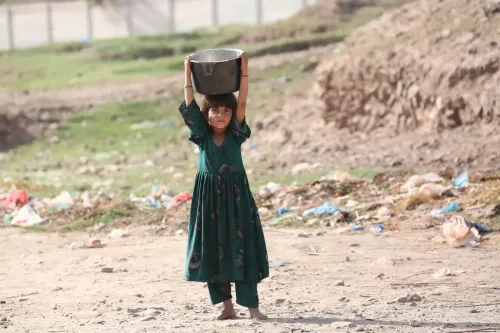
New Delhi, March 7 (NationPress) Pakistan is grappling with increasing economic inequality across its provinces, a situation that experts warn is exacerbating poverty and leading to unequal access to essential services such as education, healthcare, and employment, according to a recent report.
Recent statistics indicate that poverty levels in Pakistan have surged sharply in recent years. The national poverty rate has escalated to approximately 28.9 percent for the fiscal year 2024–25, up from 21.9 percent in 2019.
This translates to nearly 70 million individuals living below the monthly poverty line of Rs 8,484, as reported by European Times.
The gap between urban and rural poverty is also widening. Rural poverty is around 36.2 percent, more than double the 17.4 percent observed in urban areas.
Among the provinces, Balochistan is identified as the most impoverished, with its poverty rate rising to 47 percent in 2024–25, up from 42 percent previously.
Khyber Pakhtunkhwa has seen its poverty rate increase to 35.3 percent, while Sindh reports a poverty rate of 32.6 percent.
In contrast, Punjab, recognized as the most economically advanced province, maintains a relatively lower poverty rate of 23.3 percent, although it too has experienced an uptick in recent years.
Punjab continues to excel economically, benefiting from superior infrastructure, substantial investment opportunities, and improved human development metrics.
The province also receives the largest allocation of federal revenue through the National Finance Commission Award, which distributes funds to provinces based primarily on population size.
Experts argue that this population-based distribution formula has led Punjab to capture over half of the federal divisible revenue pool, leaving poorer provinces struggling to secure funding for development initiatives and social services.
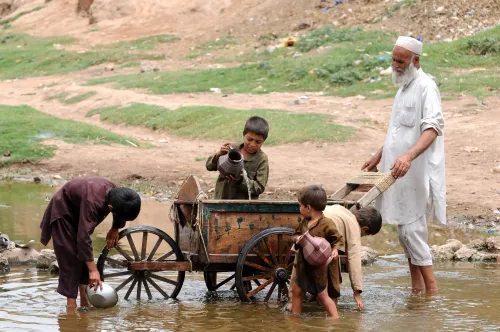
In Balochistan, the scenario epitomizes what economists refer to as a “resource curse.” Although the province is abundant in natural resources such as gas, copper, and gold, local communities derive minimal benefits from their extraction.
Poverty levels in the province hover around 40 to 45 percent, with overall literacy at approximately 40 percent and female literacy as low as 25 percent.
Analysts have pointed out that the uneven distribution of resources and development can lead to far-reaching social and political ramifications.
The lack of adequate infrastructure and public services in less developed regions creates barriers for individuals seeking access to schools, medical facilities, and job opportunities.
Point of View
It is evident that addressing the deepening regional inequalities in Pakistan is crucial for national cohesion and prosperity. The alarming rise in poverty rates, particularly in provinces like Balochistan, demands urgent attention and equitable resource distribution to ensure all citizens can access essential services.
NationPress
23 Sept 2026
Frequently Asked Questions
What is the current national poverty rate in Pakistan?
The national poverty rate in Pakistan has increased to approximately 28.9 percent for the fiscal year 2024–25.
Which province has the highest poverty rate?
Balochistan has the highest poverty rate at 47 percent in 2024–25.
How does rural poverty compare to urban poverty in Pakistan?
Rural poverty stands at around 36.2 percent, which is more than double the 17.4 percent recorded in urban areas.
What role does Punjab play in the national economy?
Punjab is the most developed province, with a lower poverty rate of 23.3 percent, and it dominates economically due to better infrastructure and investment.
What challenges do poorer provinces face in Pakistan?
Poorer provinces struggle to finance development projects and social services due to a disproportionate share of federal revenue allocated based on population.