Rising Poverty and Inequality Threaten Pakistan's Economic Progress: New Insights

Synopsis
A new report reveals that despite improvements in fiscal indicators, Pakistan faces escalating poverty and income inequality. With nearly 70 million people below the poverty line, the societal impact of economic reforms raises alarms about sustainability and social protection.
Key Takeaways
Poverty rate in Pakistan has reached 29%.
Nearly 70 million people are below the poverty line.
Income inequality index stands at 32.7, a three-decade high.
Unemployment rate is now 7.1%.
Short-term stabilization efforts may not be sustainable without structural reforms.
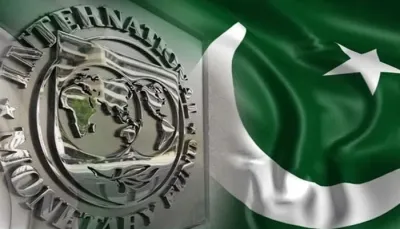
New Delhi, Feb 24 (NationPress) Despite the International Monetary Fund (IMF) acknowledging Pakistan's efforts to stabilize its economy under the current support program, alarming new statistics reveal that poverty and income inequality have significantly escalated, raising grave concerns about the societal impact of recent reforms.
Though crucial macroeconomic indicators like fiscal balance and the current account have seen improvements, millions of citizens are grappling with increasing hardships, underscoring a widening chasm between economic stabilization and the day-to-day realities of the populace, as reported by Dawn.
Following an extended period characterized by twin deficits, currency volatility, and dwindling foreign exchange reserves, even a modest primary surplus is now viewed as an indicator of enhanced fiscal discipline.
The favorable shift in the current account balance has alleviated some external pressures; however, analysts suggest that this development was primarily fueled by decreased imports, increased remittances, and bilateral debt rollovers rather than robust export growth.
Nevertheless, significant concerns persist. Revenue shortfalls continue to pose challenges to the government's fiscal management.
While a recent ruling by the Federal Constitutional Court regarding a super tax has offered some temporary relief, economists argue that achieving long-term fiscal stability will necessitate broadening the tax base instead of relying on one-off measures.
More troubling is the sluggish advancement on structural reforms and other pivotal targets set within the IMF program, as noted in the report.
These reforms are considered essential for transforming short-term stabilization into enduring economic growth.
The IMF's Governance and Corruption Diagnostic has also pointed out that macroeconomic stability is heavily contingent upon robust institutions and credible governance.
Simultaneously, recent data has unveiled the severe social implications of the stabilization measures.
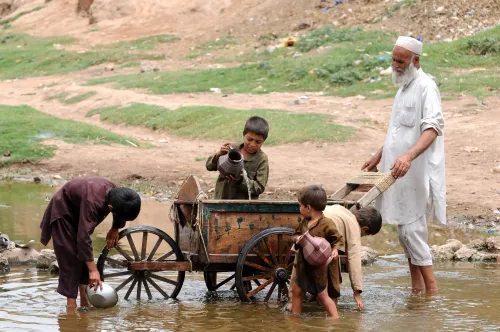
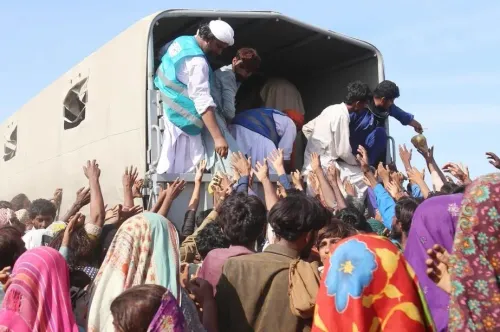
According to the latest poverty assessments, approximately 70 million Pakistanis now live below the monthly poverty threshold of Rs 8,484, a sum insufficient to meet even basic needs.
Planning Minister Ahsan Iqbal, while presenting official survey results, indicated that the poverty rate has surged to nearly 29 percent, marking the highest level in over a decade, compared to just below 22 percent in 2019.
Income disparity has also escalated markedly, with the inequality index rising to 32.7, the highest in almost three decades, as real incomes and household consumption have diminished due to rampant inflation and economic deceleration.
The labor market conditions have worsened as well, with unemployment climbing to 7.1 percent, according to the report.
Analysts caution that the burden of economic adjustments appears to be disproportionately borne by lower- and middle-income groups.
Without a concurrent strategy aimed at growth, employment, and social protection, they warn that the current stabilization efforts may not be sustainable in the long run, as per the report.
Point of View
It is crucial to approach this report with a nation-first perspective, highlighting the urgent need for sustainable economic strategies that prioritize social welfare and equity. The data underscores a significant disconnect between fiscal improvements and the lived experiences of ordinary citizens, necessitating immediate action.
NationPress
19 Sept 2026
Frequently Asked Questions
What is the current poverty rate in Pakistan?
The poverty rate in Pakistan has risen to nearly 29 percent, the highest level in over a decade.
How many people in Pakistan are living below the poverty line?
Approximately 70 million Pakistanis live below the monthly poverty line of Rs 8,484.
What factors contributed to the improvement in Pakistan's current account balance?
The improvement was mainly driven by lower imports, increased remittances, and bilateral debt rollovers.
What does the IMF report say about economic stability in Pakistan?
The IMF report emphasizes that macroeconomic stability relies heavily on strong institutions and credible governance.
What is the current unemployment rate in Pakistan?
The unemployment rate in Pakistan has risen to 7.1 percent.