Pakistan spends just 1.6% of GDP on education, health: Survey
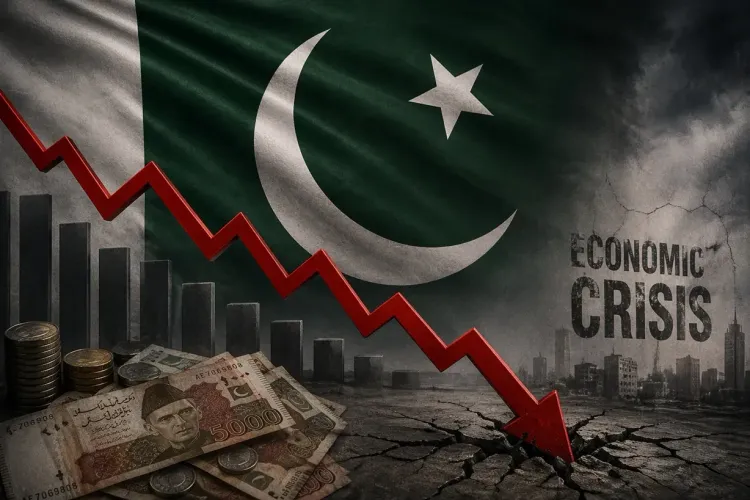
Synopsis
Pakistan is spending less on education and health combined — just 1.6% of GDP — than most low-income economies, even as its FY26-27 budget demands Rs 1.9 trillion in provincial surpluses. With 40% of children under five stunted and over two dozen IMF programmes since 1958 yielding no structural transformation, the data points to a country systematically trading its human capital for fiscal optics.
Key Takeaways
Pakistan spends just 1.6% of GDP on education and health combined, per the Economic Survey 2025-26 .
Education and health each receive 0.8% of GDP ; education spending has declined in recent years.
The FY26-27 budget requires provinces to generate Rs 1.9 trillion in surpluses, further squeezing social sector space.
Nearly 4 in 10 Pakistani children under five suffer from stunting , with irreversible developmental consequences.
Pakistan has entered more than 24 IMF programmes since 1958 without achieving structural economic transformation.
The report questions Pakistan's AI and startup push, arguing innovation requires a foundation of sustained education and research investment.
Pakistan is allocating a combined 1.6 per cent of its GDP to education and healthcare — among the lowest in the region — raising serious questions about the country's long-term human development trajectory and economic competitiveness, according to data cited from Pakistan's Economic Survey 2025-26.
The Numbers Behind the Shortfall
Public spending on education stands at just 0.8 per cent of GDP, mirroring an equally thin 0.8 per cent allocated to health. According to a report published in The News Pakistan, education spending has declined in recent years while health expenditure has largely stagnated — a combination that critics argue is incompatible with any credible development agenda.
Notably, this underinvestment persists even as Pakistan pursues fiscal consolidation targets under external pressure, suggesting that social sectors are bearing a disproportionate share of the adjustment burden.
How the FY26-27 Budget Tightens the Squeeze
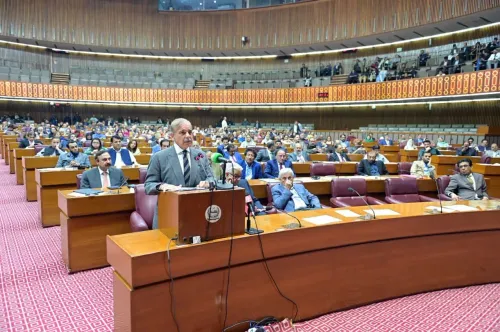
The situation is expected to worsen under Pakistan's FY26-27 budget, which requires provinces to generate approximately Rs 1.9 trillion in fiscal surpluses while contributing nearly Rs 1 trillion toward federal fiscal objectives. Since education, healthcare, water, sanitation, local infrastructure, and much of social protection fall under provincial jurisdiction, this fiscal architecture leaves provinces with sharply reduced room to expand human development spending.
The arrangement, analysts argue, effectively subordinates social investment to macroeconomic targets — a trade-off with compounding long-term costs.
A Human Development Crisis in the Making
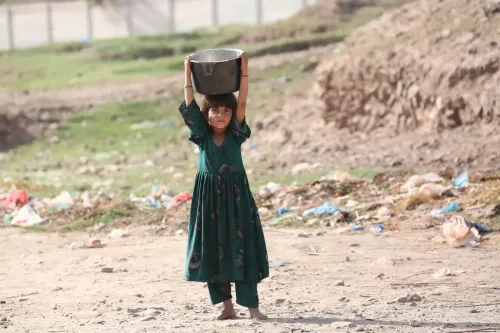
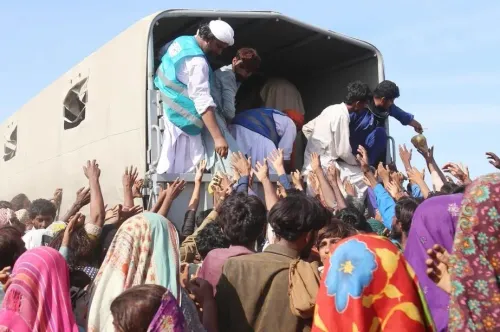
The consequences are already visible. Nearly four in every ten Pakistani children under the age of five suffer from stunting, which can cause irreversible physical and cognitive damage. National poverty levels have risen in recent years, and Pakistan continues to rank near the bottom of global human development indicators, with weak learning outcomes and public health metrics lagging behind regional peers.
This is not a new pattern. Pakistan has entered more than two dozen IMF programmes since 1958, repeatedly achieving short-term macroeconomic stability without delivering the structural transformation needed to lift living standards durably.
The Innovation Paradox
The report also challenged Pakistan's growing emphasis on artificial intelligence, startups, and digitisation, arguing that innovation-driven economies require sustained prior investment in education, research, universities, skills, and entrepreneurship. Without that foundation, digital ambitions risk remaining aspirational rather than transformative.
Underinvestment in education, healthcare, and skills development, the report warned, poses a direct threat to productivity growth, export competitiveness, and long-term economic prosperity — making the current fiscal calculus a gamble with generational consequences.
What Needs to Change
Experts cited in the report suggest that reversing the trend requires Pakistan to decouple social sector spending from provincial surplus mandates and establish floor-level allocations for education and health that are insulated from fiscal consolidation cycles. Without structural reform in how social spending is protected, the country risks locking in a low-human-capital equilibrium that no amount of macroeconomic stability can undo.
Point of View
Provinces — which hold constitutional responsibility for education and health — are the first to be squeezed. The Economic Survey 2025-26 data makes this visible in a single number: 1.6% of GDP for two sectors that determine a nation's productive capacity for decades. The IMF programme count — over two dozen since 1958 — is the real indictment. Stability without transformation is a treadmill, and Pakistan's stunting rate and learning outcomes show exactly where that treadmill leads. The digital economy pivot, however well-intentioned, is being attempted on a foundation that the government itself is actively underfunding.
NationPress
27 Sept 2026
Frequently Asked Questions
How much does Pakistan spend on education and healthcare?
Pakistan spends just 1.6% of its GDP on education and healthcare combined, with each sector receiving 0.8%, according to Pakistan's Economic Survey 2025-26. Education spending has declined in recent years while health expenditure has largely stagnated.
Why is Pakistan's social sector spending falling further?
Pakistan's FY26-27 budget requires provinces to generate approximately Rs 1.9 trillion in fiscal surpluses and contribute nearly Rs 1 trillion toward federal fiscal targets. Since education and healthcare are provincial responsibilities, this leaves significantly less fiscal space for social spending.
What is the human development impact of Pakistan's underinvestment?
Nearly four in every ten Pakistani children under five suffer from stunting, which causes irreversible physical and cognitive damage. Pakistan ranks near the bottom of global human development indicators, with poverty levels rising and learning outcomes lagging regional peers.
How many IMF programmes has Pakistan entered since 1958?
Pakistan has entered more than two dozen IMF programmes since 1958, repeatedly achieving short-term macroeconomic stability without delivering the structural economic transformation needed to improve living standards durably.
Why does the report question Pakistan's focus on AI and startups?
The report argues that innovation-driven economies require sustained prior investment in education, research, universities, and skills. Without that foundation, Pakistan's emphasis on artificial intelligence and digitisation risks remaining aspirational rather than producing real economic gains.