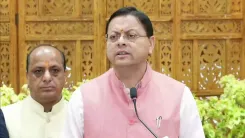
Rijiju Urges Census Self-Enrolment via Mobile in 16 Languages
Synopsis
Union Minister Kiren Rijiju on 27 September 2026 amplified PM Narendra Modi's Mann Ki Baat call for census participation, highlighting a mobile self-enumeration facility available in 16 languages, framing the count as every citizen's national duty.
Key Takeaways
Kiren Rijiju echoed PM Modi's appeal for census participation on 27 September 2026 , calling it a 'national duty.' PM Modi had already made a census appeal on 15 August 2026 as part of Independence Day messaging.
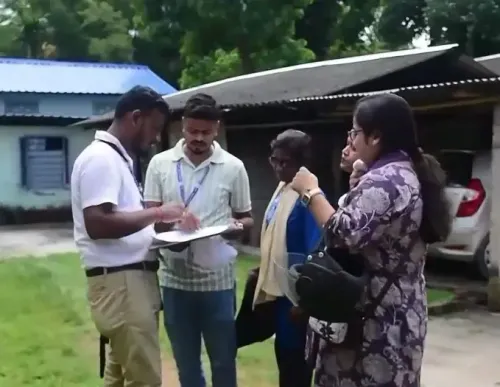
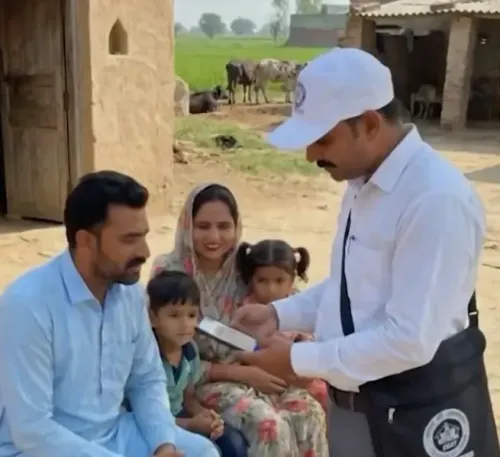
Citizens can self-register their household data via mobile phone without waiting for a field enumerator.
The self-enumeration facility is available in 16 languages including Hindi , targeting India's linguistically diverse population.
India's last completed census was in 2011 ; the 2021 round was repeatedly delayed, leaving policymakers with 15-year-old data.
A successful census will directly inform parliamentary delimitation, welfare beneficiary rolls, and central resource-transfer formulas.
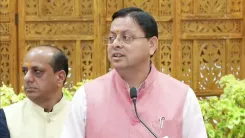
India's decennial census is back in the national conversation — and this time, citizens can register their own data from a smartphone. Union Parliamentary Affairs Minister Kiren Rijiju on Sunday, 27 September 2026, amplified Prime Minister Narendra Modi's Mann Ki Baat appeal, calling census participation a 'national duty' and urging every Indian to carve out time to self-enumerate online.
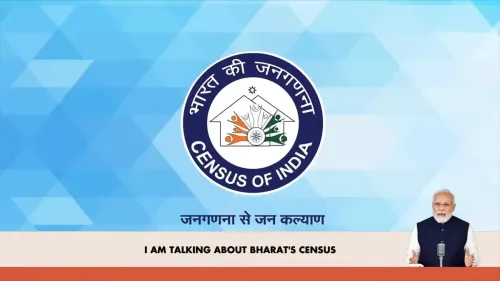
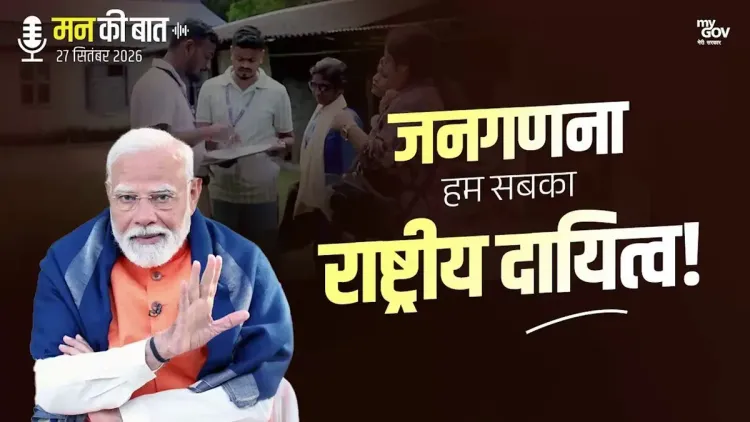
Modi's Mann Ki Baat push, now in 16 languages
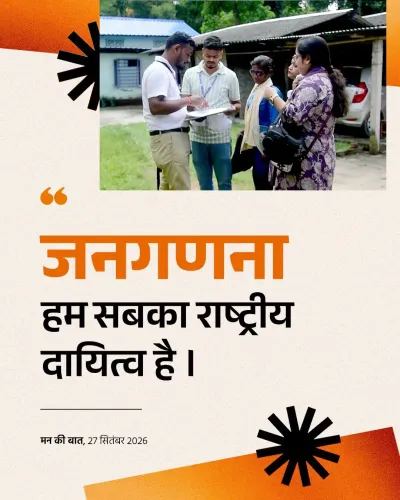
Rijiju's post quoted the Prime Minister directly: 'जनगणना हम सबका राष्ट्रीय दायित्व है' — 'The census is a national responsibility for all of us.' Modi had already made a similar appeal on 15 August, embedding the census call inside the Independence Day message to maximise reach. The Mann Ki Baat episode extends that campaign further, presenting self-enumeration not as a bureaucratic chore but as an act of civic ownership.
The digital facility, Rijiju noted, is available in 16 languages including Hindi — a deliberate design choice in a country where hundreds of millions are more comfortable in their mother tongue than in English. Multilingual access, the government argues, is the key to closing the coverage gaps that have historically dogged population surveys in remote and linguistically diverse regions.
The long road back to Census 2026
India's last fully completed census was in 2011. The 2021 round was deferred repeatedly — first by the Covid-19 pandemic, then by successive administrative delays — leaving planners, economists, and welfare ministries working off data that is now fifteen years old. That data gap has had real consequences: welfare scheme beneficiary lists, parliamentary delimitation exercises, and infrastructure planning have all had to rely on projections rather than a fresh count.
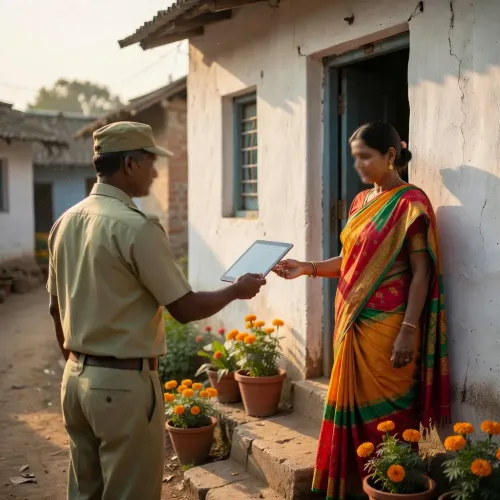
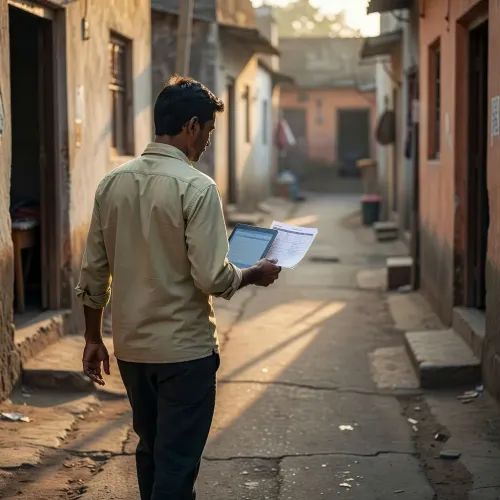
The self-enumeration window represents a significant procedural shift. Traditionally, a census enumerator visited every household; citizens were enumerated, not active participants. The mobile-first, self-registration model inverts that relationship, placing the citizen in the driver's seat while also potentially reducing the logistical burden on field staff.
Why Rijiju's amplification matters
A Cabinet minister echoing the Prime Minister on a civic-participation initiative is not accidental. The government is running a top-down communications cascade — PM on Mann Ki Baat, ministers on social media, the message descending through every tier of the party apparatus. Rijiju's specific mention of the 15 August appeal signals this is a sustained campaign, not a one-off nudge. For a census whose credibility depends on participation rates, mobilising digital-savvy urban citizens through familiar channels like X could meaningfully lift self-enrolment numbers before field enumeration begins.
The stakes are considerable. A clean, comprehensive census will underpin the next delimitation of parliamentary and assembly constituencies, recalibrate the formula for central resource transfers to states, and update the beneficiary rolls of virtually every major welfare programme. Every household that self-enumerates is one less chance for a counting error or an omission in the field.
The government has framed ease and accessibility as its twin selling points — a few minutes on a mobile phone, in the language of your choice. Whether that promise translates into mass participation is the number that will matter most when the enumeration window closes.
Point of View
Cabinet ministers on social media — reflects how seriously the ruling establishment is treating participation rates in a census that is already years overdue. By framing self-enumeration as 'national duty' rather than routine form-filling, the BJP is attempting to generate civic momentum that administrative machinery alone cannot produce. The 16-language digital interface is also a tacit acknowledgement that the old enumerator-at-the-door model left too many communities undercounted. Whether enthusiasm at the ministerial level translates into genuine household-level uptake, particularly in rural and semi-urban India where digital access remains uneven, will determine whether this census finally closes the data gap that has distorted policy for over a decade.
NationPress
27 Sept 2026
Frequently Asked Questions
What is the India census 2026 self-enumeration process?
Citizens can register their own and their family's details directly through a mobile phone application as part of the Census of India 2026 self-enumeration facility, without waiting for a government enumerator to visit their home.
In how many languages is the India census 2026 available?
The mobile self-enumeration facility for the India census 2026 is available in 16 languages including Hindi , according to the government's announcement.
Why was the India census delayed from 2021?
The 2021 Census of India was deferred due to the Covid-19 pandemic and subsequent administrative delays; the last fully completed census remains the one conducted in 2011 .
What did PM Modi say about the census on Mann Ki Baat?
Prime Minister Narendra Modi appealed to citizens on Mann Ki Baat to treat census participation as a 'national responsibility' and urged every Indian to take time to self-enumerate, a call also made on 15 August 2026 .
Why is the census important for India's welfare schemes?
A completed census underpins parliamentary constituency delimitation, the formula for central resource transfers to states, and the beneficiary rolls of virtually every major welfare programme — all of which currently rely on projections from the 2011 data .