Shekhawat echoes Modi's Mann Ki Baat census call

Synopsis
Union Culture and Tourism Minister Gajendra Singh Shekhawat amplified PM Modi's Mann Ki Baat message on September 27, 2026, calling the national census a shared civic duty — a signal that the long-delayed post-pandemic count may be moving closer to action.
Key Takeaways
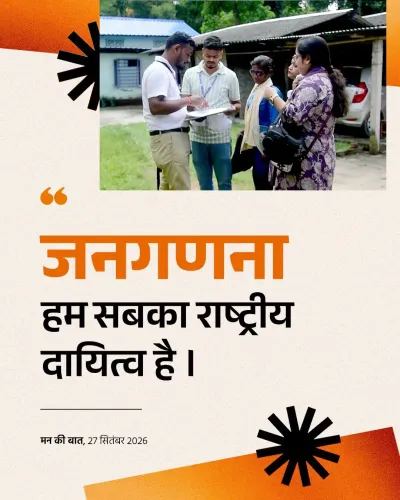
Shekhawat posted on September 27, 2026 under #MannKiBaat , calling the census a national responsibility for every citizen.
India's last completed census was in 2011 ; the 2021 round was postponed due to the COVID-19 pandemic.
Census data underpins parliamentary delimitation, reservation policies, and Finance Commission fund transfers between the centre and states.
Mann Ki Baat , PM Modi's monthly radio address, has a track record of mobilising citizen participation in large national exercises.
The Registrar General of India under the Ministry of Home Affairs administers the census; a firm rollout timeline remains pending.
Every Indian counts — literally. Union Culture and Tourism Minister Gajendra Singh Shekhawat took to X on Sunday, September 27, 2026, to reinforce a message that carries real demographic and political weight: the national census is a shared civic duty, not a bureaucratic formality.
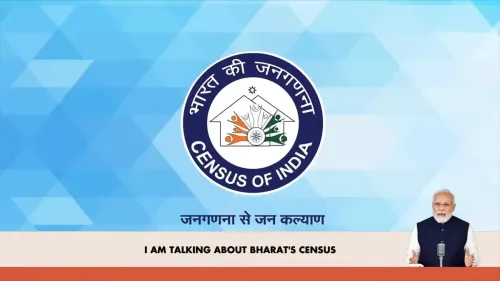
Posting in Hindi under the #MannKiBaat hashtag, Shekhawat wrote: 'The census is a national responsibility and every citizen has a role in it.' The brief, pointed message anchors itself to Prime Minister Narendra Modi's monthly radio programme — a platform that has repeatedly been used to push citizen participation in large-scale national exercises.
Why the census call lands with unusual urgency in 2026
India's last completed decennial census was conducted in 2011. The 2021 round was postponed indefinitely due to the COVID-19 pandemic — an extraordinary interruption that left the country's planners, demographers, and policymakers working off data that is now 15 years old. Every welfare scheme, every parliamentary delimitation exercise, every Finance Commission transfer formula rests on that ageing baseline.
The stakes are enormous. Census headcounts directly determine how constituencies are redrawn, how reservation policies are calibrated, and how central funds are split between states. A delayed count is not a paperwork problem — it is a governance gap measured in misallocated hospitals, schools, and subsidies.
Mann Ki Baat as a mobilisation machine
The Mann Ki Baat programme has, across successive episodes, doubled as a soft-power instrument for driving citizen behaviour — from cleanliness drives to vaccination awareness. Deploying it for census sensitisation follows an established playbook: reach tens of millions of listeners through a trusted, non-partisan voice, then amplify through ministerial social-media channels like Shekhawat's.
The Registrar General of India, operating under the Ministry of Home Affairs, administers the census. Any formal rollout timeline or legislative framework — a Census Bill, updated field rules — remains the key next step to watch in Parliament.
What comes after the awareness push
Political messaging around census participation is only as good as the operational machinery behind it. With delimitation of Lok Sabha constituencies legally required to follow the next completed census, the pressure on the government to announce a firm schedule is building fast. Shekhawat's post is a small but visible signal that the political establishment is beginning to prime public consciousness for what will be the largest civic exercise in the country's recent history.
Fifteen years of demographic change are waiting to be counted. The clock is running.
Point of View
The BJP has strong electoral incentives to both conduct and shape the narrative around the census. Amplifying the 'national responsibility' frame early is a way of pre-empting any perception that the delay was a policy failure, recasting it instead as a moment of collective civic renewal.
NationPress
27 Sept 2026
Frequently Asked Questions
When will India's next census be conducted?
No official date has been confirmed as of September 2026. The 2021 census was postponed due to the COVID-19 pandemic, and a firm rollout timeline from the Registrar General of India is still awaited.
Why is the census important for India?
Census data is the foundation for parliamentary delimitation, reservation policies, welfare scheme targeting, and Finance Commission transfers of funds from the centre to states — making it one of the most consequential governance exercises in the country.
What is Mann Ki Baat and why was the census mentioned?
Mann Ki Baat is Prime Minister Narendra Modi's monthly radio programme addressing national issues and citizen responsibilities. It has previously been used to mobilise public participation in large civic exercises, making it a natural platform for census awareness.
Who is Gajendra Singh Shekhawat?
Gajendra Singh Shekhawat is the Union Minister of Culture and Tourism, a senior BJP leader, and the Lok Sabha MP from Jodhpur, Rajasthan.
How does the census affect parliamentary seat allocation in India?
Delimitation — the redrawing of Lok Sabha and state assembly constituency boundaries — is legally required to be based on the most recent completed census, making the headcount directly tied to India's electoral map.