CM Rekha Gupta Echoes Modi's Census Call from Mann Ki Baat
Synopsis
Delhi CM Rekha Gupta amplified PM Narendra Modi's Mann Ki Baat appeal declaring the census a 'national duty,' spotlighting India's push to mobilise citizens for a long-overdue population count, the last completed in 2011.
Key Takeaways
Delhi CM Rekha Gupta shared a quote from PM Narendra Modi 's Mann Ki Baat calling the census every Indian's 'national duty.' India's last completed census was conducted in 2011 , making the data over 15 years old .
The census is governed by the Census Act, 1948 and underpins delimitation, welfare targeting, and infrastructure planning.
Mann Ki Baat has become a consistent channel for framing administrative exercises as shared civic responsibilities.
Delhi's migrant-heavy, rapidly shifting population gives the capital a particularly high stake in an accurate fresh count.
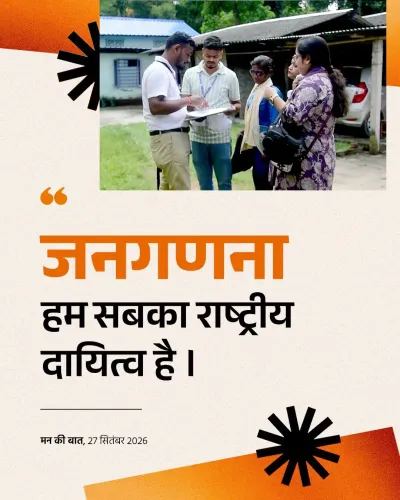
The census is not a government form — it is a national covenant. Delhi Chief Minister Rekha Gupta underscored that message on Sunday, September 27, 2026, sharing a pointed quote from Prime Minister Narendra Modi's Mann Ki Baat address that placed the responsibility squarely on every Indian citizen: 'JanagaNa hum sabka rashtriya dayitva hai' — 'The census is the national duty of us all.'
What Modi Said — and Why Gupta Amplified It
The quote originates from Mann Ki Baat, Prime Minister Modi's monthly radio address through which he frames administrative priorities as shared civic missions. By clipping and circulating this specific line, CM Gupta — a senior BJP leader — signals Delhi's alignment with the Centre's push to build public enthusiasm for the upcoming census exercise. The message is deliberate: the census is not bureaucratic routine; it is a collective act of nation-building.
India's Census Gap — and What Rides on It
The last completed Census of India was conducted in 2011, making India one of the rare large democracies to have gone more than a decade without a fresh population count. Conducted under the Census Act, 1948, the decennial exercise underpins nearly everything that governments do: constituency delimitation, welfare scheme targeting, infrastructure planning, and the National Population Register. Every year of delay means every welfare list, every poverty estimate, every school enrolment projection runs on data that is fifteen-plus years old.
Successive administrations have used Mann Ki Baat and public communication campaigns to stress that accurate data flows only from willing, accurate self-reporting by citizens. The framing of the census as a 'national duty' — rashtriya dayitva — is designed to move the exercise from a state obligation to a civic identity.
Delhi's Role in a City-State Built on Migration
Delhi, as one of India's most densely populated and rapidly shifting urban units, has an outsized stake in accurate census data. The city's migrant population, informal settlements, and fast-changing ward demographics make enumeration both harder and more critical. For a Chief Minister managing service delivery — water, schools, hospitals, ration cards — across a population that has changed significantly since 2011, a fresh census is not an abstraction. It is the operating manual.
When India's Prime Minister frames counting heads as a patriotic act, and the Chief Minister of the capital amplifies it, the administrative machine is sending a unified signal: show up, answer truthfully, be counted. The data collected will shape India's next decade of governance — and citizens who opt out will simply not exist in the plan.
Point of View
And the Modi government's deployment of Mann Ki Baat's enormous reach to address it suggests the exercise is being treated as a political as much as an administrative priority. The success of the campaign will ultimately be measured not in retweets but in response rates — especially in dense, difficult-to-reach urban pockets like Delhi.
NationPress
27 Sept 2026
Frequently Asked Questions
When was India's last census conducted?
India's last completed census was in 2011 . The decennial exercise that should have followed in 2021 was delayed, leaving the country running on over 15-year-old population data.
What is Mann Ki Baat?
Mann Ki Baat is a monthly radio address by Prime Minister Narendra Modi that reaches millions of listeners and is used to communicate government priorities and civic messages to the public.
What did PM Modi say about the census in Mann Ki Baat?
PM Modi stated, 'Janagana hum sabka rashtriya dayitva hai' — meaning 'The census is the national duty of us all' — framing citizen participation as a civic responsibility, not just a government requirement.
Why is the census important for Delhi?
Delhi's large and highly mobile migrant population, rapidly growing informal settlements, and fast-shifting ward demographics make an accurate census critical for planning schools, hospitals, water supply, and welfare scheme targeting.
What law governs the Census of India?
The Census of India is conducted under the Census Act, 1948 . The decennial count informs constituency delimitation, resource allocation, and the National Population Register.