CM Yogi Backs Modi's Census Appeal on Mann Ki Baat
Synopsis
Uttar Pradesh Chief Minister Yogi Adityanath amplified PM Narendra Modi's Mann Ki Baat Census appeal on 27 September 2026, calling the decennial count the foundation of India's future policy and urging all citizens to treat participation as a national duty.
Key Takeaways
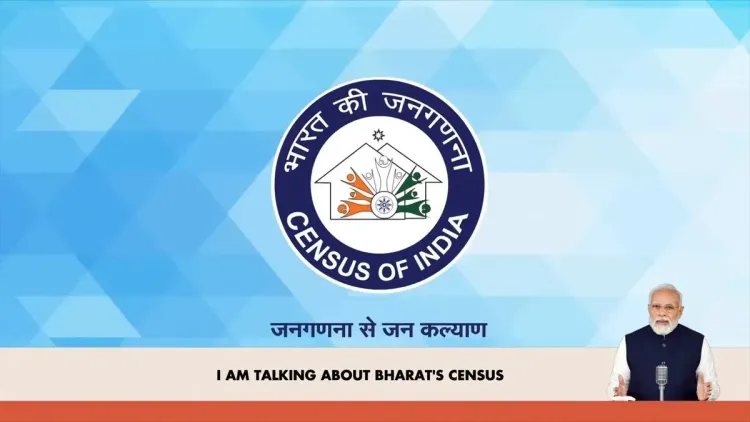
PM Narendra Modi used the Mann Ki Baat radio programme on 27 September 2026 to appeal for active Census participation by all citizens.
CM Yogi Adityanath publicly endorsed the appeal, calling the Census the 'critical foundation for the nation's future plans and policies.' The Census of India was last completed in 2011 ; the next round was delayed from 2021 due to the COVID-19 pandemic, making this enumeration a significant statistical course correction.
CM Yogi described the exercise as the world's largest administrative and statistical mega-exercise and framed participation as a national duty.
Uttar Pradesh, as India's most populous state, has an outsized stake in an accurate Census count for central resource allocation.
A phased rollout of enumeration and a possible National Population Register update are expected to follow the current mobilisation drive.
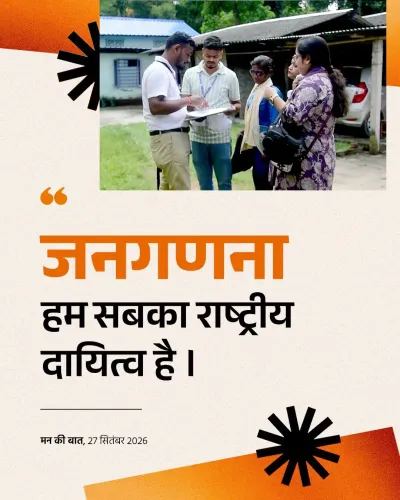
When Prime Minister Narendra Modi used Mann Ki Baat on Sunday, 27 September 2026 to call every Indian citizen into the Census, the message needed an amplifier — and Uttar Pradesh Chief Minister Yogi Adityanath stepped up fast. Within hours, the Chief Minister echoed the appeal to his own vast following, framing the exercise not as a bureaucratic headcount but as the backbone of the nation's future.
Posting in Hindi, CM Yogi described the Census as far more than a compilation of numbers — 'janganana kewal aankdon ka sankalan nahin' ('the census is not merely a collection of data') — but rather the 'critical foundation for the nation's future plans and policies.' He urged every citizen to join what he called the world's largest administrative and statistical mega-exercise, and to treat it as a national duty that contributes to building a 'viksit, sashakt evam samridh Bharat' — a 'developed, empowered and prosperous India.'
Why India's Census Carries This Much Weight
The Census of India is the country's single most consequential data-gathering exercise. Conducted once a decade, it supplies the demographic bedrock on which central and state governments build welfare allocation, infrastructure planning, electoral delimitation, and public-health policy. The last completed Census was in 2011 — making this round, delayed from its original 2021 schedule by the COVID-19 pandemic, a correction of a significant statistical gap.
For a country of India's scale, every five-year policy plan, every targeted subsidy, and every school-to-hospital ratio calculation runs on Census data. Running that machinery on fifteen-year-old numbers is a structural liability. This round is not just an update — it is a course correction.
Uttar Pradesh's Stake in an Accurate Count
Uttar Pradesh is India's most populous state — any undercounting here skews national totals and, critically, skews the state's own share of central resource allocation. CM Yogi's public endorsement carries weight precisely because the Chief Minister's call-to-action reaches deep into the state apparatus and into communities that historically record lower enumeration rates.
By aligning his public platform with the Prime Minister's Mann Ki Baat appeal, Yogi Adityanath signals that state machinery in UP will actively support the enumeration drive — a coordination signal that administrators and block-level enumerators will feel on the ground.
Mann Ki Baat as a Census Mobilisation Tool
This is not the first time the Prime Minister's monthly radio programme has been used to move public behaviour at scale. Mann Ki Baat has previously mobilised awareness around everything from sanitation to vaccination. Deploying it for Census outreach follows the same playbook: reach citizens who are outside the daily news cycle, in their own language, via a medium that penetrates rural India more deeply than any press conference.
With the phased rollout of Census enumeration now underway, and questions around the National Population Register update expected to follow, the coming weeks will show how effectively this top-down mobilisation translates into door-to-door participation.
The data collected will shape resource flows, welfare rosters, and political boundaries for the decade ahead. How Indians respond to this call is, quite literally, how India counts itself.
Point of View
Ensuring that UP's administrative machinery gets an unambiguous top-down signal. Coming after a five-year delay, this Census is politically consequential as well as statistically urgent: fresh population data will inform the next delimitation exercise, reshaping the electoral map and, by extension, the balance of political power between states. The framing of participation as a national duty tied to a 'developed, empowered and prosperous India' embeds the Census within the broader Viksit Bharat narrative that the BJP has made central to its governance pitch. How effectively the mobilisation reaches historically undercounted communities will be the real test of whether the rhetorical alignment translates into ground-level results.
NationPress
27 Sept 2026
Frequently Asked Questions
Why is CM Yogi Adityanath talking about the Census?
CM Yogi Adityanath amplified PM Modi's appeal from Mann Ki Baat, urging Uttar Pradesh citizens and all Indians to actively participate in the ongoing Census enumeration, describing it as a national duty.
What is Mann Ki Baat and what did PM Modi say about the Census?
Mann Ki Baat is Prime Minister Narendra Modi's monthly radio address to citizens. On 27 September 2026, he called on all Indians to participate actively in the Census of India, framing it as the statistical foundation for national planning.
When was the last Census of India conducted?
The last completed Census of India was in 2011. The subsequent decennial census, originally scheduled around 2021, was postponed due to the COVID-19 pandemic.
Why does the Census matter for states like Uttar Pradesh?
Uttar Pradesh is India's most populous state, so an accurate Census count directly determines how central government funds, welfare schemes, and infrastructure resources are allocated to the state.
What happens after the Census enumeration is completed?
Following enumeration, the collected data is used to update welfare rosters, plan infrastructure, inform electoral delimitation, and is also expected to feed into an update of the National Population Register.