Shekhawat pays tribute to Padma Shri Kanhaiyalal Sethia on death anniversary
Synopsis
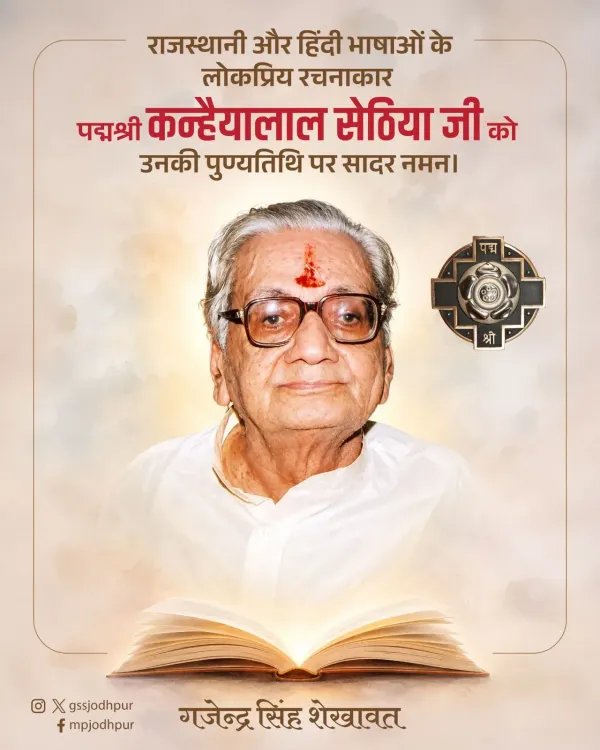
Union Culture Minister Gajendra Singh Shekhawat paid his respects to Padma Shri Kanhaiyalal Sethia on the poet's death anniversary, recognising Sethia's legacy as a Rajasthani-Hindi literary figure, freedom fighter, and environmental advocate.
Key Takeaways
Union Culture and Tourism Minister Gajendra Singh Shekhawat posted a tribute to Padma Shri Kanhaiyalal Sethia on his death anniversary on 11 November 2026 .
Sethia was a celebrated writer in both Rajasthani and Hindi languages and a recipient of the Padma Shri award.
Beyond literature, Sethia participated in India's freedom struggle and was known as an environmental advocate .
The tribute reflects the Ministry of Culture's routine acknowledgement of regional literary and independence-era figures on anniversaries.
Shekhawat, a Lok Sabha MP from Jodhpur, Rajasthan , shares a regional connection with Sethia's literary heritage.
A poet who gave Rajasthani literature its modern voice, Padma Shri Kanhaiyalal Sethia is remembered today on his death anniversary — with Union Culture and Tourism Minister Gajendra Singh Shekhawat leading the tributes on Wednesday, 11 November 2026.
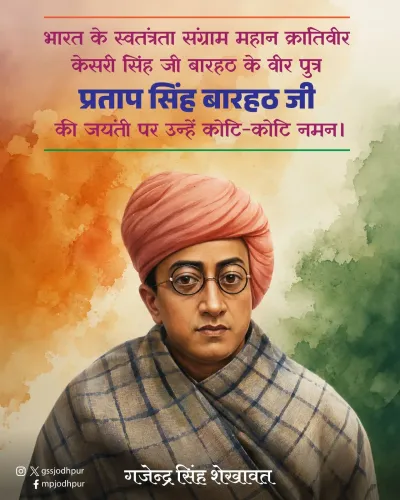
Posting on X in Hindi, Shekhawat offered his respects — 'saadar naman' (reverential salute) — to Sethia, describing him as a beloved creator in both Rajasthani and Hindi languages. The minister underscored that Sethia's contributions extended well beyond the written word: he served the nation as a freedom fighter and championed the cause of environmental protection throughout his life.
A literary giant rooted in Rajasthan's soil
Kanhaiyalal Sethia occupies a rare position in Indian letters — a writer whose work resonated equally in the regional idiom of Rajasthani and in mainstream Hindi literary circles. Honoured with the Padma Shri, India's fourth-highest civilian award, Sethia built a body of work celebrated for its lyrical depth and rootedness in the landscape and ethos of Rajasthan. His verses are regarded as touchstones of modern Rajasthani poetry.
What set Sethia apart was the breadth of his public life. At a time when many writers confined themselves to the page, he stepped into the freedom struggle — a commitment that shaped both his worldview and his art. His environmental advocacy, too, was ahead of its era, lending him a reputation as a voice of conscience on ecological matters long before such causes entered mainstream political conversation.
Culture Ministry's pattern of literary remembrance
Shekhawat's tribute fits a consistent pattern at the Ministry of Culture: publicly honouring Padma awardees, regional literary figures, and independence-era contributors on significant anniversaries. For a minister who represents Jodhpur — itself a cultural heartland of Rajasthan — paying homage to Sethia carries particular resonance, reinforcing the Centre's stated commitment to preserving and promoting India's diverse linguistic heritage.
Rajasthani literature, long seeking broader institutional recognition, finds in such ministerial acknowledgements a signal that the language and its torchbearers remain visible at the national level.
Point of View
Whose political base is Jodhpur, honouring Sethia reinforces a cultural identity that resonates with his constituency. The Ministry of Culture's consistent pattern of such remembrances reflects a broader BJP-era emphasis on reclaiming and elevating regional heritage within the national narrative.
NationPress
11 Nov 2026
Frequently Asked Questions
Who was Kanhaiyalal Sethia?
Kanhaiyalal Sethia was a celebrated Indian poet who wrote in both Rajasthani and Hindi , honoured with the Padma Shri award. He was also known as a participant in India's freedom movement and an advocate for environmental causes.
What award did Kanhaiyalal Sethia receive?
Kanhaiyalal Sethia was awarded the Padma Shri , India's fourth-highest civilian honour, in recognition of his contributions to Rajasthani and Hindi literature.
Why did Gajendra Singh Shekhawat pay tribute to Kanhaiyalal Sethia?
Union Culture and Tourism Minister Gajendra Singh Shekhawat posted a tribute on 11 November 2026 , Sethia's death anniversary, honouring his literary legacy, role in the freedom struggle, and environmental work.
What is Kanhaiyalal Sethia known for in Rajasthani literature?
Sethia is considered one of the foremost voices of modern Rajasthani poetry , with works celebrated for their lyrical depth and cultural rootedness in the landscape and traditions of Rajasthan .
What is Gajendra Singh Shekhawat's role?
Gajendra Singh Shekhawat is India's Union Minister of Culture and Tourism , a senior BJP leader, and a Lok Sabha MP from Jodhpur, Rajasthan .