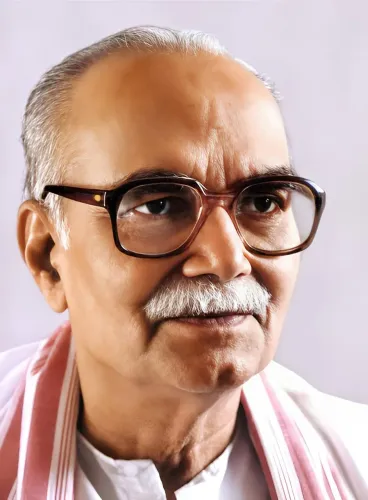
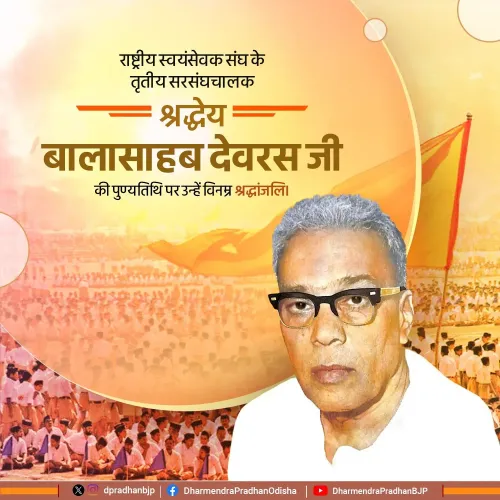
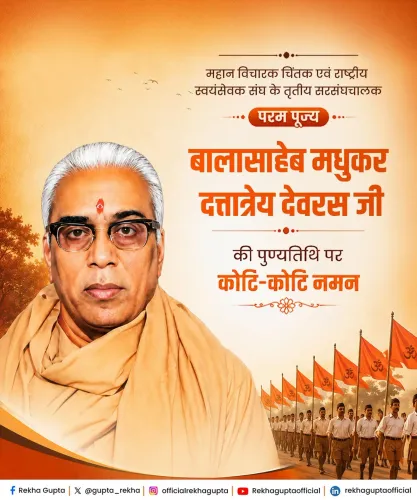
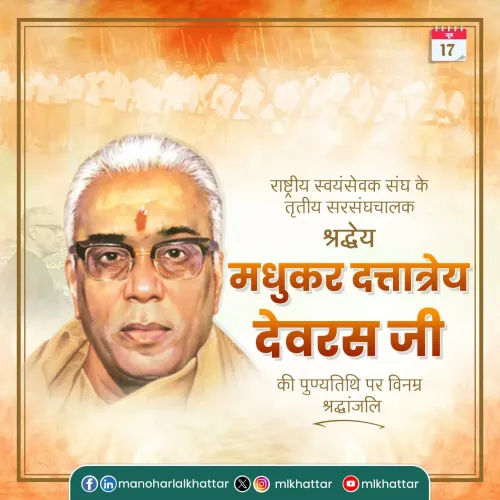
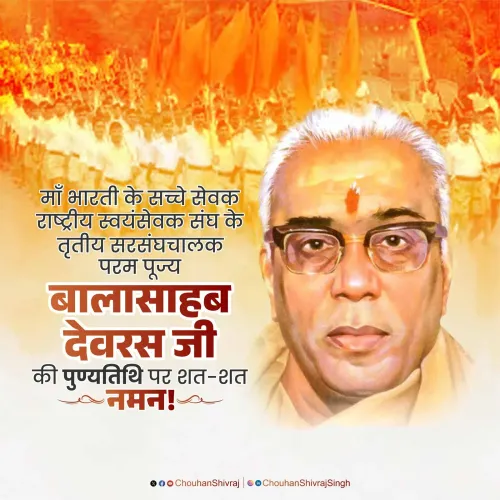
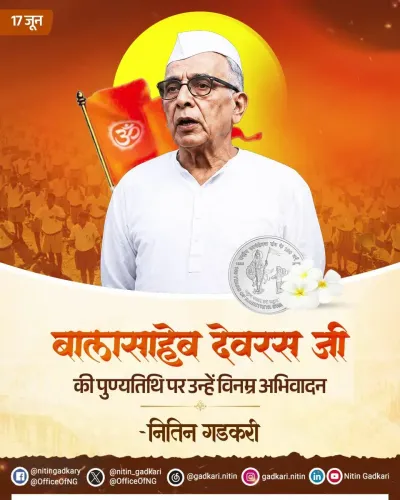
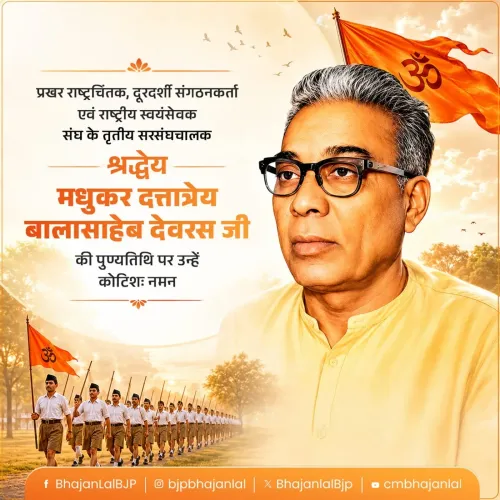
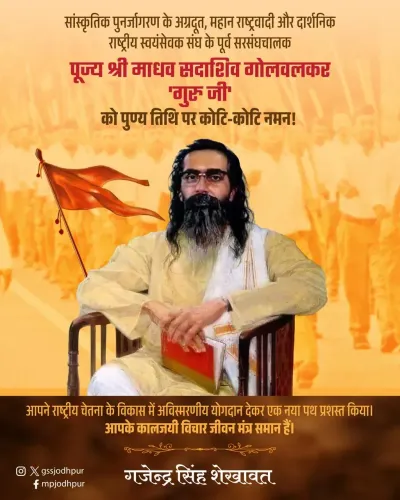
Shekhawat pays tribute to RSS chief Balasaheb Deoras on death anniversary
Synopsis
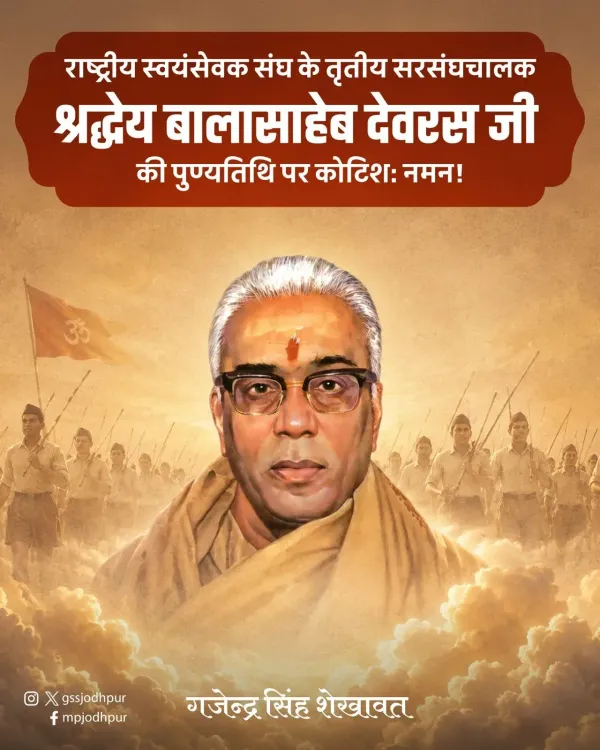
Union Culture Minister Gajendra Singh Shekhawat on 17 June 2026 paid homage to Balasaheb Deoras, the RSS's third Sarsanghchalak, on his death anniversary, calling him a symbol of tradition, discipline, service, and dharma as the foundations of human welfare.
Key Takeaways
Union Culture and Tourism Minister Gajendra Singh Shekhawat paid tribute to Balasaheb Deoras on his death anniversary on 17 June 2026 .
Balasaheb Deoras was the third Sarsanghchalak of the RSS , serving from 1973 to 1994 .
Shekhawat described Deoras as someone who regarded tradition, discipline, service, and dharma as the capital of human welfare.
The tribute continues a pattern of official ministerial acknowledgement of RSS leadership figures established since 2014 .
In 2015 , the Ministry of Culture supported programmes marking the birth centenary of RSS founder K.
Hedgewar , setting a precedent for such recognition.
Similar statements are expected on other RSS anniversaries, including Vijayadashami (RSS Foundation Day) .
Union Culture and Tourism Minister Gajendra Singh Shekhawat on Wednesday, 17 June 2026 paid homage to Balasaheb Deoras, the third Sarsanghchalak of the Rashtriya Swayamsevak Sangh (RSS), on his death anniversary, honouring his legacy of discipline, service, and cultural consolidation.
Posting on X in Hindi, Shekhawat offered his reverential tribute — 'कोटिश: नमन' (a million salutations) — and reflected that Deoras regarded tradition, discipline, service, and dharma as the capital of human welfare. 'His life was an example of the synthesis of these elements. His ideals and thoughts will continue to illuminate us,' the minister wrote.
Context
Madhukar Dattatraya Deoras, widely known as Balasaheb Deoras, served as the RSS's third Sarsanghchalak from 1973 to 1994 — one of the longest tenures in the organisation's history. Under his leadership, the RSS significantly expanded its social-service network and rural outreach, while reinforcing internal discipline and ideological coherence. His death anniversary is observed annually by RSS volunteers and affiliated organisations across India.
Policy Backdrop
The tribute fits a broader pattern of official cultural acknowledgement of RSS leadership figures that has been consistent since 2014. In 2015, the Ministry of Culture supported nationwide programmes marking the birth centenary of RSS founder K. B. Hedgewar, establishing a precedent for official recognition of organisational milestones. Successive Culture Ministers have issued similar statements on the anniversaries of Hedgewar, M. S. Golwalkar, and Deoras, reflecting the ideological continuum between the RSS and the ruling Bharatiya Janata Party (BJP).
As Culture Minister, Shekhawat has overseen commemoration of figures associated with India's cultural and nationalist traditions. His ministry's mandate includes preserving and promoting cultural heritage, a brief that the government has interpreted broadly to include the legacies of social and nationalist organisations.
Stakeholders and Impact
The statement resonates most directly with the RSS's vast volunteer base — estimated to span thousands of daily shakhas (local branches) across the country — as well as affiliated cultural organisations and BJP workers who regard Deoras as a foundational ideological figure. For the broader public, the tribute underscores the government's continued alignment with the RSS's organisational values of grassroots service and cultural discipline.
Critics of the ruling party have in the past questioned the blurring of lines between a voluntary cultural organisation and official state commemoration, though the practice has faced no formal legislative challenge.
What's Next
Similar ministerial statements are expected on the death anniversaries of other RSS Sarsanghchalaks and on RSS Foundation Day (Vijayadashami), which the organisation observes each autumn. The ministry's calendar of cultural commemorations is also likely to feature references to Deoras's legacy during parliamentary discussions on the culture budget. The consistency of such tributes signals that official recognition of RSS figures will remain a fixture of the government's cultural communication strategy.
Point of View
Culture Ministers have consistently marked anniversaries of all three preceding Sarsanghchalaks, transforming what were once intra-organisational commemorations into quasi-official state acknowledgements. This pattern serves a dual purpose: it signals ideological continuity to the RSS's vast volunteer base while framing the organisation's values of discipline and service as part of India's mainstream national culture. The consistency of the practice suggests it is now institutionalised rather than incidental.
NationPress
16 Sept 2026
Frequently Asked Questions
Who was Balasaheb Deoras?
Balasaheb Deoras, born Madhukar Dattatraya Deoras, was the third Sarsanghchalak (chief) of the Rashtriya Swayamsevak Sangh (RSS), serving from 1973 to 1994. He is credited with expanding the RSS's social-service activities and rural outreach while strengthening the organisation's internal discipline.
Why did Gajendra Singh Shekhawat pay tribute to Balasaheb Deoras?
Shekhawat paid tribute on Deoras's death anniversary, 17 June 2026, honouring his legacy of tradition, discipline, service, and dharma. As Union Culture Minister and a senior BJP leader, Shekhawat has consistently acknowledged RSS figures as part of India's cultural heritage.
What is the RSS and who leads it?
The Rashtriya Swayamsevak Sangh (RSS) is a volunteer organisation founded in 1925 that promotes Hindu cultural and national values through daily local branches called shakhas. It is led by a Sarsanghchalak; Balasaheb Deoras was its third chief, succeeded by subsequent leaders after his retirement in 1994.
Has the Indian government officially recognised RSS leaders before?
Yes. Since 2014, successive Culture Ministers under the BJP-led government have issued tributes on the anniversaries of RSS Sarsanghchalaks including Hedgewar, Golwalkar, and Deoras. In 2015, the Ministry of Culture also supported programmes for K. B. Hedgewar's birth centenary.
What values did Balasaheb Deoras stand for according to Shekhawat?
According to Shekhawat's post, Deoras regarded tradition, discipline, service, and dharma as the capital of human welfare, and his life was described as an example of the synthesis of these elements.