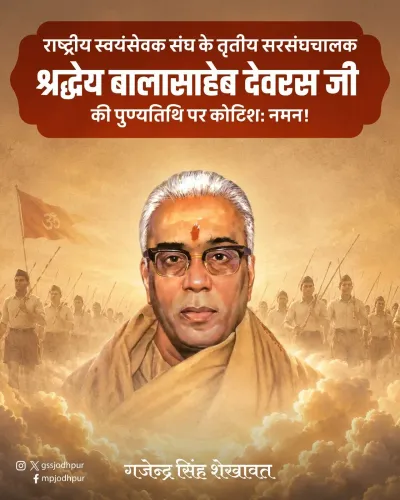
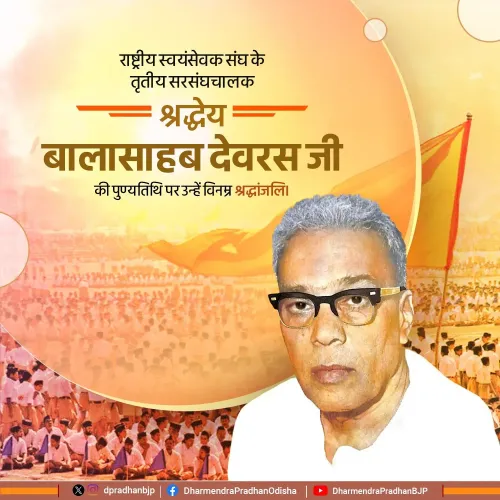
Shivraj Singh Chouhan pays tribute to RSS chief Balasaheb Deoras
Synopsis
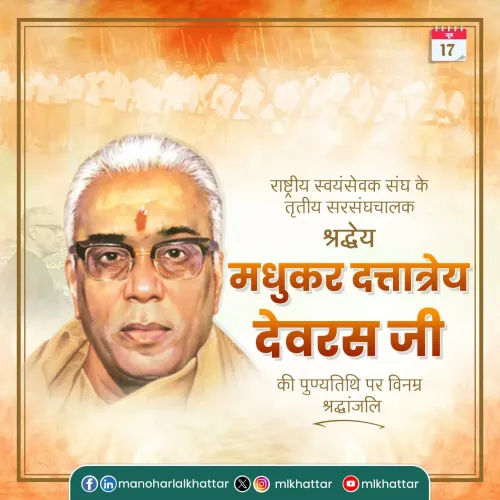
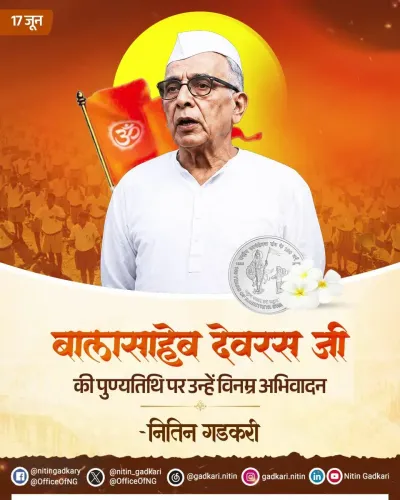
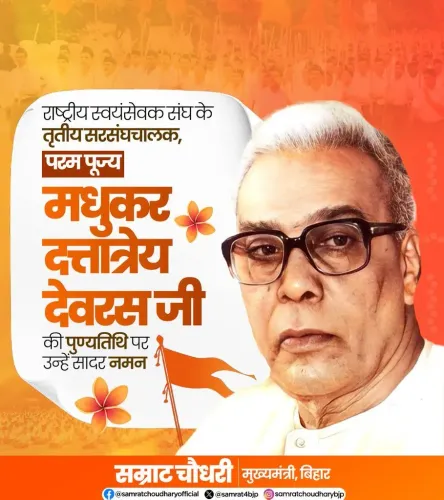
Union Agriculture Minister Shivraj Singh Chouhan on 17 June 2026 paid tribute to Balasaheb Deoras, the RSS's third Sarsanghchalak, on his death anniversary, calling him a true servant of Mother India whose ideals would inspire future generations toward national reconstruction and social progress.
Key Takeaways
Union Agriculture Minister Shivraj Singh Chouhan posted a tribute on 17 June 2026 marking the death anniversary of Balasaheb Deoras .
Deoras was the third Sarsanghchalak of the RSS, serving from 1973 to 1994 .
Chouhan described Deoras as a 'true servant of Mother India' and said his ideals would guide future generations.
Deoras led the RSS through the Emergency (1975–77) , a period during which the organisation was banned, and oversaw its subsequent expansion.
Senior BJP leaders routinely mark RSS chiefs' anniversaries on social media, reflecting the organisational continuity between the party and the Sangh.
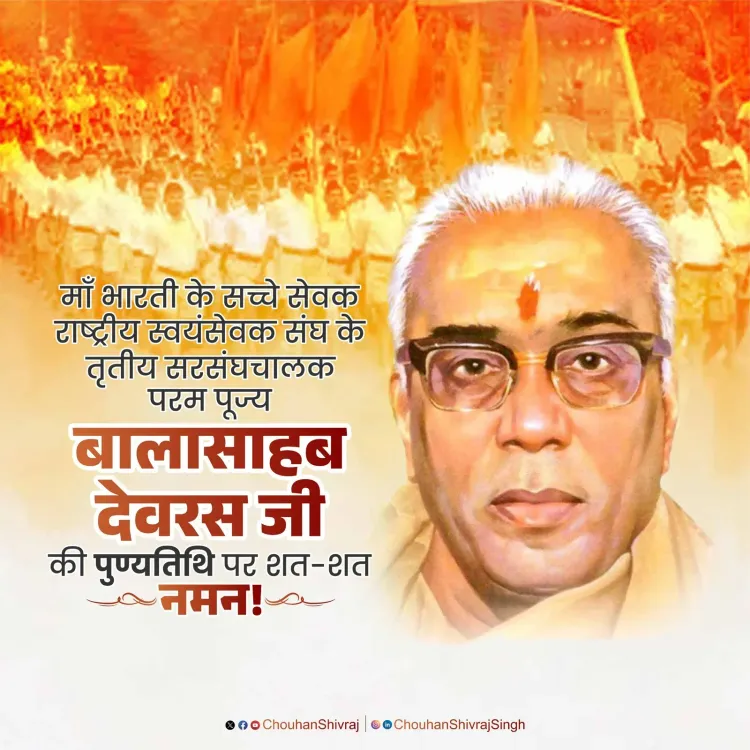
Union Agriculture Minister Shivraj Singh Chouhan on Wednesday, 17 June 2026 paid tribute to Balasaheb Deoras, the third Sarsanghchalak of the Rashtriya Swayamsevak Sangh (RSS), on his death anniversary, describing him as a 'true servant of Mother India' whose ideals would continue to guide future generations.
Context
Chouhan posted on X in Hindi, offering his shat-shat naman (hundredfold salutations) to Balasaheb Deoras, addressed as Param Pujya (most revered). He wrote that Deoras's 'exemplary life and spirited thoughts will forever guide future generations and inspire them towards the reconstruction of the nation and the advancement of society.'
The tribute marks the punyatithi (death anniversary) of Deoras, who remains a towering figure in the RSS's institutional memory. Chouhan, a longtime RSS swayamsevak before entering electoral politics, has consistently observed such commemorations throughout his political career.
Policy Backdrop
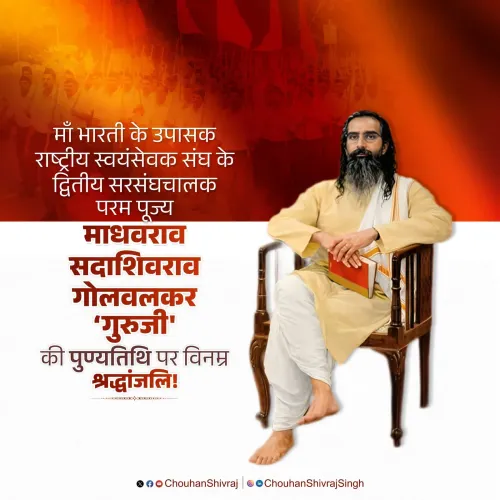
Madhavrao Sadashivrao Golwalkar, the second Sarsanghchalak, was succeeded by Balasaheb Deoras in 1973. Deoras led the organisation until 1994, a period that included the Emergency (1975–77) — during which the RSS was banned — and the subsequent resurgence of the Sangh and its affiliated political formations.
Under Deoras, the RSS expanded its network of shakhas (daily assemblies) and social-service wings significantly, laying organisational groundwork that BJP leaders credit as foundational to the party's later electoral growth. His tenure is also associated with outreach to Dalit communities and an emphasis on social harmony as a pillar of Hindu nationalist thought.
Stakeholders and Impact
Senior BJP ministers and chief ministers routinely mark the death anniversaries of past RSS chiefs on social media, a practice that underscores the ideological and organisational continuity between the party and the Sangh. These tributes carry symbolic weight both for the RSS's internal culture of remembrance and for BJP's communication to its core voter base.
Chouhan's post is consistent with a broader pattern observed since 2014, in which Union ministers use social platforms to publicly affirm their RSS roots — signalling institutional loyalty while simultaneously presenting the Sangh's legacy as a national, rather than partisan, heritage.
What's Next
Similar commemorative posts from other Union ministers and state-level BJP leaders are expected through the day. RSS units across the country typically organise local remembrance programmes on the death anniversaries of former Sarsanghchalaks, and publications revisiting Deoras's ideological contributions may follow later in 2026. The anniversary also offers an occasion for the Sangh to restate themes of nation-building and social service that Deoras is credited with institutionalising.
Point of View
Whose political identity is deeply rooted in the RSS, such commemorations also serve to maintain credibility within the Sangh parivar at a time when he operates from a central cabinet role rather than a state government. The broader arc here is the BJP's ongoing project of embedding RSS history into mainstream national memory.
NationPress
16 Sept 2026
Frequently Asked Questions
Who was Balasaheb Deoras?
Balasaheb Deoras was the third Sarsanghchalak (chief) of the Rashtriya Swayamsevak Sangh, serving from 1973 to 1994. He led the organisation through the Emergency period and oversaw significant expansion of the RSS network.
Why is Shivraj Singh Chouhan paying tribute to Balasaheb Deoras?
17 June marks the death anniversary ( punyatithi ) of Balasaheb Deoras. Chouhan, a senior BJP leader with longstanding RSS association, posted a tribute on X as part of the customary homage BJP leaders pay to past RSS chiefs on such occasions.
What did Shivraj Singh Chouhan say about Balasaheb Deoras?
Chouhan described Deoras as a 'true servant of Mother India' and said his 'exemplary life and spirited thoughts will forever guide future generations and inspire them towards the reconstruction of the nation and the advancement of society.'
What is the RSS and what role did Deoras play in it?
The Rashtriya Swayamsevak Sangh (RSS) is a Hindu nationalist volunteer organisation founded in 1925. Deoras, as its third chief, expanded the organisation's social-service wings and oversaw its recovery after the Emergency-era ban.
Do BJP ministers regularly pay tribute to RSS leaders?
Yes. Senior BJP ministers and chief ministers have consistently marked the birth and death anniversaries of RSS chiefs on social media since 2014, reflecting the ideological and organisational ties between the party and the Sangh.