CM Bhajan Lal Sharma Pays Tribute to RSS Chief Balasaheb Deoras
Synopsis
Rajasthan Chief Minister Bhajan Lal Sharma paid tribute to RSS's third Sarsanghchalak Balasaheb Deoras on his 2026 death anniversary, calling him a 'sharp national thinker' whose dedication to nation-building and social harmony remains an enduring source of inspiration.
Key Takeaways
Rajasthan CM Bhajan Lal Sharma paid tribute to Balasaheb Deoras on his death anniversary on 17 June 2026 .
Deoras served as the third Sarsanghchalak of the RSS from 1973 to 1994 , succeeding M.S.
He is remembered for expanding RSS shakhas, reinforcing organisational discipline, and championing social harmony ( samajik samarasta ) .
The RSS was founded in 1925 by K.B.
Hedgewar in Nagpur and is the ideological parent of the BJP.
BJP leaders routinely mark punyatithis of senior RSS figures, reaffirming the party's ideological lineage within the Sangh Parivar .
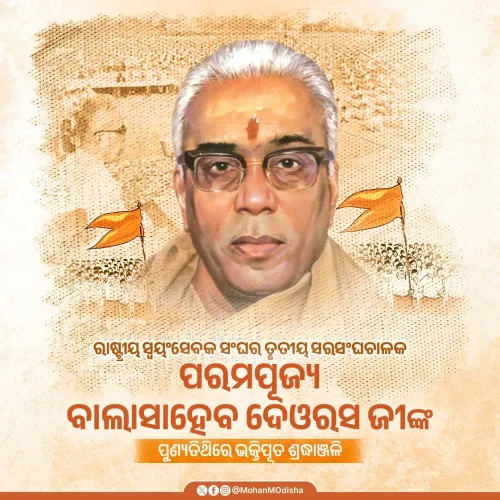
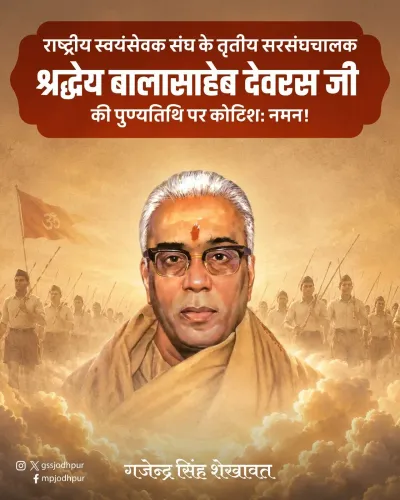
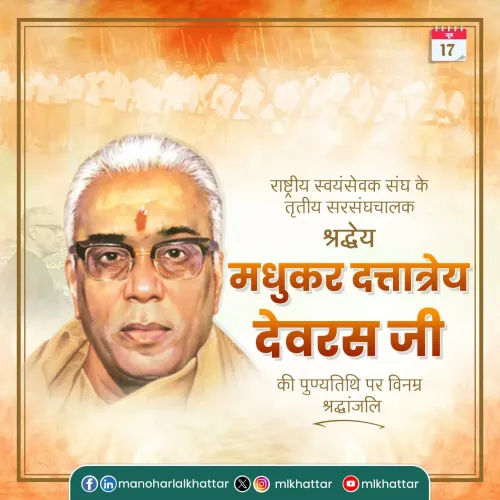
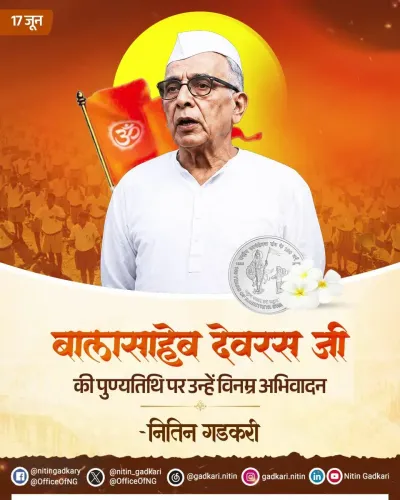
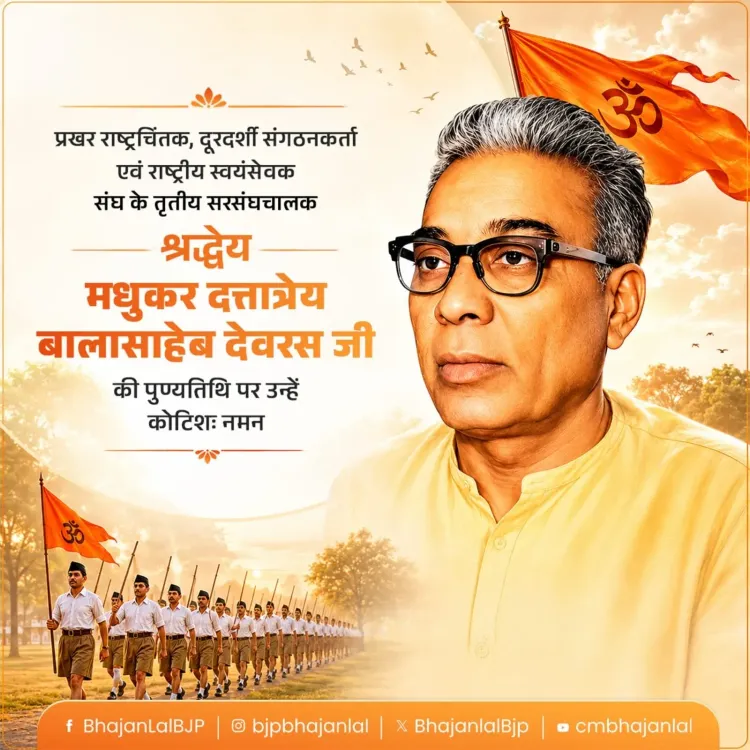
Rajasthan Chief Minister Bhajan Lal Sharma on Wednesday, 17 June 2026, paid tribute to Madhukar Dattatreya 'Balasaheb' Deoras, the third Sarsanghchalak of the Rashtriya Swayamsevak Sangh (RSS), on his death anniversary (punyatithi).
Posting on X, CM Sharma described Deoras as a 'prakkhar rashtrachhintak, doordarshi sangathankarta' — a 'sharp national thinker and far-sighted organiser' — and offered him kotishaha naman, meaning 'salutations a crore times over.' He wrote that Deoras's life of dedication to nation-building, social harmony (samajik samarasta), and organisational work 'remains a source of inspiration for all of us,' adding that 'his thoughts and ideals will always guide us.'
Context
Balasaheb Deoras served as the third Sarsanghchalak of the RSS from 1973 to 1994, taking over after the death of M.S. Golwalkar. His tenure is widely associated with the expansion of RSS shakhas across India, a renewed emphasis on organisational discipline, and a strong push for social harmony — particularly outreach to communities historically marginalised within Hindu society.
Deoras is credited with broadening the RSS's social base and steering the organisation through one of its most challenging periods, including the Emergency of 1975-77, when the RSS was banned. His emphasis on samajik samarasta became a defining ideological thread of his leadership.
Policy Backdrop
The RSS, founded in 1925 by K.B. Hedgewar in Nagpur, functions as the ideological parent organisation of the BJP. Tributes to former Sarsanghchalaks and senior RSS pracharaks are a regular feature of the BJP's political calendar, publicly reaffirming the party's organisational and ideological roots within the broader Sangh Parivar ecosystem.
For BJP chief ministers and senior office-bearers, marking such anniversaries is both a matter of personal conviction and an act of political signalling — demonstrating continuity with the RSS's foundational values of national integration and character-building.
Stakeholders and Impact
The tribute is directed at a broad constituency: RSS swayamsevaks, BJP workers, and the wider Sangh Parivar network in Rajasthan and across India. Deoras's emphasis on social harmony resonates with communities that the RSS sought to integrate during his tenure, making his punyatithi an occasion with both ideological and organisational significance.
For CM Sharma, publicly honouring Deoras reinforces his credentials within the RSS-BJP ecosystem, particularly among grassroots workers who regard the former Sarsanghchalak as a foundational figure of modern Hindutva organisational thought.
What's Next
RSS shakhas across the country typically observe Deoras's death anniversary with prayers, readings from his speeches, and discussions on social harmony. State-level BJP units in Rajasthan may organise programmes aligned with the themes he championed — nation-building and samajik samarasta. Whether the Rajasthan government will announce any formal initiative linked to his legacy remains to be seen.
Point of View
Energising grassroots RSS workers who see their foundational figures acknowledged by elected leaders. The pattern reflects how BJP governance in states like Rajasthan remains consciously intertwined with RSS calendars and commemorative culture.
NationPress
15 Sept 2026
Frequently Asked Questions
Who was Balasaheb Deoras?
Madhukar Dattatreya 'Balasaheb' Deoras was the third Sarsanghchalak of the Rashtriya Swayamsevak Sangh (RSS) , serving from 1973 to 1994 . He succeeded M.S. Golwalkar and is known for expanding the RSS's organisational reach and championing social harmony.
Why did CM Bhajan Lal Sharma pay tribute to Balasaheb Deoras?
CM Bhajan Lal Sharma paid tribute on Deoras's death anniversary (punyatithi) on 17 June 2026 , honouring his contributions to nation-building, social harmony, and RSS organisational work — values central to the BJP's ideological identity.
What is the RSS and what role did Deoras play in it?
The Rashtriya Swayamsevak Sangh (RSS) is a Hindu nationalist volunteer organisation founded in 1925 . Deoras, as its third Sarsanghchalak, expanded its shakha network, steered it through the Emergency of 1975-77, and made samajik samarasta (social harmony) a central organisational theme.
What does 'Sarsanghchalak' mean?
'Sarsanghchalak' is the title given to the supreme head of the RSS . The position carries significant ideological authority within the Sangh Parivar. Deoras was the third person to hold this office, after founders K.B. Hedgewar and M.S. Golwalkar .
Do BJP leaders regularly pay tribute to RSS figures?
Yes. BJP office-bearers and state leaders routinely mark the birth and death anniversaries of senior RSS pracharaks and Sarsanghchalaks, publicly reaffirming the party's organisational and ideological lineage within the broader Sangh Parivar ecosystem.