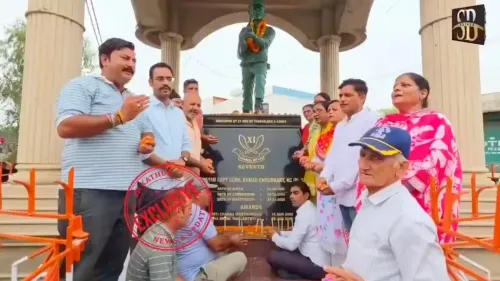
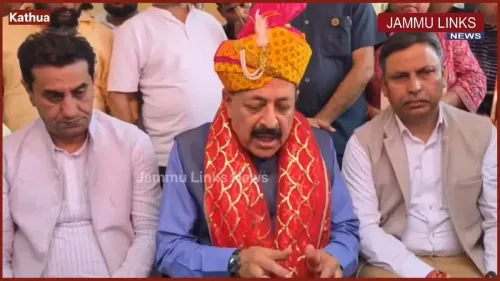
796 new bunkers added in Kathua's Hiranagar sector, taking total past 2,800
Synopsis
With 796 new family bunkers completed in Kathua's Hiranagar sector, the government has quietly crossed the 2,800-structure mark in one of J&K's most shelling-exposed belts — and over 500 more are planned for Uri. The pivot from community shelters to individual family bunkers near homes reflects hard lessons from past shelling incidents, and reveals how much the border infrastructure programme has evolved since its ₹415.73 crore approval in 2018.
Key Takeaways
796 new family bunkers completed in Hiranagar sector, Kathua district , along the Indo-Pak International Border, confirmed on 11 November 2026 .
Total bunkers in the Hiranagar sector now exceed 2,800 , including over 2,000 built since 2018 .
Roughly 9,500 bunkers completed across Jammu and Kashmir out of 14,460 approved by the MHA in 2018 at a cost of ₹415.73 crore .
Government is shifting focus to individual family bunkers over community structures for faster resident access during shelling.
Over 500 new bunkers are reportedly planned for the Uri area in Baramulla district .
The programme covers 221 km of International Border and 744 km of Line of Control in J&K.
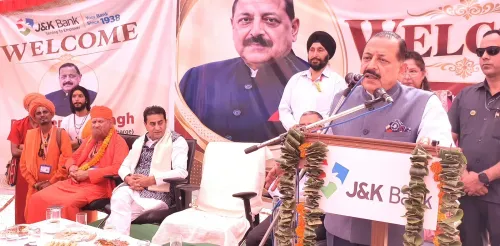
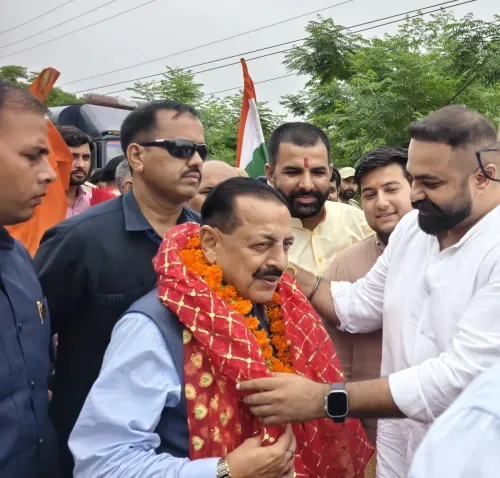
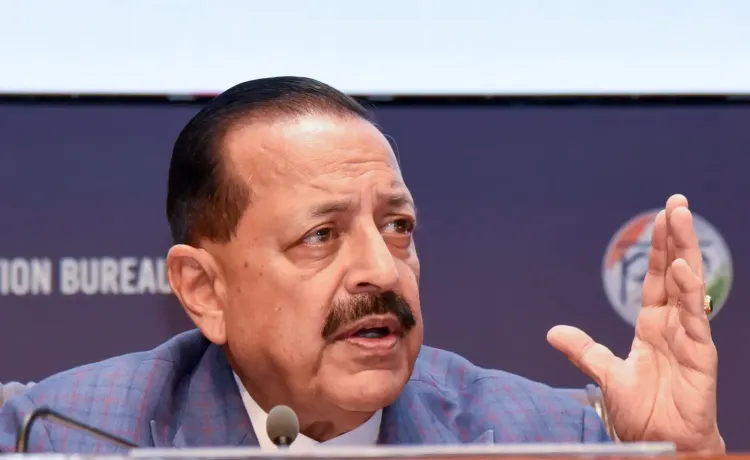
Union Minister Dr Jitendra Singh, who represents the Kathua-Udhampur constituency in Jammu and Kashmir, announced on Wednesday, 11 November 2026, that 796 new family bunkers have been completed in the Hiranagar sector of Kathua district along the Indo-Pak International Border, bringing the cumulative count in that sector to over 2,800. The addition marks a significant expansion of civilian protection infrastructure in one of Jammu and Kashmir's most exposed border belts.
What Singh Said
In a post on X, Singh stated: 'In the #Hiranagar sector of district #Kathua, the completion of 796 new family bunkers along the Indo-Pak International Border, in addition to the already existing over 2,000 family bunkers constructed since 2018, reflects government's unwavering commitment and PM Sh @narendramodi's reiteration of ensuring dignified living for the people in the border areas.' The minister attributed the push to Prime Minister Narendra Modi's stated priority of ensuring dignified living conditions for communities in conflict-prone border zones.
Scope of the Border Bunker Programme
The bunker drive is a centrally funded initiative managed under the Security Related Expenditure (SRE) framework. In 2018, the Union Ministry of Home Affairs (MHA) approved 14,460 bunkers — comprising 13,029 individual and 1,431 community structures — at a sanctioned cost of ₹415.73 crore across five districts of the Jammu division: Jammu, Samba, Kathua, Rajouri, and Poonch.
As of now, roughly 9,500 bunkers have been completed across Jammu and Kashmir. In the Jammu division alone, nearly 8,000 structures are finished, led by Rajouri (over 2,600), Samba (over 1,560), Kathua (over 1,500), Jammu (over 1,160), and Poonch (over 920). The programme covers both the 221 km International Border (IB) and the 744 km Line of Control (LoC).
Shift Toward Individual Family Bunkers
Following renewed cross-border tensions, the central government and local administrations have pivoted toward smaller, family-specific individual bunkers rather than large community shelters. Residents reportedly prefer structures near their homes for faster access during shelling episodes. Beyond emergency use, many existing bunkers are also utilised by families for daily household storage during quiet periods — a sign of how integrated the structures have become in border life.
This trend is reflected in the latest expansion: the 796 new bunkers in Hiranagar are all family-specific, and over 500 additional bunkers are reportedly planned for the Uri area of Baramulla district in north Kashmir, covering vulnerable sectors such as Baramulla and Kupwara as well.
What This Means for Border Communities
For the tens of thousands of civilians living along the LoC and IB, the bunker programme is a frontline safety net. Cross-border shelling — sporadic but recurring — leaves border villages with little warning time, making proximity of shelter critical. The phased expansion since 2018 has gradually reduced the dependence on shared community bunkers, which critics noted were too distant and too crowded during peak shelling incidents.
With the Uri expansion under planning and broader targets still not fully met against the original 14,460-bunker approval, the pace of construction and remaining funding allocation will determine how completely the government's protective mandate is fulfilled in the coming months.
Point of View
Slower story: the Centre's border bunker programme, approved in 2018 with a ₹415.73 crore sanction for 14,460 structures, has delivered roughly 9,500 — a completion rate of about 66% over eight years. The pivot to family bunkers is operationally sound, since residents have consistently found community shelters too far or too crowded during live shelling. But the gap between sanctioned and completed structures raises questions about pipeline clearance, funding disbursement, and contractor accountability that ministerial announcements rarely address. With tensions along the IB and LoC periodically spiking, the pace of the remaining 5,000-odd bunkers matters as much as the political optics of each new completion milestone.
NationPress
11 Nov 2026
Frequently Asked Questions
How many bunkers have been built in Kathua's Hiranagar sector along the Indo-Pak border?
Over 2,800 family bunkers have now been built in the Hiranagar sector of Kathua district — more than 2,000 since 2018 and an additional 796 completed most recently. Union Minister Jitendra Singh confirmed the latest addition on 11 November 2026.
What is the Security Related Expenditure bunker programme in Jammu and Kashmir?
It is a centrally funded initiative under which the Ministry of Home Affairs approved 14,460 bunkers in 2018 at a cost of ₹415.73 crore to protect civilians living along Jammu and Kashmir's 221 km International Border and 744 km Line of Control from cross-border shelling. Roughly 9,500 of those structures have been completed so far.
Why is the government building individual family bunkers instead of community ones?
Residents along the border reportedly prefer family-specific bunkers located near their homes because they allow faster access during sudden shelling incidents. Large community bunkers were often too distant or too crowded during peak shelling events, prompting authorities to shift toward smaller, home-adjacent structures.
Which districts in Jammu and Kashmir have the most bunkers?
In the Jammu division, Rajouri leads with over 2,600 completed structures, followed by Samba (over 1,560), Kathua (over 1,500), Jammu district (over 1,160), and Poonch (over 920). North Kashmir districts such as Baramulla and Kupwara are also covered under the programme.
Are more bunkers planned beyond the current completions?
Yes. Over 500 new bunkers are reportedly planned for the Uri area in Baramulla district, and the broader programme still has a gap between the 14,460 sanctioned and the roughly 9,500 completed, suggesting further construction activity is expected across multiple districts.