Dr. Jitendra Singh: 796 New Bunkers in Kathua's Hiranagar Sector

Synopsis
Union Minister Dr. Jitendra Singh announces completion of 796 new family bunkers in Kathua's Hiranagar sector, bringing the total to over 2,800 since 2018 — reinforcing the government's civilian protection pledge along the Indo-Pak International Border.
Key Takeaways
796 new family bunkers have been completed in the Hiranagar sector of Kathua district along the Indo-Pak International Border.
These additions bring the cumulative total to over 2,000 previously existing bunkers constructed since 2018 , now supplemented by the new phase.
Jitendra Singh attributed the milestone to PM Narendra Modi 's commitment to 'dignified living' for border-area residents.
The family bunker programme is part of the broader Border Area Development Programme , which also covers roads, power, and housing in Jammu's forward villages.
Keeping border communities rooted in forward areas has dual value: humanitarian protection and strategic prevention of demographic voids along the International Border.
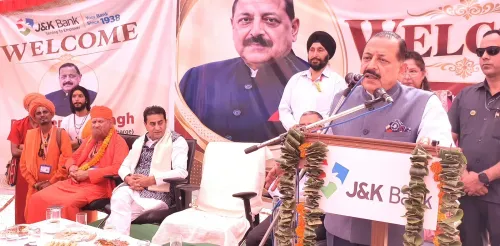
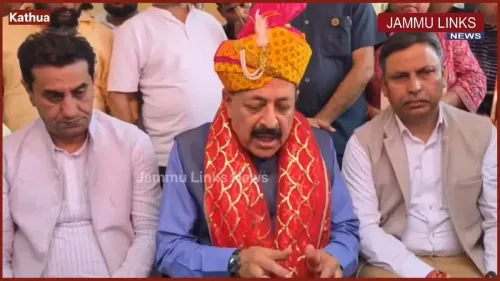
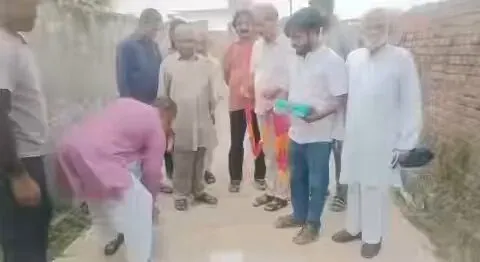
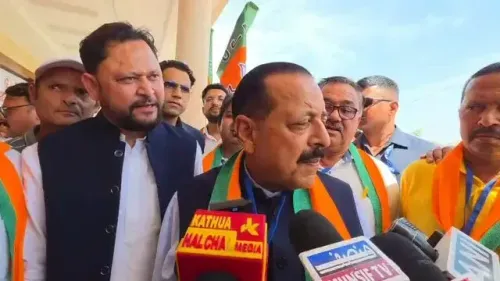
Concrete walls between civilians and cross-border fire are rising again in Kathua district — and this time, the numbers are significant. Union Science and Technology Minister Dr. Jitendra Singh announced on Wednesday, November 11, 2026, that 796 new family bunkers have been completed in the Hiranagar sector of Kathua along the Indo-Pak International Border, adding to an existing stock of over 2,000 family bunkers built since 2018.
Hiranagar's new shield: 796 bunkers on the firing line
The Hiranagar sector sits in one of the most exposed stretches of the International Border in Jammu, where civilian villages have historically borne the brunt of cross-border shelling. Family bunkers — small, reinforced underground or semi-underground structures built adjacent to homes — are designed to give border residents a few critical minutes of protection when firing begins. The 796 newly completed structures in Hiranagar represent a significant single-phase addition to the district's protective infrastructure.
Dr. Jitendra Singh framed the completion as evidence of 'government's unwavering commitment' and Prime Minister Narendra Modi's personal reiteration of ensuring 'dignified living for the people in the border areas.' The phrasing is deliberate: for successive administrations, bunkers have never been sold merely as military-adjacent infrastructure but as a welfare entitlement — the state's minimum promise to those who live under the shadow of the border.
A programme that began in 2018 and keeps growing
India's family bunker scheme in Jammu's border villages was formally accelerated from 2018 onwards, funded centrally and executed through the Jammu and Kashmir administration. The logic was straightforward: community bunkers required villagers to run to a central shelter, costing precious seconds. Family-level bunkers — one per household — eliminated that fatal delay. The programme sits within the broader Border Area Development Programme, which also covers road connectivity, electrification, and housing upgrades in forward villages.
The 2019 reorganisation of Jammu and Kashmir as a Union Territory gave the central government direct administrative leverage over project timelines, and the pace of infrastructure delivery in border areas reportedly picked up in subsequent years. The cumulative figure of over 2,000 bunkers since 2018 — now supplemented by the 796 in Hiranagar — represents thousands of families with a physical line of last resort inside their own compounds.
What the milestone means for Kathua's border villages
Kathua is not an abstract data point. The district has seen multiple ceasefire violation incidents over the years, and its border belt villages — many within earshot of Pakistani outposts — have experienced evacuations, property damage, and casualties when tensions spike. For residents of these villages, a completed bunker is not a policy announcement; it is a decision about whether to stay on ancestral land or leave.
That calculus — stay or abandon the border belt — has enormous strategic significance beyond the humanitarian dimension. Depopulated border villages create security voids. Keeping communities rooted in forward areas, with the confidence that the state has built them shelter, is as much a border-security calculation as a welfare one. It is why successive governments have treated bunker construction as non-negotiable, even as the Line of Control and International Border have experienced varying degrees of tension.
The next test for the programme will be whether the remaining gaps across other vulnerable sectors of the International Border are closed at comparable speed — and whether the Border Area Development Programme review cycles translate the Hiranagar model into a replicable template for every exposed village from Kathua to Poonch.
Point of View
Dr. Jitendra Singh — himself a Jammu-region MP — signals that border-area infrastructure remains a politically salient deliverable ahead of any future J&K electoral cycle. The programme's deeper strategic logic, however, transcends electoral calculus: populated forward villages are themselves a form of soft border management, and the state's willingness to build shelter inside every household is what makes that population's continued presence viable.
NationPress
11 Nov 2026
Frequently Asked Questions
What are family bunkers and why are they built in Kathua?
Family bunkers are small reinforced protective structures built adjacent to homes in border villages, allowing residents to take immediate shelter during cross-border shelling without having to run to a distant community bunker. Kathua district lies along the Indo-Pak International Border and has historically experienced civilian exposure to cross-border firing, making such infrastructure a critical safety measure.
How many family bunkers have been built in J&K border areas since 2018?
According to Union Minister Dr. Jitendra Singh's announcement, over 2,000 family bunkers were constructed since 2018, and an additional 796 have now been completed in the Hiranagar sector of Kathua district, bringing the cumulative figure above 2,800.
What is the Border Area Development Programme?
The Border Area Development Programme is a central government scheme that funds infrastructure in villages along India's international borders, covering roads, electrification, housing, and civilian protection measures such as family bunkers in J&K's Jammu region.
Which areas of Kathua are covered by the new bunker construction?
The 796 newly completed family bunkers are specifically located in the Hiranagar sector of Kathua district along the Indo-Pak International Border in the Jammu region.
Why does the government prioritise keeping villagers in border areas?
Populated forward villages serve a dual purpose: they provide communities with the right to live on ancestral land with state protection, and they prevent demographic voids along the International Border that could create security vulnerabilities. Infrastructure investment, including bunkers, is seen as essential to sustaining civilian presence in these strategically sensitive zones.