Chirag Paswan pitches Farm-to-Global Market vision at Bharat Agriculture Conference
Synopsis
Union Food Processing Minister Chirag Paswan addressed the Bharat Agriculture Conference 2026 at Bharat Mandapam, New Delhi, pushing a 'Farm to Factory to Global Market' strategy that links AI-driven farming, food processing infrastructure and global exports to raise farmer incomes.
Key Takeaways
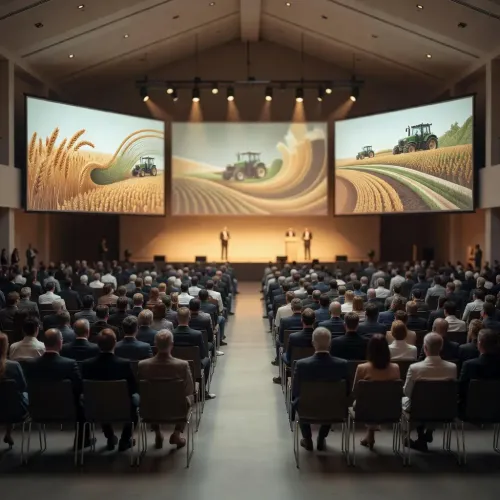
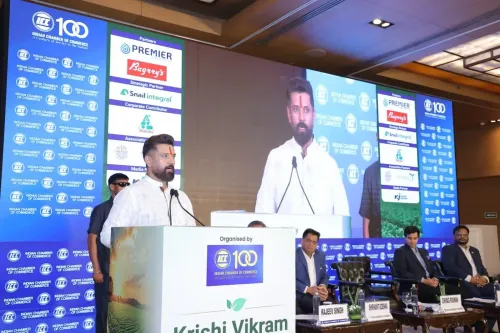
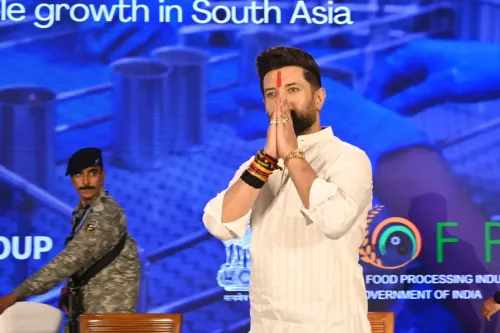
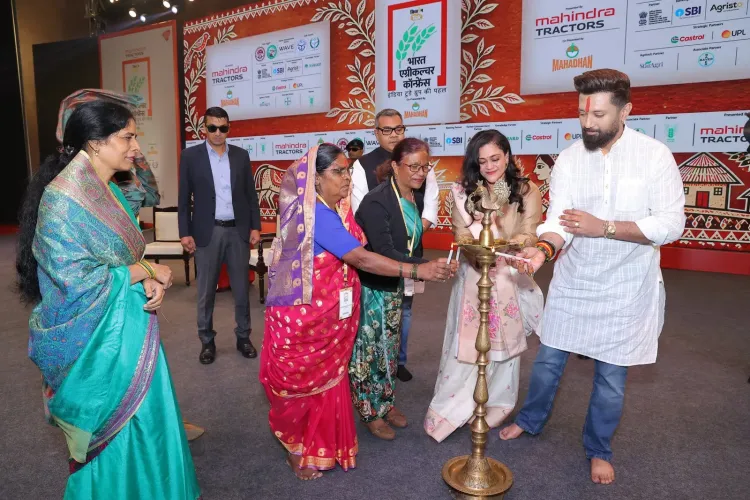
Chirag Paswan spoke at the Bharat Agriculture Conference 2026 at Bharat Mandapam, New Delhi on November 11, 2026 , organised by Kisan Tak.
The minister articulated a 'Farm to Factory to Global Market' vision as the government's operating logic for the food processing and agriculture sectors.
He stressed the need for AI-based farming, modern technology adoption , and value addition to close the gap between farm-gate prices and final consumer prices.
Existing policy instruments include the Pradhan Mantri Kisan Sampada Yojana (2017) and the PM Formalisation of Micro Food Processing Enterprises scheme (2020) .
The stated goal is not just higher agricultural production but better market access, fair prices, and increased economic returns for farmers through processing.
Fresh scheme guidelines or budget allocations for AI integration and value-addition projects from the Ministry of Food Processing Industries remain the key development to watch.
From the floor of Bharat Mandapam, New Delhi, Union Food Processing Minister Chirag Paswan told an audience of farmers, industry stakeholders and policymakers on Wednesday, November 11, 2026 that India's agricultural future must be measured not just in tonnes harvested — but in the value that travels from the field all the way to a global shelf.
Speaking at the Bharat Agriculture Conference 2026, organised by Kisan Tak — the agri initiative of the India Today Group — Paswan laid out a three-link chain that now anchors the government's thinking: 'Farm to Factory aur Factory to Global Market' (Farm to Factory and Factory to Global Market). The framing, he said, is not rhetorical. It is the operating logic behind efforts to give farmers a fair price, better market access, and greater economic returns through food processing.
Why 'value addition' is the operative phrase now
India has historically obsessed over production numbers — record wheat output, record rice procurement. What that metric misses is the spread between what a farmer earns at the farm gate and what a consumer pays for a finished product. Paswan's conference remarks zeroed in on exactly this gap. He stressed that increasing AI-based farming, modern technology adoption, and processing-led value addition are the instruments the government intends to use to close it.
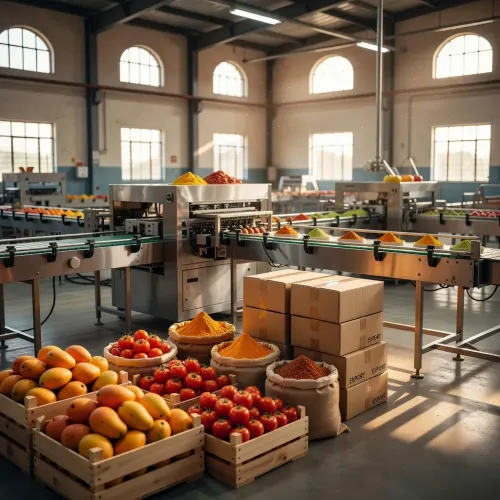
The policy scaffolding is not new. The Pradhan Mantri Kisan Sampada Yojana, launched in 2017, was designed to build the cold-chain and processing infrastructure that would allow perishables to survive the journey from village to market. The Pradhan Mantri Formalisation of Micro Food Processing Enterprises (PM FME) scheme, approved in 2020, targeted the vast informal tier of small processors — giving micro-units access to credit, branding support and market linkages that had previously been out of reach.
AI in the field — from buzzword to policy priority
What is newer in Paswan's articulation is the explicit emphasis on artificial intelligence and digital tools in farming itself — not just in the factory. Since 2014, multiple central ministries have pushed technology adoption across the agricultural value chain, but AI-led precision farming has only recently moved from pilot programmes to mainstream ministerial messaging. At Bharat Mandapam, Paswan signalled that the Ministry of Food Processing Industries sees itself as a bridge between the farm-tech conversation and the processing industry's hunger for consistent, quality raw material.
The 'Global Market' ambition and what it demands
The third link in the chain — global market access — is where the ambition is most pronounced and the execution most demanding. For Indian processed food to earn shelf space internationally, it requires standardisation, cold-chain continuity, and compliance with importing-country regulations — gaps that government schemes have tried to address with varying success. Paswan's framing at the conference reinforces the government's stated intent to position India's food processing sector as a global export powerhouse, backing Prime Minister Narendra Modi's broader push to lift agricultural value-chain earnings at scale.
The Ministry's next steps — including any fresh budget allocations or scheme guidelines for AI integration and value-addition infrastructure — will be the real test of whether this 'Farm to Factory to Global Market' vision acquires hard rupee targets or remains an aspirational frame.
The conference stage was set; now the policy calendar has to deliver the sequel.
Point of View
The minister is also signalling alignment with the broader digital-India push, lending political salience to what are often seen as technocratic scheme discussions. The speech fits a longer arc in which successive governments have tried to shift the policy narrative from input subsidies to output value — a shift that has consistently outpaced implementation. Whether the LJP (Ram Vilas)-led ministry can convert this aspirational framing into durable scheme architecture and measurable farmer income gains before the next election cycle will define the political legacy of this ministerial tenure.
NationPress
11 Nov 2026
Frequently Asked Questions
What did Chirag Paswan say at the Bharat Agriculture Conference 2026?
Union Food Processing Minister Chirag Paswan outlined a 'Farm to Factory to Global Market' strategy, emphasising AI-based farming, modern technology, and food processing as tools to raise farmer incomes and give Indian agricultural produce global market access.
Where was the Bharat Agriculture Conference 2026 held?
The Bharat Agriculture Conference 2026 was held at Bharat Mandapam, New Delhi, and was organised by Kisan Tak, the agriculture initiative of the India Today Group.
What is the Pradhan Mantri Kisan Sampada Yojana?
The Pradhan Mantri Kisan Sampada Yojana was launched in 2017 to build modern food processing infrastructure, including cold chains and processing units, to reduce post-harvest losses and improve farmer realisation.
What is the PM Formalisation of Micro Food Processing Enterprises scheme?
The PM FME scheme, approved in 2020, supports small and micro food processing units with credit access, branding support and market linkages, aiming to integrate them into formal value chains and increase farmer incomes.
How is AI being used in Indian farming?
Multiple central ministries have promoted AI and digital tools in agriculture since 2014 for precision farming and crop management. Chirag Paswan's remarks at the Bharat Agriculture Conference 2026 signal that AI-based farming is now a mainstream ministry-level policy priority.