Chirag Paswan Meets World Bank to Push Food Processing Agenda
Synopsis
Union Food Processing Minister Chirag Paswan met World Bank officials and senior ministry officers on 27 May 2026 to discuss India's food processing agenda, focusing on infrastructure, supply chains, value addition, and scaling investments — signalling a push for multilateral support to modernise a sector critical to rural incomes.
Key Takeaways
Chirag Paswan met World Bank officials alongside senior Ministry of Food Processing Industries officers on 27 May 2026 .
Discussions covered four areas: infrastructure, supply chains, value addition, and investments to scale the food processing sector.
India's food processing sector faces post-harvest losses estimated at 20 to 30 percent , a key problem the ministry's schemes aim to address.
Active policy instruments include the Pradhan Mantri Kisan Sampada Yojana , the PMFME scheme , and the PLI Scheme for Food Processing Industries .
The World Bank has historically backed cold-chain and market-linkage projects in India aligned with formalisation and export goals.
Outcomes to watch include possible new World Bank project approvals and food processing allocations in the next Union Budget .
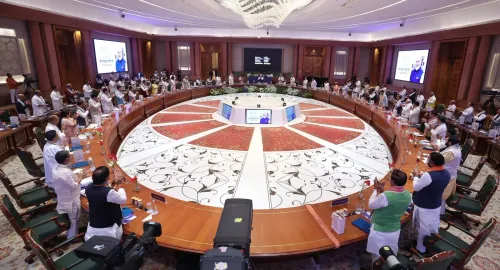
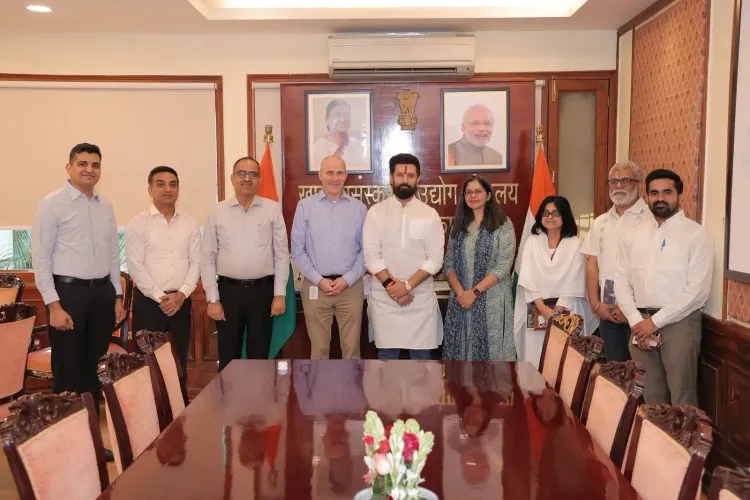
Union Food Processing Minister Chirag Paswan met with officials from the World Bank on Wednesday, 27 May 2026, alongside senior officers of the Ministry of Food Processing Industries, to advance India's food processing agenda covering infrastructure development, supply chain strengthening, value addition, and investment scaling.
Context
The minister confirmed the engagement on X (formerly Twitter), stating that discussions centred on four pillars: infrastructure, supply chains, value addition, and investments to scale the sector. The meeting signals an active push by the ministry to draw multilateral support for a sector the government considers critical to rural income growth and agricultural modernisation.
India's food processing sector has long been hampered by fragmented supply chains and post-harvest losses estimated at 20 to 30 percent of produce. Bridging this gap has been a stated priority across successive administrations, and multilateral partnerships have been a recurring instrument in that effort.
Policy Backdrop
The Ministry of Food Processing Industries has several active schemes underpinning the agenda discussed with the World Bank. The Pradhan Mantri Kisan Sampada Yojana, launched in 2017, supports mega food parks, cold-chain networks, and processing infrastructure across states. The Pradhan Mantri Formalisation of Micro Food Processing Enterprises (PMFME) scheme, launched in 2020, targets micro-unit upgrades and supply-chain linkages for small operators.
The Production Linked Incentive (PLI) Scheme for Food Processing Industries, introduced in 2021, has been the flagship instrument to attract large-scale private investment and expand processing capacity. Together, these schemes form the scaffolding within which any World Bank technical or financial assistance would likely operate.
The National Mission on Food Processing, restructured in 2017-18, further reinforced the ministry's mandate to strengthen value addition and supply-chain integration — themes that directly mirror the agenda Paswan outlined from the 27 May meeting.
Stakeholders and Impact
The primary beneficiaries of any outcome from this engagement would be food processing MSMEs, farmers and Farmer Producer Organisations (FPOs), and agri-value chain investors. A stronger cold-chain and processing infrastructure directly reduces post-harvest losses, improving farm-gate realisations for millions of small and marginal farmers.
The World Bank has historically supported cold-chain and market-linkage projects in India aligned with export promotion and sector formalisation. Its technical assistance capacity, combined with the ministry's scheme architecture, could accelerate state-level processing cluster development — particularly in regions with high agricultural output but limited value-addition infrastructure.
For investors, a coordinated multilateral signal alongside government-backed PLI incentives could lower perceived risk and attract fresh capital into a sector that the government aims to grow significantly as a share of GDP.
What's Next
Observers will watch for possible new World Bank project approvals or technical assistance packages targeting state-level food processing clusters in the months ahead. Parliamentary committee reviews on food processing budget allocations and the next Union Budget cycle will be key milestones for assessing how this engagement translates into concrete commitments.
Minister Paswan's outreach to a multilateral lender at this stage of the government's term suggests the ministry is positioning the food processing sector for a significant investment push — one that could define rural agri-economy outcomes well into the next planning cycle.
Point of View
Supply chains, value addition, and investment — reflects a deliberate effort to internationalise the ministry's reform pitch beyond domestic scheme cycles. For a minister who also leads a coalition partner, securing a high-profile multilateral engagement serves both policy and political optics. The meeting fits a broader arc in which successive food processing ministers have leaned on World Bank credibility to accelerate private capital into a sector that has underperformed its potential relative to India's farm output. The real test will be whether this dialogue produces binding project commitments or remains an exploratory exchange.
NationPress
10 Oct 2026
Frequently Asked Questions
Why did Chirag Paswan meet World Bank officials?
Chirag Paswan met World Bank officials on 27 May 2026 to discuss India's food processing agenda, specifically infrastructure development, supply chain strengthening, value addition, and attracting investments to scale the sector.
What is the World Bank's role in India's food processing sector?
The World Bank has historically provided loans and technical assistance for cold-chain, market-linkage, and infrastructure projects in India that support food processing formalisation and export promotion goals.
What are the main government schemes for food processing in India?
Key schemes include the Pradhan Mantri Kisan Sampada Yojana for mega food parks and cold chains, the PMFME scheme for micro-enterprise formalisation, and the PLI Scheme for Food Processing Industries to attract large-scale investment.
What is post-harvest loss in India's food sector?
Post-harvest losses in India's food and agriculture sector are estimated at 20 to 30 percent of produce, driven by inadequate cold-chain infrastructure and fragmented supply chains — a core problem the ministry's schemes aim to address.
What outcomes are expected from the Chirag Paswan World Bank meeting?
Observers are watching for possible new World Bank project approvals or technical assistance packages for state-level food processing clusters, as well as any reflection of the engagement in upcoming Union Budget allocations for the sector.