Chirag Paswan marks World Food Safety Day, urges food processing push
Synopsis
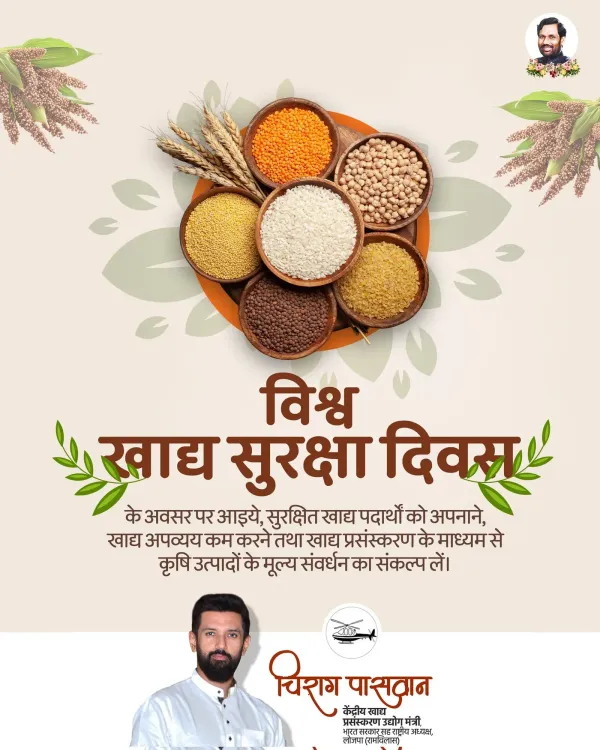
On World Food Safety Day, 7 June 2026, Union Minister Chirag Paswan called on citizens to pledge safe and quality food use, eliminate wastage, and promote food processing to strengthen farmer incomes and India's food security — linking consumer behaviour to the ministry's broader policy agenda.
Key Takeaways
World Food Safety Day is observed on 7 June every year, designated by the UN General Assembly in 2018 .
Union Minister Chirag Paswan urged citizens to resolve to consume safe, clean, and quality food and to reduce food wastage.
The minister linked food processing promotion directly to farmer income enhancement and national food security.
The PMFME scheme , launched in 2020 with a Rs 10,000 crore outlay, is the ministry's flagship instrument for formalising micro food processing units.
Post-harvest losses for fruits and vegetables are estimated at 15–20 per cent , the core economic rationale for expanding processing infrastructure.
FSSAI , established under the Food Safety and Standards Act, 2006 , enforces food quality standards aligned with Codex Alimentarius .
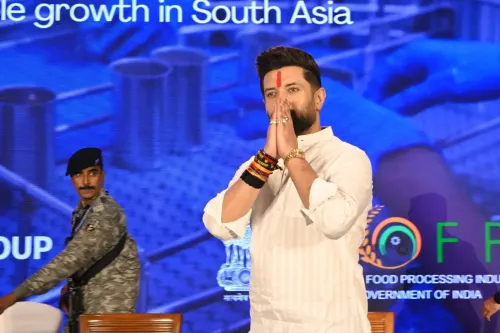
Union Food Processing Minister Chirag Paswan on Sunday, 7 June 2026 marked World Food Safety Day by calling on citizens to pledge safe, clean, and quality food consumption and to support food processing as a means of strengthening farmer incomes and national food security.
Context
Posting in Hindi on the occasion of World Food Safety Day, the minister wrote: 'विश्व खाद्य सुरक्षा दिवस के अवसर पर आइए, हम सभी सुरक्षित, स्वच्छ एवं गुणवत्तापूर्ण खाद्य पदार्थों के उपयोग का संकल्प लें' ('On the occasion of World Food Safety Day, let us all resolve to use safe, clean, and quality food products'). He further urged citizens to stop food wastage, raise awareness about nutrition, and contribute to farmer welfare by promoting food processing.
World Food Safety Day is observed every year on 7 June following a United Nations General Assembly resolution in 2018, co-sponsored by the Food and Agriculture Organisation (FAO) and the World Health Organisation (WHO). The day is designed to draw attention to foodborne risks and to promote action across the farm-to-fork chain.
Policy Backdrop
The Ministry of Food Processing Industries, established in 1988, is the nodal body for policy and investment promotion in India's food processing sector. The ministry administers the Pradhan Mantri Formalisation of Micro Food Processing Enterprises (PMFME) scheme, launched in 2020 under the Atmanirbhar Bharat package with an outlay of Rs 10,000 crore to formalise micro food processing units and support One District One Product clusters.
Food safety standards are set and enforced nationally by the Food Safety and Standards Authority of India (FSSAI), a statutory regulator created under the Food Safety and Standards Act, 2006. India has aligned its national standards with the Codex Alimentarius framework since the 1960s and participates in joint FAO-WHO food safety programmes.
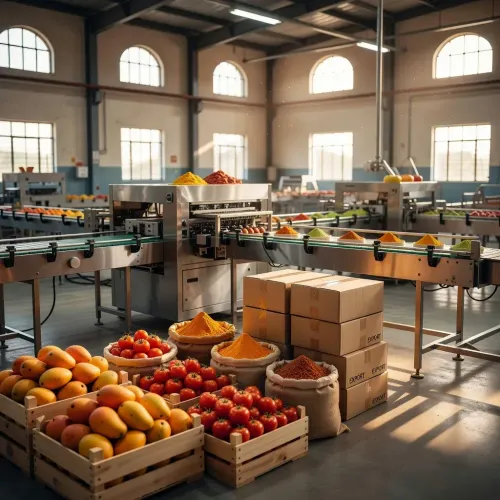
Post-harvest losses for fruits and vegetables have been estimated at 15 to 20 per cent, a figure that successive governments have cited as the primary rationale for expanding processing infrastructure. Reducing such losses directly improves farmer realisation and moderates consumer prices.
Stakeholders and Impact
The minister's call encompasses three distinct groups: small and marginal farmers who stand to gain from higher value realisation through processing; micro food processing enterprises seeking formalisation and credit support; and consumers who bear the health costs of unsafe food. Linking all three in a single message reflects the ministry's stated approach of treating food safety, nutrition awareness, and processing capacity as interconnected policy levers.
India's food processing sector has grown steadily as a share of agricultural GDP, with the government positioning it as a bridge between farm output and industrial value addition — a trajectory that began accelerating after the 1991 economic liberalisation. Chirag Paswan, as national president of the Lok Janshakti Party (Ram Vilas) and a minister in the National Democratic Alliance government, has consistently emphasised value addition and farmer income in his ministerial communication.
What's Next
Attention will remain on the ground-level rollout of PMFME processing clusters and credit-linked support in state budgets, as well as any amendments to FSSAI regulations that may be tabled in the forthcoming Parliament session. The ministry is also expected to use global observances such as World Food Safety Day to anchor public-awareness campaigns aligned with its broader nutrition and anti-wastage agenda.
As India's food processing ambitions expand, the minister's emphasis on behavioural change — pledging against food wastage and demanding quality produce — signals that policy intent will increasingly need to be matched by consumer-level adoption and grassroots enterprise support.
Point of View
Anti-wastage, and processing promotion in a single post, he reinforces the ministry's framing of food processing as a welfare instrument rather than a purely industrial one. The explicit mention of farmer income alongside food safety is consistent with the NDA government's broader effort to position agricultural value chains as a rural livelihood strategy. Coming ahead of a potential Parliament session, the message may also be laying groundwork for legislative or regulatory activity around FSSAI norms or PMFME expansion. The call for citizen-level pledges reflects a growing pattern in Indian policy communication: using global observances to domesticate international agendas and generate visible ministerial ownership.
NationPress
19 Sept 2026
Frequently Asked Questions
What is World Food Safety Day and when is it observed?
World Food Safety Day is an annual global observance held on 7 June , designated by the United Nations General Assembly in 2018 to raise awareness about foodborne risks and promote safe food practices across the farm-to-fork chain.
What did Chirag Paswan say on World Food Safety Day 2026?
Chirag Paswan called on citizens to pledge safe, clean, and quality food consumption, stop food wastage, raise nutrition awareness, and promote food processing to strengthen farmer incomes and national food security.
What is the PMFME scheme?
The Pradhan Mantri Formalisation of Micro Food Processing Enterprises (PMFME) scheme was launched in 2020 under Atmanirbhar Bharat with an outlay of Rs 10,000 crore to formalise micro food processing units and support One District One Product clusters.
What is FSSAI and what does it do?
FSSAI is the Food Safety and Standards Authority of India , a statutory regulator set up under the Food Safety and Standards Act, 2006 to establish and enforce food safety and quality standards across the country, aligned with international Codex Alimentarius norms.
How does food processing help farmers in India?
Food processing reduces post-harvest losses — estimated at 15–20 per cent for fruits and vegetables — and increases value addition, which raises the price farmers receive for their produce and reduces supply-chain waste.