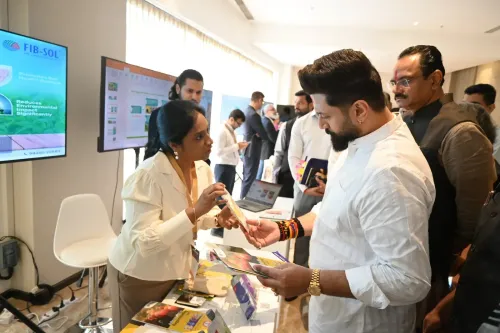
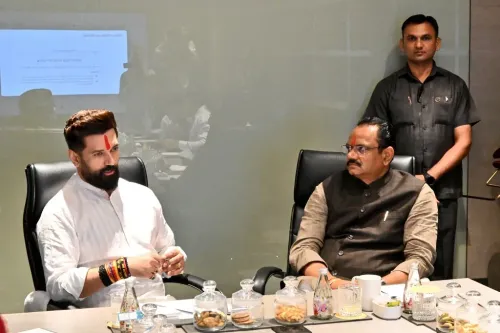
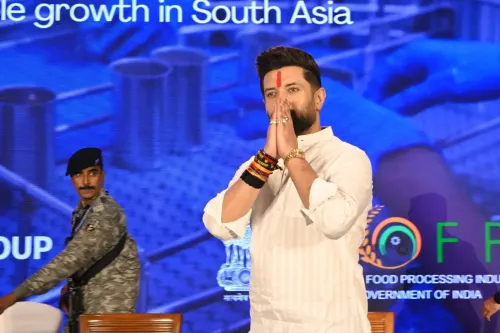
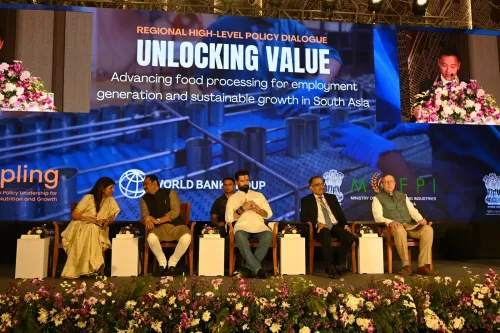
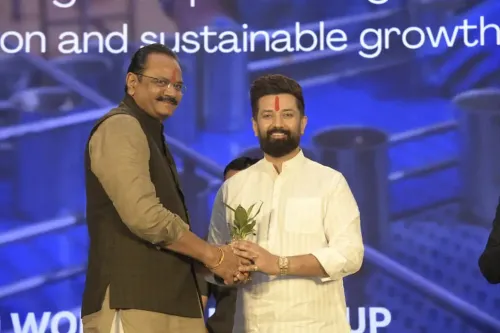
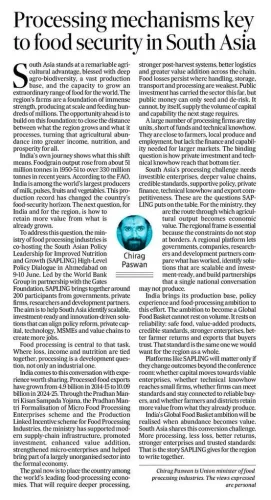
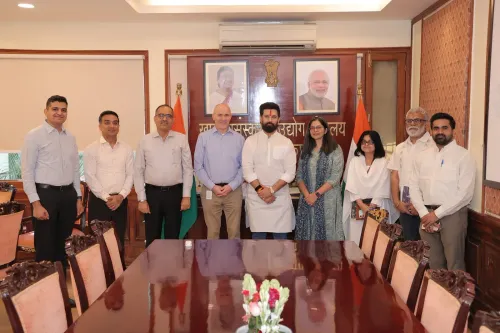
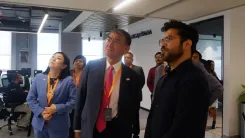
Chirag Paswan at World Bank SAPLING Dialogue in Ahmedabad

Synopsis
Union Food Processing Minister Chirag Paswan attended the World Bank's two-day SAPLING dialogue in Ahmedabad on June 9, 2026, calling for concrete steps on food wastage reduction and job creation to realise PM Modi's vision of making India a global 'Food Basket'.
Key Takeaways
Chirag Paswan participated in the World Bank -organised SAPLING two-day dialogue in Ahmedabad on June 9, 2026 .
The minister stressed tackling food processing challenges, creating employment, and reducing food wastage as the three pillars of India's 'Food Basket' ambition.
He attributed the vision of India as a global food supplier directly to Prime Minister Narendra Modi .
India's estimated post-harvest losses stand at 30–40% , a key target of schemes such as PMFME , Operation Greens , and the PLI for food products.
The SAPLING platform convened by the World Bank aims to align South Asian policy on nutrition and food systems, with India playing a central role.
Follow-up actions to watch include next Union Budget allocations for food processing and a potential India–World Bank nutrition project pipeline.
Union Food Processing Minister Chirag Paswan participated in a two-day World Bank-organised SAPLING (South Asian Policy Leadership for Improved Nutrition and Growth) dialogue in Ahmedabad on Tuesday, June 9, 2026, engaging in wide-ranging discussions on the food processing sector and India's ambition to become a global food supplier.
Context
Posting on X after the event, Chirag Paswan wrote in Hindi that he had participated in the two-day SAPLING dialogue and held deliberations on 'खाद्य प्रसंस्करण क्षेत्र से जुड़े विभिन्न आयामों' [various dimensions related to the food processing sector]. He stated his belief that by understanding the sector's challenges, creating new employment opportunities, and taking concrete steps to reduce food wastage, 'we can establish India as a global Food Basket.' He attributed this vision to Prime Minister Narendra Modi and reaffirmed collective commitment to realising it.
The SAPLING platform is convened by the World Bank to shape regional policy on nutrition and food systems across South Asia. The choice of Ahmedabad as the venue places the dialogue in one of India's key agro-industrial corridors, underlining the country's central role in the regional conversation.
Policy Backdrop
India's food processing sector has been the focus of sustained policy attention over the past several years. The Pradhan Mantri Formalisation of Micro Food Processing Enterprises (PMFME) scheme, launched in June 2020, extended credit, training and branding support to micro-level units, while the expanded Operation Greens initiative targeted post-harvest loss reduction for key horticultural value chains.
The Production-Linked Incentive (PLI) scheme for food products and the 2019 National Policy on Food Processing further aimed at raising the sector's share in GDP and boosting exports. Analysts estimate India's post-harvest losses at 30–40% of produce — a figure that successive schemes have sought to bring down through cold-chain investment and processing infrastructure.
Engagement with multilateral bodies such as the World Bank reflects an effort to align domestic programmes with broader South Asian nutrition and food-security goals, and to attract technical and financial partnerships for scaling these initiatives.
Stakeholders and Impact
The minister's emphasis on employment creation and food-waste reduction directly concerns small and marginal farmers and food processing MSMEs, which together form the backbone of India's rural agri-economy. Reducing post-harvest losses translates into higher effective incomes for farmers and lower food prices for consumers.
For South Asian neighbours, India's positioning as a 'Food Basket' carries implications for regional food security, trade flows, and nutrition outcomes — themes central to the SAPLING platform's mandate. The World Bank's convening role signals that multilateral financing and technical assistance may be on the table for follow-up action.
What's Next
Observers will watch for any formal outcomes or joint statements from the Ahmedabad SAPLING dialogue, as well as subsequent announcements on the PMFME or PLI schemes in the forthcoming Union Budget cycle. The minister's public articulation of PM Modi's 'Food Basket' vision at a World Bank forum also sets a benchmark against which future policy announcements from the Ministry of Food Processing Industries are likely to be measured.
If the SAPLING engagement translates into a formal India–World Bank nutrition or food-systems project pipeline, it could channel significant multilateral resources into India's agri-processing infrastructure — with ripple effects for rural employment and export competitiveness alike.
Point of View
Not just domestic scheme architecture. By invoking PM Modi's 'Food Basket' vision on an international platform, the minister is effectively internationalising a domestic policy goal — raising its stakes and its accountability. This fits a broader pattern in which the NDA government uses multilateral engagements to legitimise and amplify flagship programmes, creating pressure for measurable outcomes. The real test will be whether the SAPLING dialogue produces a concrete project pipeline or remains a high-profile conversation.
NationPress
20 Sept 2026
Frequently Asked Questions
What is the SAPLING dialogue organised by the World Bank?
SAPLING stands for South Asian Policy Leadership for Improved Nutrition and Growth. It is a platform convened by the World Bank to shape regional policy on nutrition and food systems across South Asia, bringing together policymakers from member countries.
Why did Chirag Paswan attend the World Bank SAPLING event in Ahmedabad?
As Union Minister of Food Processing Industries, Chirag Paswan attended the two-day SAPLING dialogue to discuss challenges and opportunities in India's food processing sector, including employment creation and food wastage reduction, in a regional multilateral setting.
What is India's 'Food Basket' vision?
The 'Food Basket' vision refers to Prime Minister Narendra Modi 's stated goal of positioning India as a leading global supplier of processed and raw food by reducing post-harvest losses, scaling food processing infrastructure, and boosting agri-exports.
What schemes support India's food processing sector?
Key schemes include the PMFME (Pradhan Mantri Formalisation of Micro Food Processing Enterprises) launched in 2020 , the Production-Linked Incentive (PLI) scheme for food products, and Operation Greens , all aimed at reducing waste and expanding processing capacity.
How large is India's food wastage problem?
India is estimated to lose 30–40% of its agricultural produce to post-harvest losses, making food wastage reduction a central objective of the Ministry of Food Processing Industries and a recurring theme in multilateral discussions.