Chirag Paswan Meets Gujarat Agri Minister in Ahmedabad
Synopsis
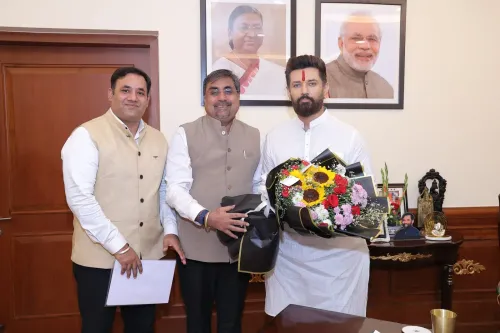
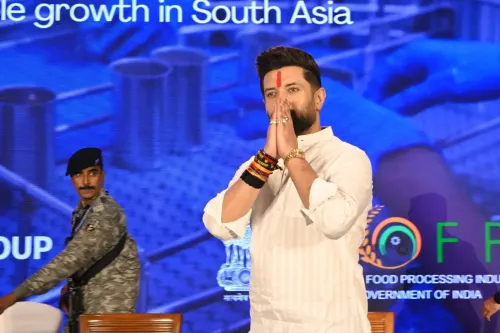
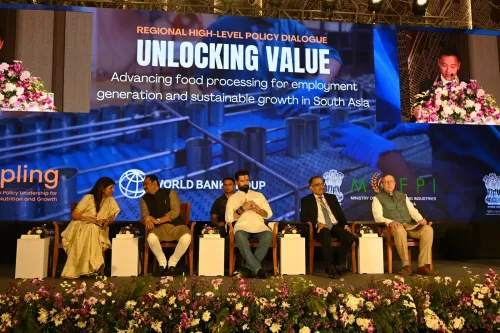
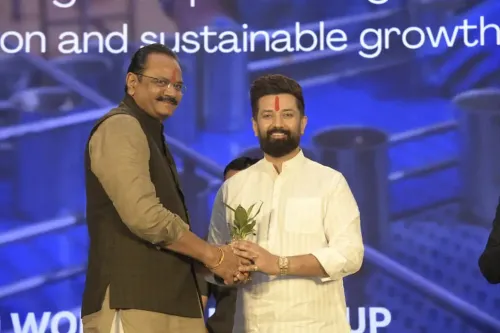
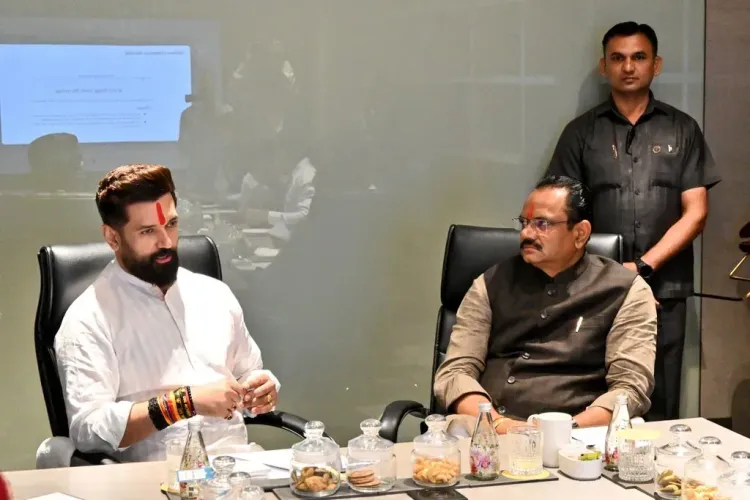
Union Food Processing Minister Chirag Paswan met Gujarat Agriculture Minister Jitu Vaghani in Ahmedabad on June 9 during the SAPLING programme. Talks covered accelerating food processing, improving farmer price realisations, and expanding investment and jobs in Gujarat, with both sides invoking PM Modi's 'double engine government' framework.
Key Takeaways
Chirag Paswan and Gujarat Agriculture Minister Jitu Vaghani met in Ahmedabad on June 9, 2026 on the sidelines of the SAPLING programme .
Discussions focused on accelerating food processing growth in Gujarat , securing better prices for farmers, and boosting investment and employment.
Paswan cited the 'double engine government' framework under PM Narendra Modi as the basis for central-state coordination on food processing.
The PMFME scheme , launched in 2020 , is the Centre's flagship tool for formalising and supporting micro food processing enterprises across states including Gujarat .
Follow-up investment announcements or MoUs from the Ahmedabad talks are being watched as a measure of outcomes.
Union Food Processing Minister Chirag Paswan met Gujarat Agriculture and Farmer Welfare Minister Jitu Vaghani in Ahmedabad on Tuesday, June 9, 2026, on the sidelines of the SAPLING programme, holding focused talks on accelerating food processing investment and improving farmer incomes in the state.
Context
Paswan described the meeting as a 'meaningful discussion' (sarthak charcha), covering three broad areas: giving momentum to food processing in Gujarat, ensuring better prices for farmers, and expanding investment and employment in the sector. The talks reflect an effort to align central ministry priorities with state-level agricultural policy at a time when Gujarat is being actively positioned as a hub for agro-industrial growth.
The SAPLING programme provided the platform for the meeting. Its exact scope could not be independently confirmed from established public records, but the event brought together central and state functionaries focused on agriculture and food processing.
Policy Backdrop
Food processing has been a central policy priority for the BJP-led government at the Centre, with the Pradhan Mantri Formalisation of Micro Food Processing Enterprises (PMFME) scheme, launched in 2020, serving as the flagship instrument. The scheme provides credit linkages, technical training, and marketing support to micro food processing units across states, with Gujarat among the key implementing states.
Paswan invoked the concept of the 'double engine government' (double engine sarkar) — a phrase used to describe aligned BJP-led administrations at the Centre and in states — saying that under Prime Minister Narendra Modi's leadership, the government is committed to making food processing 'a strong foundation of farmer prosperity and India's development journey.' The framing signals that the Centre views state-level coordination as essential to realising the sector's potential.
Post-harvest losses remain a structural challenge in Indian agriculture. Value addition through food processing is widely seen as a lever to raise farmer realisations, reduce waste, and generate rural employment. Gujarat has historically attracted agro-industrial investment owing to its infrastructure, port connectivity, and policy environment under successive administrations.
Stakeholders and Impact
Gujarat's farming community and the state's food processing MSMEs stand to be the primary beneficiaries of any concrete outcomes from the Ahmedabad discussions. Better price realisation for farmers depends directly on the depth of processing infrastructure available close to farm gates — a gap that central schemes like PMFME aim to address through cluster-based support.
For investors and industry, the signal from a joint central-state engagement is that policy continuity and administrative coordination are available to underpin new commitments. Employment generation in food processing — which is labour-intensive relative to capital employed — is also a stated goal, making the sector relevant to Gujarat's broader economic agenda.
What's Next
Observers will watch for follow-up investment announcements, memoranda of understanding, or state-level implementation updates on PMFME and allied schemes emerging from the Ahmedabad meeting. The engagement between Paswan and Vaghani sets a visible marker for accountability: any concrete commitments made in the room will be tested by ground-level outcomes for Gujarat's farmers and food processing entrepreneurs in the months ahead.
Point of View
Visible field engagement in a high-profile BJP state reinforces his ministry's relevance within the coalition calculus. The invocation of PM Modi's leadership alongside a state BJP minister also serves a political signalling function, projecting unity of purpose on farmer welfare — a theme that carries electoral weight in agrarian constituencies. The real test, however, will be whether the discussions translate into measurable outcomes: higher PMFME disbursements in Gujarat, new processing clusters, or concrete investor commitments.
NationPress
23 Oct 2026
Frequently Asked Questions
What did Chirag Paswan discuss with Gujarat Agriculture Minister Jitu Vaghani in Ahmedabad?
Chirag Paswan and Jitu Vaghani held talks in Ahmedabad on June 9, 2026, focusing on accelerating food processing in Gujarat, ensuring better price realisations for farmers, and increasing investment and employment in the sector.
What is the SAPLING programme mentioned in Chirag Paswan's post?
The SAPLING programme was the event that brought Chirag Paswan and Jitu Vaghani together in Ahmedabad. Its exact scope and objectives could not be confirmed from established public records at the time of this report.
What is the PMFME scheme and how does it relate to Gujarat?
The Pradhan Mantri Formalisation of Micro Food Processing Enterprises (PMFME) scheme was launched in 2020 to provide credit, training, and marketing support to micro food processing units. Gujarat is among the key states implementing the scheme.
What does 'double engine government' mean in Indian politics?
'Double engine government' is a phrase used by the BJP to describe states where both the central government and the state government are BJP-led, implying better policy alignment and faster implementation of central schemes.
Why is Gujarat important for food processing in India?
Gujarat has historically attracted agro-industrial investment due to its infrastructure, port connectivity, and stable policy environment. It is positioned as a model state for food processing and agro-industrial growth under successive BJP administrations.