Jaishankar pitches India's DPI and FTAs at Commonwealth summit
Synopsis
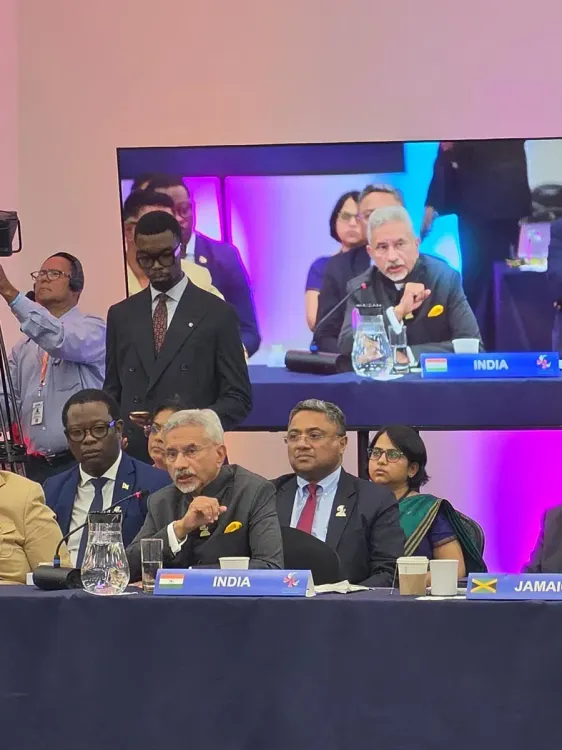
EAM Dr. S. Jaishankar represented India at the Commonwealth Heads of Government Executive Session, advocating for India's digital public infrastructure as a governance model and briefing delegates on India's FTAs and ongoing trade negotiations aimed at supply-chain resilience.
Key Takeaways
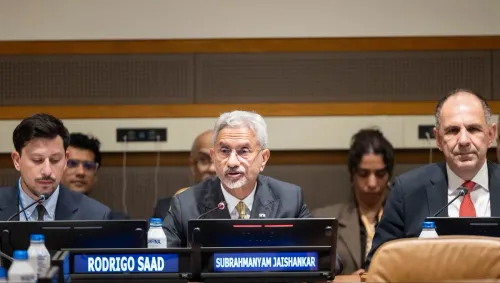
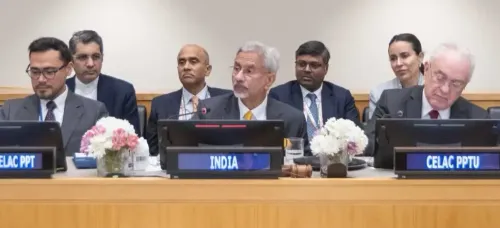
Jaishankar represented India at the Commonwealth Heads of Government Executive Session on 4 November 2026 .
He championed India's Digital Public Infrastructure — including Aadhaar, UPI and the Account Aggregator — as a replicable model for democratic economic access.
India had earlier positioned DPI as a global public good during its G20 presidency in 2023 , and the Commonwealth forum extends that campaign.
Jaishankar briefed delegates on India's FTAs with the UAE (February 2022) and Australia (April 2022) , and on ongoing negotiations with the EU and UK .
The minister framed FTAs as instruments for 'predictable trade and resilient supply chains' — a priority for small Commonwealth economies.
India's twin pitch of DPI and FTAs reflects a consistent strategy of using multilateral platforms to advance digital governance and trade liberalisation together.
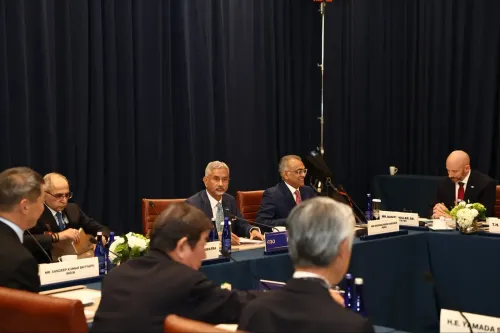
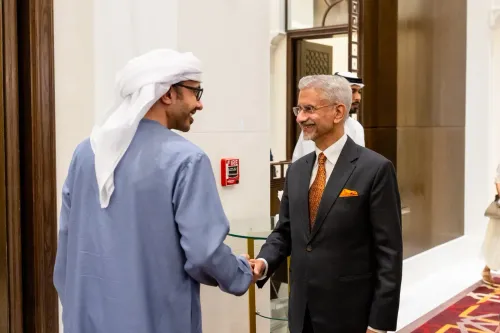
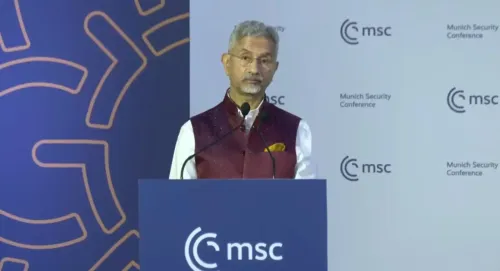
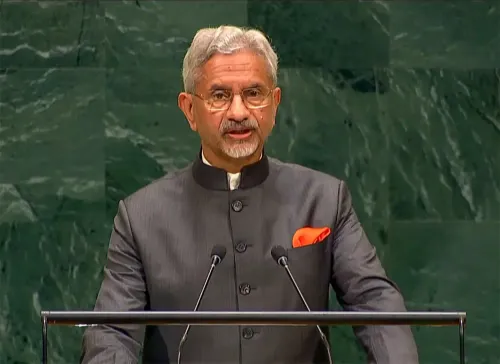
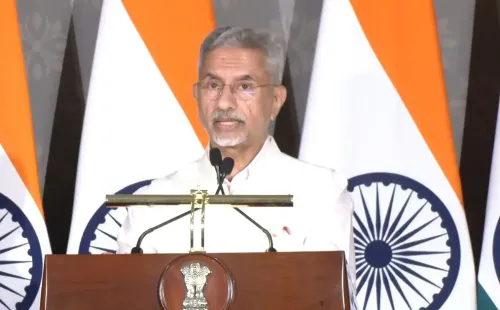
India's digital public infrastructure went on the global stage again — this time at the Commonwealth Heads of Government Executive Session, where Union External Affairs Minister Dr. S. Jaishankar represented the country and made the case for two of New Delhi's most consequential economic propositions: its homegrown digital stack and its expanding trade agreement architecture.
India's DPI stack as a governance blueprint for the Commonwealth
Speaking at the Executive Session of the Commonwealth Secretariat, Dr. Jaishankar highlighted the value of digital public infrastructure (DPI) for good governance and financial responsibility. His central argument: that DPI has 'democratized economies by expanding opportunities' — and that the Indian example is instructive for the bloc's 56 member states, many of them developing nations wrestling with inclusion gaps.
India's DPI stack — anchored by Aadhaar (biometric identity), UPI (real-time payments), and the Account Aggregator framework (consent-based data sharing) — is the same architecture India successfully championed as a global public good during its G20 presidency in 2023. The Commonwealth forum gives New Delhi another multilateral window to push that model south and east, toward economies that can adopt interoperable systems without building from scratch.
FTAs and the supply-chain resilience argument
Dr. Jaishankar also briefed delegates on India's recent Free Trade Agreements and ongoing negotiations. India signed a Comprehensive Economic Partnership Agreement with the UAE in February 2022 and an Economic Cooperation and Trade Agreement with Australia in April 2022 — two landmark deals that broke a decade-long FTA drought for New Delhi.
Talks with the EU and the UK remain active work-in-progress. The minister framed these understandings as contributors to 'predictable trade and resilient supply chains' — language that maps directly onto the post-pandemic global consensus around de-risking critical supply lines. For Commonwealth members, many of whom are small open economies, that framing offers a practical hook.
India's pattern at multilateral tables
The twin pitch — DPI plus FTAs — is not coincidental. India has consistently used multilateral platforms to advance both agendas in tandem, treating digital governance and trade liberalisation as mutually reinforcing levers of economic diplomacy. The Commonwealth, with its shared legal and administrative traditions, is fertile ground: member states share common-law frameworks that can ease the adoption of digital identity and payment systems modelled on India's experience.
What to watch next: whether the Commonwealth session produces any formal digital-infrastructure cooperation mandates, and whether the EU or UK FTA negotiations reach a decisive stage before the year closes — either outcome would validate the platform play Jaishankar made on Wednesday, 4 November 2026.
India is no longer just exporting software engineers. It is exporting the architecture of governance itself — and Jaishankar is making sure every multilateral room hears that pitch.
Point of View
New Delhi is building a coherent narrative — that its digital stack and its trade architecture together offer a credible development pathway for the Global South. The Commonwealth, with its 56-member reach into Africa, the Pacific and the Caribbean, is a strategically underused forum that India is now actively working to shape. Progress on the EU and UK FTAs will be the real test of whether this diplomatic energy converts into durable economic architecture.
NationPress
4 Nov 2026
Frequently Asked Questions
What did Jaishankar say at the Commonwealth Heads of Government meeting?
Dr. Jaishankar highlighted India's digital public infrastructure as a model for good governance and financial inclusion, and briefed Commonwealth delegates on India's recent FTAs and ongoing trade negotiations aimed at building resilient supply chains.
What is India's digital public infrastructure (DPI)?
India's DPI stack comprises Aadhaar (biometric identity), UPI (real-time digital payments) and the Account Aggregator framework — together enabling large-scale financial inclusion and governance efficiency, a model India has promoted globally since its G20 presidency in 2023.
Which FTAs has India signed recently?
India signed a Comprehensive Economic Partnership Agreement with the UAE in February 2022 and an Economic Cooperation and Trade Agreement with Australia in April 2022. Negotiations with the EU and UK are ongoing.
Why is India promoting DPI at Commonwealth summits?
India uses multilateral platforms like the Commonwealth to position its DPI stack as a replicable global public good, particularly for developing economies seeking cost-effective digital governance solutions — an approach consistent with India's South-South cooperation strategy.
What is the Commonwealth Heads of Government Executive Session?
The Executive Session is a working-level component of the biennial Commonwealth Heads of Government Meeting, where member states discuss shared economic, governance and development priorities among the 56-nation bloc.