Jaishankar tells CELAC: India's GDP doubling powers Global South solidarity
Synopsis
At the UN in New York, EAM Jaishankar co-chaired a rare India-CELAC foreign ministers' meeting and made a pointed case: India's doubled GDP is not just a domestic milestone — it is the engine of a new Global South solidarity model. With trade at $50 billion and climbing, and CELAC backing five Indian-led multilateral initiatives, this is India's most structured bid yet to anchor influence in Latin America and the Caribbean.
Key Takeaways
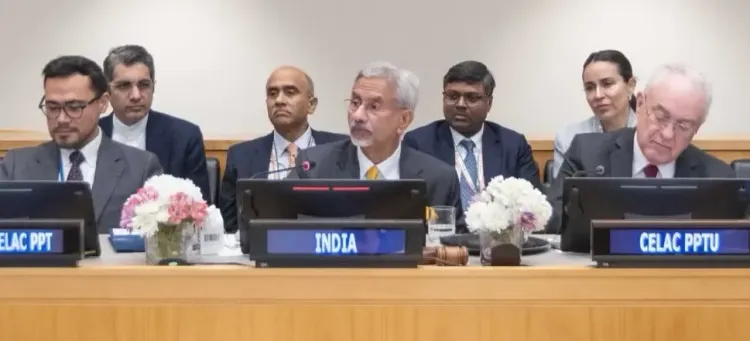
Jaishankar co-chaired the CELAC foreign ministers' meeting at the United Nations on 23 September 2026 .
India's GDP has more than doubled over the past decade, Jaishankar told 33 CELAC member nations .
India-CELAC mutual trade has grown to over $50 billion annually , with significant room to expand.
Ministers agreed to cooperate on health, pharma, agriculture, energy, SMEs, and digital technology .
CELAC nations backed five Indian-led initiatives including the International Solar Alliance and Global Biofuels Alliance .
New Delhi will expand ITEC programme slots for CELAC countries to boost capacity-building.
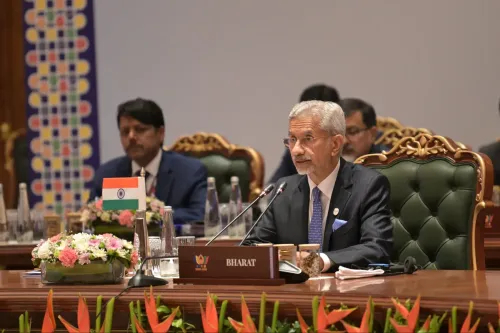
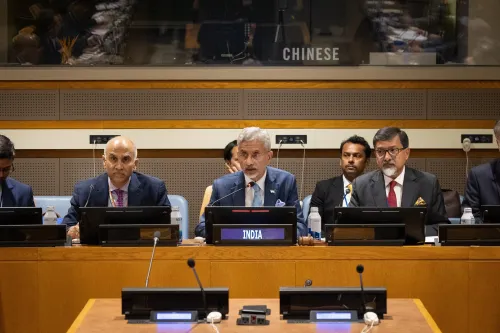
External Affairs Minister S. Jaishankar on Tuesday, 23 September 2026, told the foreign ministers of the Community of Latin American and Caribbean States (CELAC) at the United Nations in New York that India's rise as a major economy has enabled it to contribute meaningfully to shared prosperity across the Global South. The remarks came as Jaishankar co-chaired the 33-member CELAC foreign ministers' meeting alongside Uruguay's Foreign Minister Mario Lubetkin.
India's Economic Credentials on the Global Stage
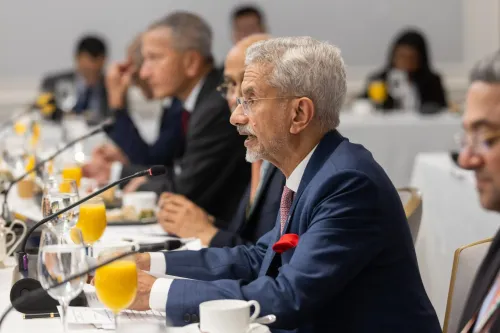
“Over the past decade, India has emerged as one of the world's major economies. Our GDP has more than doubled, growth has remained robust,” Jaishankar told the gathering. He pointed to India's expanding human resource base, growing domestic market, strong digital infrastructure, and widening technology capabilities as the foundations of its outward engagement. “This has strengthened our ability to contribute meaningfully to global growth and to partners across the Global South,” he said.
Solidarity, Not Self-Interest: India's Pitch to Latin America
Jaishankar was careful to frame India's engagement as principle-driven. “Our engagement with the Global South reflects our solidarity and commitment to shared prosperity,” he said, distancing New Delhi from a transactional foreign-policy reading. He cited India's humanitarian response to Hurricane Melissa, which struck Jamaica last year, and the earthquake that devastated Venezuela this year, as well as ongoing support for development programmes in the Caribbean and medicine supplies to Latin American nations.
Key Areas of Cooperation Agreed Upon
After the meeting, Jaishankar posted on X that ministers had agreed to deepen cooperation across health and pharmaceuticals, food and agriculture, energy and resources, small and medium enterprises, and digital technology. CELAC nations also extended support for a slate of Indian-led multilateral initiatives: the International Solar Alliance, the Coalition for Disaster Resilient Infrastructure, the International Big Cat Alliance, the Global Biofuels Alliance, and Mission Life.
Trade and Complementary Strengths
Bilateral trade between India and the CELAC bloc has grown to over $50 billion annually, though Jaishankar acknowledged significant untapped potential. “Yet there is much more room to grow,” he said. He outlined complementary strengths: India brings technology, pharmaceuticals, skilled human resources, and digital capabilities, while CELAC offers opportunities in critical minerals, sustainable energy, agriculture, food resources, and natural assets. New Delhi will also increase slots for CELAC countries in the Indian Technical and Economic Cooperation (ITEC) programme, broadening capacity-building access.
What This Signals for India's South-South Diplomacy
The CELAC engagement is the latest in a series of Global South outreach moves that have accelerated since India hosted the G20 Presidency in 2023, during which the African Union's permanent membership was secured. This comes amid growing competition among major powers — including China and the United States — to deepen influence in Latin America and the Caribbean. India's pitch centres on a non-coercive, capacity-building model rather than infrastructure loans or military ties. How CELAC nations respond — and whether trade follow-through matches diplomatic warmth — will determine the durability of this outreach.
Point of View
India is inserting itself as a third option rooted in soft power: medicines, digital infrastructure, and multilateral institution-building. The $50 billion trade figure is real progress, but it remains a fraction of China's trade footprint in the region. The true measure of this diplomacy will be whether ITEC expansions and pharma supply chains translate into durable political alignment, or whether India's Global South narrative remains a summit-table aspiration. India's record of converting ministerial goodwill into on-the-ground economic presence has been uneven — and Latin America will be a tough proving ground.
NationPress
23 Sept 2026
Frequently Asked Questions
What did EAM Jaishankar say at the CELAC meeting at the UN?
Jaishankar told CELAC foreign ministers on 23 September 2026 that India's doubled GDP and expanding capabilities have strengthened its ability to contribute to Global South prosperity. He cited India's humanitarian assistance, medicine supplies, and development support as evidence of solidarity beyond narrow national interest.
What is CELAC and why does it matter for India?
The Community of Latin American and Caribbean States (CELAC) is a 33-member regional bloc encompassing all of Latin America and the Caribbean. For India, the grouping represents a growing trade and diplomatic partner, with mutual trade now exceeding $50 billion annually and scope for expansion in critical minerals, energy, and digital sectors.
What cooperation areas did India and CELAC agree on?
Ministers agreed to cooperate in health and pharmaceuticals, food and agriculture, energy and resources, small and medium enterprises, and digital technology. CELAC nations also extended support for five Indian-led multilateral initiatives including the International Solar Alliance and Global Biofuels Alliance.
How will India expand ties with CELAC through the ITEC programme?
India will increase the number of slots available for CELAC countries in the Indian Technical and Economic Cooperation (ITEC) programme, which provides training and capacity-building opportunities. This is aimed at deepening people-to-people and institutional links between India and Latin American and Caribbean nations.
What is India's broader Global South strategy?
India frames its Global South engagement as solidarity-driven rather than interest-driven, offering technology, pharmaceuticals, digital infrastructure, and multilateral institution-building as alternatives to debt-based infrastructure models. The CELAC outreach follows India's G20 Presidency in 2023, during which it championed the Global South's voice on the world stage.