Jaishankar calls India-US trade pact a 'big step' that can boost economy
Synopsis
At the Kautilya Economic Conclave, Jaishankar framed the proposed India-US trade deal as a generational opportunity — while simultaneously defending India's multi-alignment strategy that keeps New Delhi engaged with Russia, China, and the Gulf. The remarks signal that India is no longer choosing sides but actively expanding its economic perimeter on every front at once.
Key Takeaways
External Affairs Minister S.
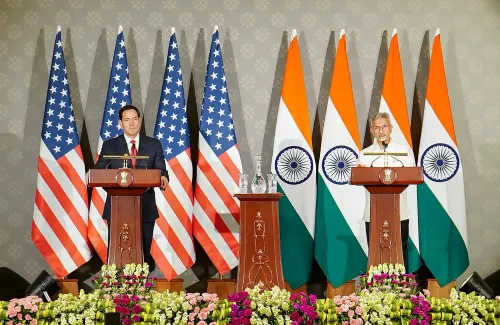
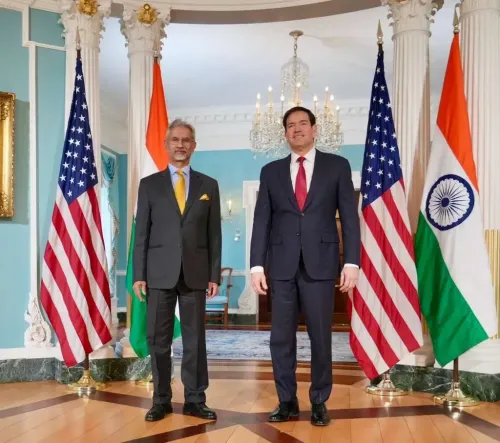
Jaishankar called the proposed India-US bilateral trade agreement a 'big step with great possibilities' on 5 October 2026 .
He described the US as India's foremost economic, trade, and defence partner, and said recently concluded pacts with the EU , UK , and EFTA add greater balance to India's trade ties.
India's earlier FTAs focused on ASEAN , Japan , and South Korea ; Jaishankar signalled a deliberate pivot to markets with higher purchasing power.
He defended a 'multi-alignment' approach encompassing China , Russia , and the Gulf , calling every bilateral relationship 'net-net a plus'.
India is in talks with Russia and Ukraine to secure safe passage for shipping in the Black Sea following attacks in July that reportedly killed Indian sailors .
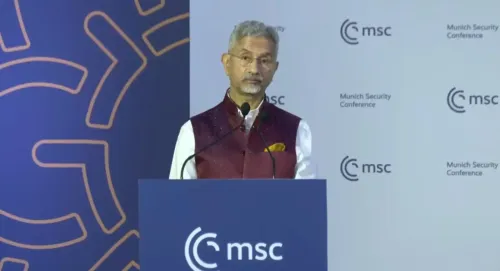
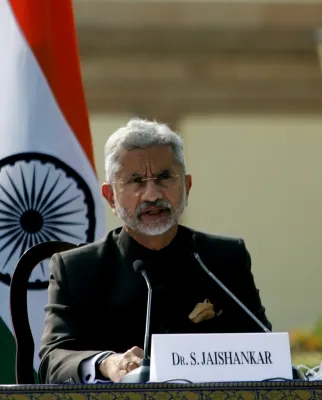
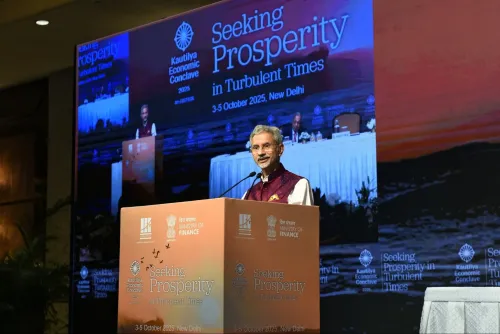
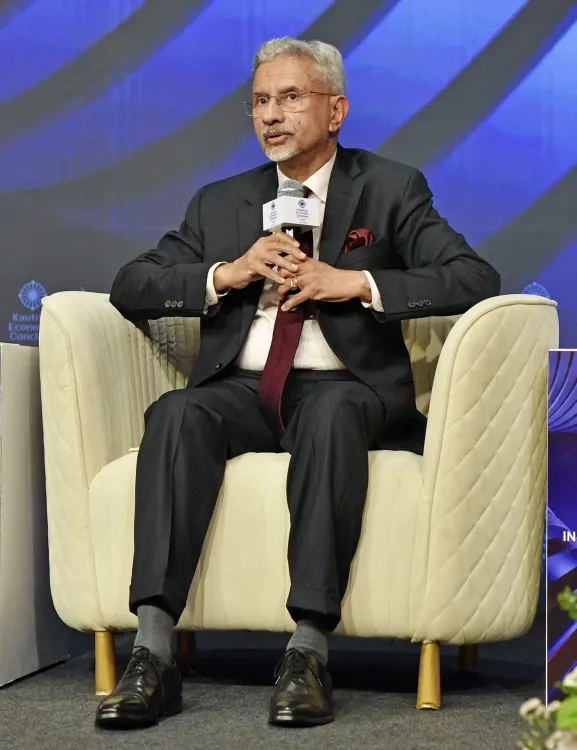
External Affairs Minister S. Jaishankar on Monday, 5 October described the proposed India-US bilateral trade agreement as a 'big step with great possibilities', saying it could deliver a significant boost to India's economy by opening access to one of the world's largest and most lucrative consumer markets. He was speaking at the Kautilya Economic Conclave in New Delhi, held under the theme 'India and the World: Adaptive by Design'.
US as India's Central Economic and Defence Partner
Jaishankar underscored that the United States remains India's foremost economic, trade, and defence partner. He also noted that recently concluded trade agreements with the European Union, the United Kingdom, and the European Free Trade Association (EFTA) would help bring greater balance to India's overall trade relationships. The minister argued that Washington should not bear the blame for all distortions in the global trading system, pointing out that several imbalances have originated from other sources and need to be assessed objectively.
Diversifying Beyond ASEAN: A Strategic Pivot
The minister observed that India's earlier free trade agreements had been concentrated largely around ASEAN countries, Japan, and South Korea. This makes it strategically important, he said, for New Delhi to diversify towards economies with more transparent and mature markets and stronger purchasing power — a clear signal of India's intent to deepen ties with Western and Gulf economies. Notably, this represents a measurable shift in the architecture of India's trade diplomacy over the past decade.
Multi-Alignment: China, Russia, and the Gulf
Jaishankar also highlighted that India has strengthened ties with China, Russia, and the Gulf as part of what he described as a 'multi-alignment' approach — advancing multiple relationships simultaneously based on the opportunities and challenges each presents. He stated that every bilateral relationship is 'net-net a plus' for India, and that progress with one partner can create favourable conditions for advancing interests elsewhere.
Civilian Shipping Attacks 'Completely Unacceptable'
On maritime security, Jaishankar said India regards attacks on civilian shipping as 'completely unacceptable', whether in the Black Sea, the Red Sea, or the Gulf. He stated that dialogue and diplomacy remain the only viable path to resolving the Russia-Ukraine conflict. India is currently in talks with both Russia and Ukraine to secure safe passage for grain and fuel shipments from the Black Sea, following attacks on civilian vessels in July in which some Indian sailors were reportedly killed, according to the minister's remarks.
What Comes Next
The India-US trade agreement remains under negotiation, with no formal timeline announced. However, Jaishankar's remarks at a prominent economic forum signal that the government regards the pact as a priority. With India's trade diversification strategy accelerating — spanning the EU, UK, EFTA, and now a potential US deal — the shape of India's global economic partnerships is undergoing its most significant reorientation in decades.
Point of View
China, and the Gulf. That framing — 'every relationship is net-net a plus' — is less a diplomatic doctrine than a political answer to critics who argue India cannot have it all. The harder question is whether the US, increasingly demanding reciprocity on market access and geopolitical alignment, will accept India's multi-vector posture as the deal moves from concept to text. The July Black Sea incident, involving Indian sailors, adds a humanitarian urgency that has so far received less diplomatic bandwidth than the economic headline.
NationPress
5 Oct 2026
Frequently Asked Questions
What did Jaishankar say about the India-US trade deal?
External Affairs Minister S. Jaishankar called the proposed India-US bilateral trade agreement a 'big step with great possibilities' on 5 October 2026, saying it could significantly boost India's economy by expanding market access. He made the remarks at the Kautilya Economic Conclave in New Delhi.
What is India's multi-alignment foreign policy approach?
India's multi-alignment approach, as described by Jaishankar, involves simultaneously strengthening ties with multiple global powers — including the US, EU, UK, China, Russia, and Gulf nations — based on the opportunities and challenges each relationship presents. The goal is to advance India's national interests across all fronts rather than align exclusively with any single bloc.
Which trade agreements has India recently concluded?
India has recently concluded trade agreements with the European Union, the United Kingdom, and the European Free Trade Association (EFTA). Jaishankar said these deals, combined with a potential US pact, would bring greater balance to India's trade relationships beyond its earlier focus on ASEAN, Japan, and South Korea.
What is India's position on attacks on civilian shipping?
Jaishankar stated that India regards attacks on civilian shipping in the Black Sea, Red Sea, and Gulf as 'completely unacceptable'. India is actively in talks with both Russia and Ukraine to secure safe passage for grain and fuel shipments from the Black Sea, following attacks in July that reportedly killed Indian sailors.
What is the Kautilya Economic Conclave?
The Kautilya Economic Conclave is a high-level policy forum where senior government officials, economists, and global leaders discuss economic strategy and international affairs. The 2026 edition was held in New Delhi under the theme 'India and the World: Adaptive by Design'.