Jaishankar urges L.69, C-10 nations to unite for UNSC reform push
Synopsis
At the UN General Assembly, India's EAM Jaishankar brought together L.69 and C-10 blocs — over 40 Global South and African nations — in a coordinated push against UNSC inaction. With the G4 simultaneously declaring 18 years of IGN talks 'largely ineffective' and threatening to take the fight to other forums, this is the most unified multilateral pressure campaign for Security Council expansion in years.
Key Takeaways
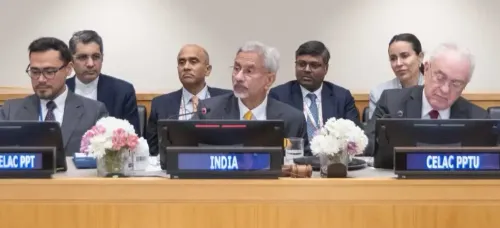
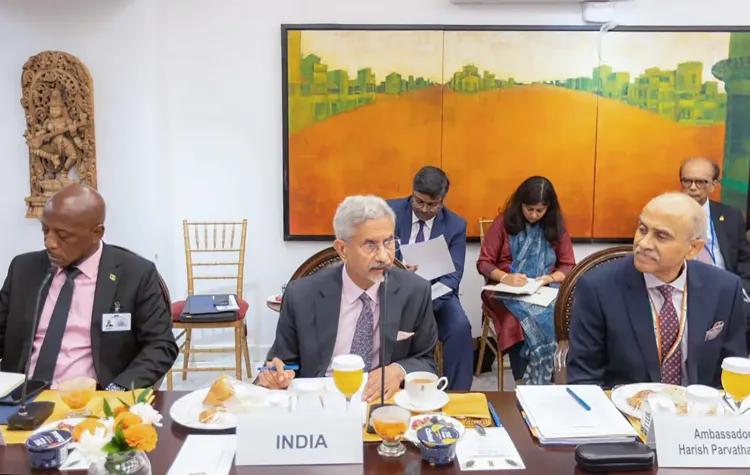
Jaishankar co-chaired a meeting of L.69 foreign ministers and the C-10 African group on 23 September in New York , calling for a united push on UNSC reform .
Jaishankar declared that 'continuing to delay reform perpetuates historical injustice,' framing the status quo as a burden on the Global South .
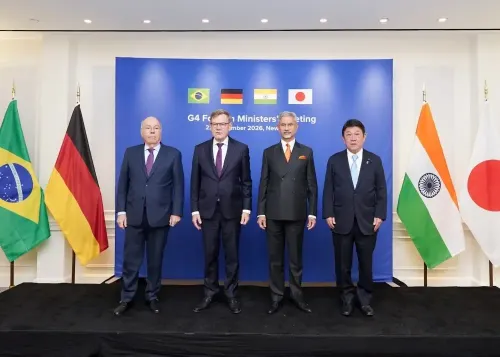
The G4 nations — India , Brazil , Germany , and Japan — condemned the IGN framework as 'largely ineffective' after 18 years of negotiations with no concrete outcomes.
G4 ministers said reform discussions need not be confined to the IGN and signalled willingness to use other UN forums.
All blocs emphasised expansion of the UNSC in both permanent and non-permanent membership categories, with a majority of UN member states reportedly backing this position.
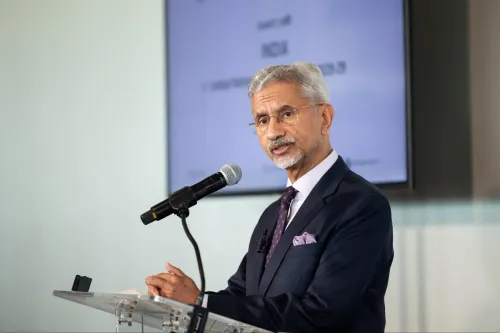
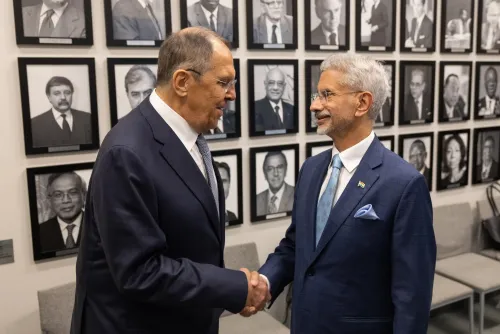
External Affairs Minister S. Jaishankar on Wednesday, 23 September called on countries directly affected by the United Nations Security Council (UNSC)'s inability to resolve global conflicts and its stalled reform process to join hands and collectively demand structural change at the world body. The appeal came as India stepped up multilateral diplomacy on the sidelines of the UN General Assembly in New York.
L.69 and C-10 Join Forces
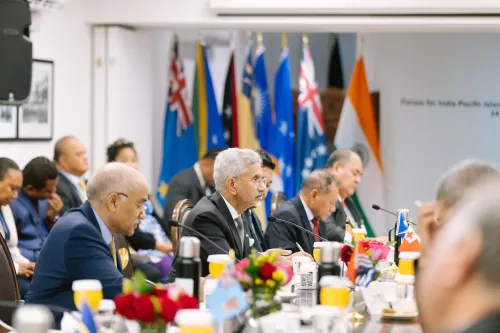
Jaishankar co-chaired a consultative meeting of foreign ministers of the L.69 group — a coalition of more than 30 Global South nations advocating UNSC reform — where the leader of the C-10 African group also participated. Sierra Leone's Foreign Minister Swaray Rahman, coordinator of the C-10, a bloc of ten African nations pushing for reform, attended the meeting.
After the session, Jaishankar wrote on X: 'As directly impacted stakeholders, L.69 and C.10 members join forces to keep pushing for UNSC reform.' He stressed that the Global South bears the consequences of a Security Council that repeatedly falls short of expectations in the face of escalating global threats.
India's Core Argument: Historical Injustice and Stalled Negotiations
Jaishankar argued that the UNSC's structural deficiencies were no longer abstract procedural concerns. 'The Global South is at the receiving end of the unprecedented changes the world is undergoing, with the UN falling short of expectations,' he wrote. 'Continuing to delay reform perpetuates historical injustice,' he added, in pointed language that frames the UNSC's current composition as a legacy of post-World War II power arrangements that no longer reflect contemporary geopolitical realities.
He further said: 'The inability of the UN Security Council to address ongoing conflicts and threats to international peace and security only highlights the urgency of reform.' The remarks come against the backdrop of multiple unresolved conflicts — in Ukraine, Gaza, and across parts of Africa — where UNSC vetoes by permanent members have blocked decisive action.
G4 Nations Express 'Strong Concern' Over 18 Years of Inaction
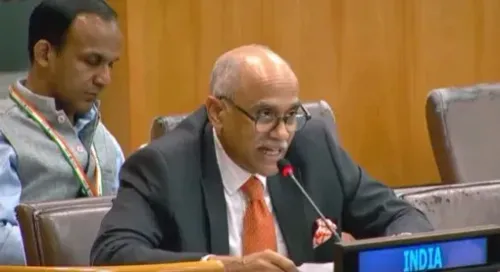
Earlier on the same day, the foreign ministers of the G4 — India, Brazil, Germany, and Japan — issued a joint statement expressing 'strong concern' over the failure of UNSC reform negotiations to yield any concrete outcomes after nearly two decades. The statement directly criticised the Inter-Governmental Negotiations (IGN) framework, describing it as 'largely ineffective in forging any concrete outcomes towards real UNSC reform despite 18 years of activities.'
The G4 ministers flagged that the lack of progress persisted through the previous IGN session as well, signalling a pattern of deliberate obstruction rather than procedural delay. Notably, the joint statement left the door open to bypassing the IGN framework entirely, with ministers reiterating that 'discussions on reform need not be confined to the IGN' and expressing willingness to engage other UN forums.
Push for Permanent and Non-Permanent Seat Expansion
The G4 ministers underscored that expansion of the UNSC in both the permanent and non-permanent categories of membership is central to any credible reform, and said a majority of UN member states supports this position. They committed to collaborating with other reform-oriented groups to develop a 'consolidated model' that properly reflects the voice of a majority of member states, and to commencing text-based negotiations as a high priority.
This diplomatic convergence between the L.69, C-10, and G4 blocs represents the broadest coordinated push for UNSC reform in recent years. Whether the renewed momentum translates into formal procedural progress will depend on whether veto-holding permanent members — particularly China and Russia — allow the IGN to advance toward binding discussions.
Point of View
C-10, and G4 rhetoric is significant, but rhetoric is what UNSC reform has generated for three decades. The real test is whether this coalition can move from coordinated language to coordinated procedure — specifically, whether they can force text-based negotiations outside the IGN, which China and Russia have used as a containment mechanism. Jaishankar's framing of delay as 'historical injustice' is also a deliberate escalation: it shifts the conversation from a procedural dispute to a moral one, which builds Southern solidarity but may harden P5 resistance. India's window is narrow — each election cycle in Brazil, Germany, and Japan can dilute G4 cohesion.
NationPress
24 Sept 2026
Frequently Asked Questions
What is the L.69 group and why is it relevant to UNSC reform?
The L.69 group is a coalition of more than 30 Global South countries — spanning Asia, Africa, Latin America, and the Caribbean — that collectively advocates for comprehensive reform of the UN Security Council. It is relevant because it represents a broad base of nations that argue current UNSC membership no longer reflects contemporary global demographics or power realities.
What did EAM Jaishankar say about UNSC reform at the UN General Assembly?
Jaishankar said the UNSC's failure to address ongoing conflicts 'highlights the urgency of reform' and that 'continuing to delay reform perpetuates historical injustice.' He co-chaired a meeting of L.69 and C-10 foreign ministers on 23 September in New York, calling on affected nations to join forces.
Why have the G4 nations criticised the IGN process?
The G4 — India, Brazil, Germany, and Japan — declared in a joint statement that the Inter-Governmental Negotiations (IGN) framework has been 'largely ineffective' after 18 years, failing to produce any concrete outcomes. They signalled willingness to pursue reform discussions in other UN forums outside the IGN.
What kind of UNSC expansion are India and its allies seeking?
India and its G4 and L.69 partners are advocating for expansion of the UNSC in both the permanent and non-permanent categories of membership. They argue that a majority of UN member states already supports this position.
What is the C-10 African group and who represented it at the meeting?
The C-10 is a bloc of ten African nations advocating for UNSC reform, coordinated by Sierra Leone. Sierra Leone's Foreign Minister Swaray Rahman represented the group at the consultative meeting co-chaired by EAM Jaishankar on 23 September.