Jaishankar outlines India's 5-point stand in talks with Rubio at Hyderabad House
Synopsis
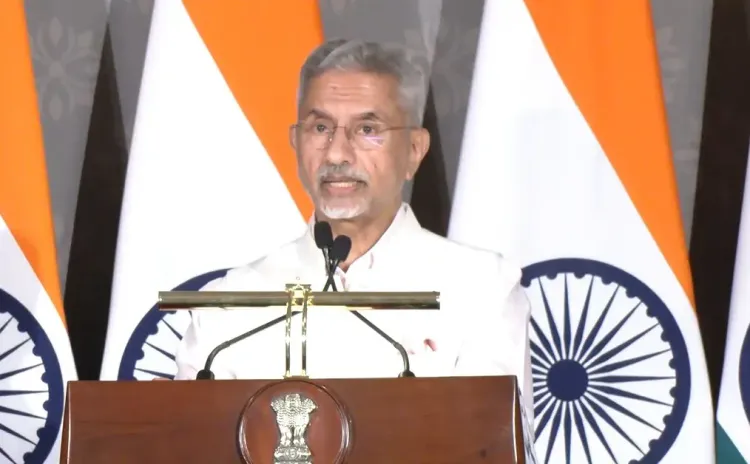
At a joint press briefing with US Secretary of State Marco Rubio at Hyderabad House, EAM Jaishankar spelled out five clear foreign policy pillars — including opposition to weaponising trade and support for free maritime commerce — signalling India's intent to anchor its global posture on rules, not power plays. With a Quad meeting on 26 May and an interim trade deal in the works, New Delhi is pressing on multiple fronts simultaneously.
Key Takeaways
Jaishankar outlined India's five-point approach on global issues at Hyderabad House, New Delhi on 25 May 2025 .
The five pillars: dialogue and diplomacy, safe maritime commerce, respect for international law, opposition to weaponisation of trade, and trusted supply chains.
US Secretary of State Marco Rubio also met Prime Minister Narendra Modi on Saturday ahead of the ministerial talks.
Both sides discussed early finalisation of the India-US interim trade agreement , envisaged during Modi's February 2025 US visit.
The Shanti Act has opened new avenues for nuclear cooperation ; a renewed 10-year defence partnership framework and an underwater domain awareness roadmap were also referenced.
A Quad meeting is set for 26 May , with the Indo-Pacific as a key agenda item.
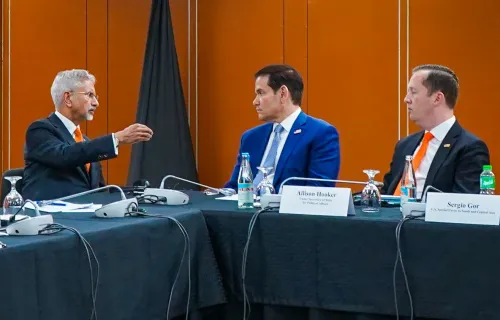
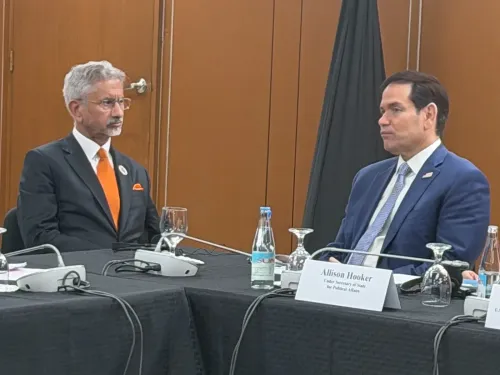
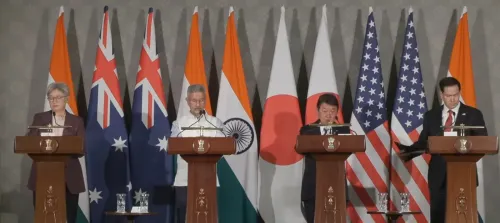
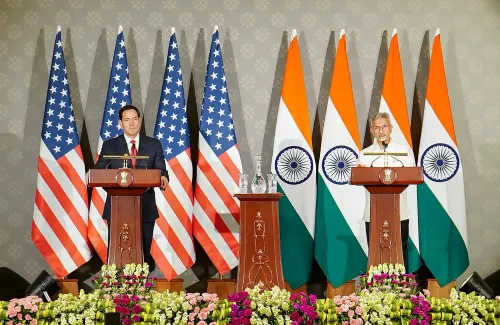
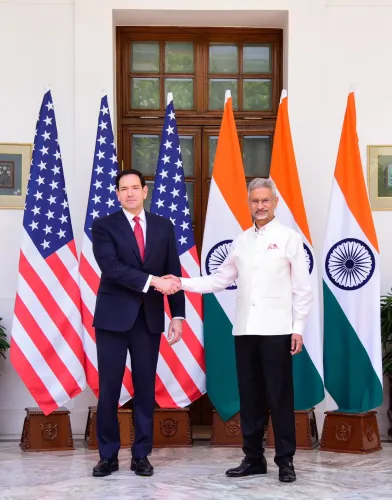
External Affairs Minister S. Jaishankar on Sunday, 25 May 2025, laid out India's five-point position on key regional and global issues at a joint press briefing with US Secretary of State Marco Rubio following delegation-level talks at Hyderabad House, New Delhi. The five pillars — dialogue, maritime commerce, international law, opposition to weaponisation of trade, and trusted supply chains — frame India's current foreign policy posture at a moment of heightened global uncertainty.
The Five-Point Framework
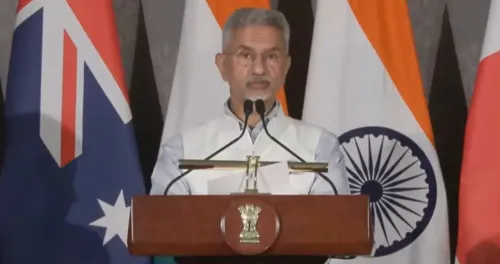
Jaishankar articulated India's stance in precise terms: 'One, that we advocate dialogue and diplomacy to address conflicts. Two, we support safe and unimpeded maritime commerce. Three, we demand scrupulous respect for international law. Fourth, we are against the weaponisation of market shares and resources. And five, we believe in the value of trusted partnerships and resilient supply chains to de-risk the global economy.'
The framing is notable for its implicit messaging — opposition to coercive trade practices and support for free maritime passage carry weight at a time when global shipping lanes and supply chains face disruption from multiple flashpoints.
India-US Strategic Engagement
Jaishankar underscored the depth of ongoing India-US engagement, noting that the two sides have remained in continuous contact since Rubio assumed office — with interactions in Washington D.C., New York, and most recently on the sidelines of an event in France. 'This has included occasions in Washington, D.C., and New York, and also on the sidelines of other events, the most recent one being in France,' he said.
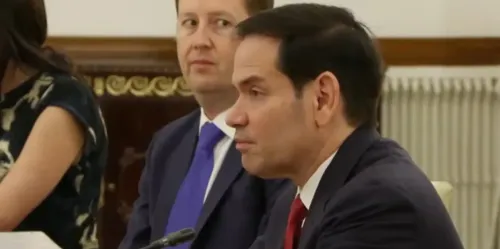
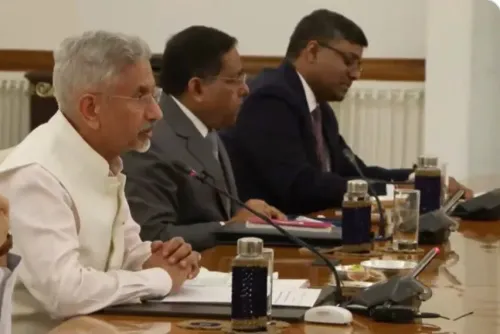
Rubio also called on Prime Minister Narendra Modi on Saturday, during which the two leaders discussed a range of global and regional developments, according to Jaishankar. Discussions during the ministerial meeting covered West Asia, the Indian subcontinent, East Asia, and Rubio's recent visit to the Caribbean region. The Ukraine conflict and developments in the Gulf were also on the agenda.
Defence, Trade, and Nuclear Cooperation
On the defence front, Jaishankar referenced the recently renewed 10-year major defence partnership framework agreement between the two countries, as well as the signing of a comprehensive underwater domain awareness roadmap. He stressed the importance of incorporating the 'Make in India' approach and lessons from recent conflicts into future defence collaboration.
On trade, both sides discussed the early finalisation of an India-US interim trade agreement — a step envisaged during Prime Minister Modi's visit to the United States in February 2025 — that is expected to pave the way for a comprehensive bilateral trade pact.
Energy security and nuclear cooperation also featured prominently. Jaishankar noted the expansion of bilateral energy trade and said the passage of the Shanti Act has opened new possibilities in nuclear cooperation. He also raised certain regulatory issues on the American side with Rubio.
Technology, Minerals, and Counter-Terrorism
Emerging technologies, critical minerals, and artificial intelligence were also discussed. Jaishankar noted that India has joined Pax Silica and is part of the Forge initiative, and highlighted the AI Impact Summit held in New Delhi in February as a marker of the India-US technology relationship's potential.
On counter-terrorism, Jaishankar reaffirmed India's zero-tolerance position and acknowledged strong bilateral cooperation between the two countries' agencies. He specifically recognised the extradition from the United States to India of a key planner of the 26/11 Mumbai attacks last year, and said both nations would intensify collaboration on countering illegal narcotics trade.
What Comes Next
A Quad meeting is scheduled for 26 May, where the Indo-Pacific will be a central agenda item. Progress on the interim trade agreement text and nuclear cooperation timelines will be closely watched in the weeks ahead, as will any movement on the Gulf situation that Jaishankar flagged as a live and evolving concern.
Point of View
Increasingly, the United States have used trade as leverage. India is threading a needle: deepening the US partnership on defence and technology while preserving strategic autonomy on trade and energy. The Shanti Act and underwater domain awareness roadmap signal that the defence-technology axis is moving faster than the trade deal — and the Quad meeting on 26 May will test whether that momentum translates into collective regional signalling.
NationPress
10 Oct 2026
Frequently Asked Questions
What is India's 5-point stand outlined by EAM Jaishankar?
Jaishankar outlined five principles: advocating dialogue and diplomacy for conflict resolution, supporting safe and unimpeded maritime commerce, demanding respect for international law, opposing the weaponisation of market shares and resources, and believing in trusted partnerships and resilient supply chains to de-risk the global economy. The framework was presented at a joint press briefing with US Secretary of State Marco Rubio on 25 May 2025.
What was discussed in the Jaishankar-Rubio talks at Hyderabad House?
The talks covered a wide range of issues including developments in West Asia, the Indian subcontinent, East Asia, the Gulf, and the Ukraine conflict. Defence cooperation, the India-US interim trade agreement, energy security, nuclear cooperation under the Shanti Act, critical minerals, AI, and counter-terrorism were also on the agenda.
What is the India-US interim trade agreement?
It is a proposed preliminary trade deal between India and the United States, aimed at paving the way for a comprehensive bilateral trade agreement. Its finalisation was envisaged during Prime Minister Modi's visit to the US in February 2025, and both sides discussed concluding the final text at an early date during the Rubio visit.
What is the Shanti Act and why does it matter for India-US ties?
The Shanti Act is a US legislative development that has opened new possibilities for nuclear energy cooperation between India and the United States. Jaishankar noted that an American delegation had recently visited India to explore this potential, and he also raised certain regulatory concerns on the American side with Rubio.
What is scheduled after the Rubio visit?
A Quad meeting is scheduled for 26 May 2025, where the Indo-Pacific will be a central agenda item. Progress on the interim trade agreement text and nuclear cooperation frameworks will also be closely tracked in the coming weeks.