Oman, Iran agree to push Hormuz Strait talks amid US ceasefire collapse
Synopsis
Even as US President Trump declared the Iran ceasefire 'over', Oman and Iran quietly agreed in Muscat to press ahead with technical and political talks on Hormuz Strait navigation — a diplomatic paradox that may be the only thing standing between a fragile de-escalation and a full-blown energy crisis affecting one-fifth of the world's seaborne oil trade.
Key Takeaways
Oman and Iran agreed on 12 July in Muscat to continue technical and political talks on Strait of Hormuz navigation safety.
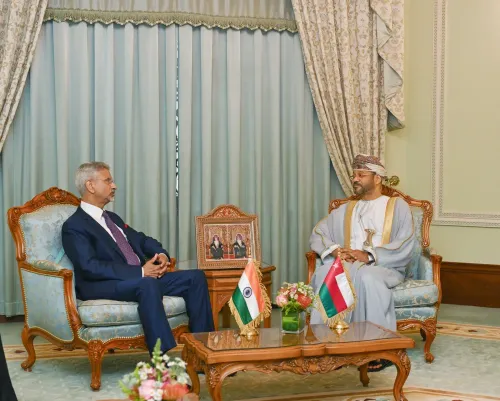
Iranian Foreign Minister Seyed Abbas Araghchi visited Oman on Saturday for high-level Hormuz consultations.
Iran had restricted passage through the strait to US- and Israeli-linked vessels following US-Israeli strikes in late February .
The strait carries approximately one-fifth of the world's seaborne oil trade .
US President Donald Trump declared the Iran ceasefire 'OVER' on Friday, even as Washington agreed to continue diplomatic talks.
A joint Iran-Oman working group established in June is expected to continue meeting as part of the ongoing process.
Oman and Iran have agreed to continue technical and political discussions on ensuring safe navigation through the Strait of Hormuz, following high-level consultations held in Muscat on 12 July. The talks come at a critical juncture, with tensions in the region running high after a recent exchange of military strikes between the United States and Iran.
What Was Agreed in Muscat
The two sides met in the Omani capital to address concerns over the safety and freedom of navigation through the strait, according to the Oman News Agency. Both nations agreed to advance discussions at both the technical and political levels, with the goal of reaching understandings in line with international law.
This follows an earlier agreement reached in June, when Iran and Oman established a joint working group between their foreign ministries to manage the future of navigation and related maritime services in the strait.
Iran's Foreign Minister Visits Oman
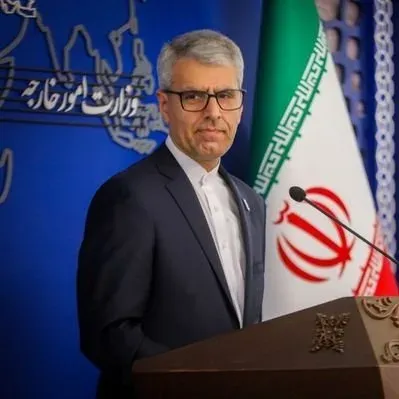
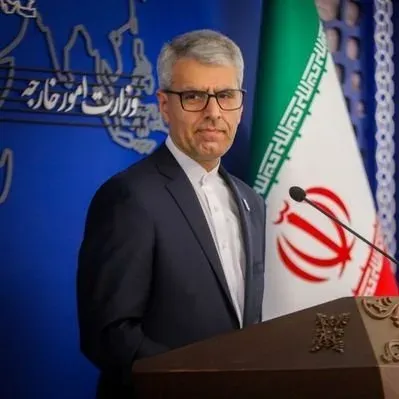
Iranian Foreign Minister Seyed Abbas Araghchi visited Oman on Saturday for consultations on the Hormuz issue, according to Iranian Foreign Ministry spokesman Esmaeil Baghaei, who confirmed the visit on Friday. The visit underscored Oman's continued role as a back-channel diplomatic facilitator between Tehran and Western powers — a role it has played across multiple administrations.
The Backdrop: Strikes, Blockades, and Escalation
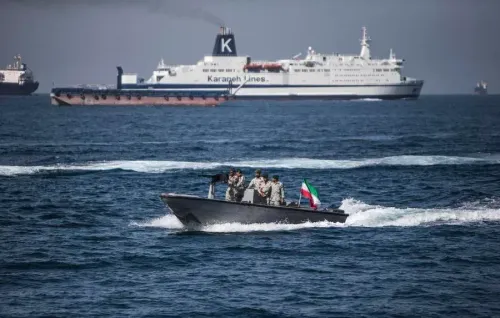
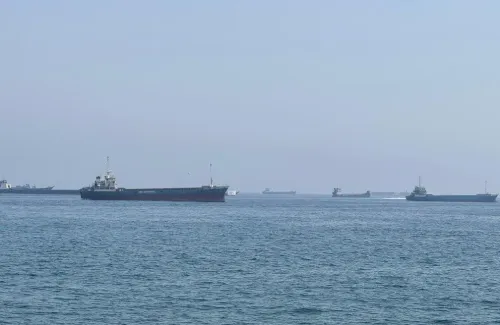
The strait has been at the centre of a sharp geopolitical standoff. Following US-Israeli strikes on Iran in late February, Tehran tightened its grip over the Strait of Hormuz — a chokepoint through which approximately one-fifth of the world's seaborne oil trade passes — and barred safe passage to vessels linked to Israel and the United States. Iran had also been accused of alleged strikes on commercial vessels transiting the waterway, triggering the broader exchange of attacks with Washington.
Notably, this is not the first time the strait has been weaponised as leverage in Iran's geopolitical disputes. Tehran has periodically threatened or imposed restrictions on Hormuz navigation during periods of maximum pressure — making the current Oman-brokered dialogue all the more significant.
Trump Declares Ceasefire 'Over' but Talks Continue
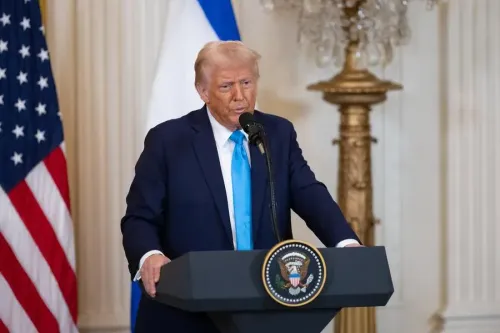
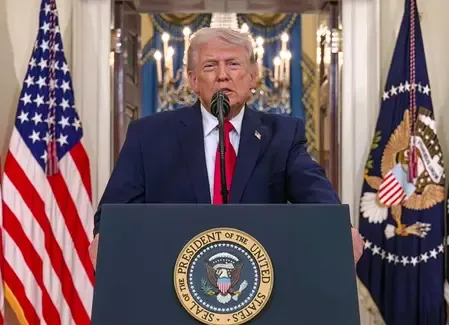
US President Donald Trump on Friday said Washington had agreed to continue talks with Iran, even as he declared the ceasefire between the two countries effectively over. 'The Islamic Republic of Iran has asked us to continue 'talks.' We have agreed to do so, but the United States has stated to them, in no uncertain terms, that the Cease Fire is OVER!' Trump wrote in a post on Truth Social.
The statement points to a fragile diplomatic paradox: active engagement continuing even as the formal ceasefire framework — negotiated just last month — has collapsed. Analysts note that the continuation of talks despite military posturing suggests both sides are seeking a managed de-escalation rather than a full rupture.
What Comes Next
The joint working group between the Iranian and Omani foreign ministries is expected to meet again as part of the ongoing process. The outcome of these talks will have direct consequences for global energy markets, given the strait's role as a critical artery for oil exports from the Persian Gulf. With the US ceasefire declaration now in question, the pace and substance of the Oman-mediated dialogue will be closely watched by energy importers and maritime insurers worldwide.
Point of View
Preserving maximum pressure without foreclosing a deal. For global energy markets, the danger is that the Hormuz chokepoint is now a live variable in a conflict with no clear off-ramp. The joint working group is a pressure valve, not a resolution — and the gap between 'talks continuing' and 'ceasefire over' is exactly where miscalculation happens.
NationPress
12 Jul 2026
Frequently Asked Questions
What did Oman and Iran agree to regarding the Strait of Hormuz?
Oman and Iran agreed on 12 July in Muscat to continue discussions at both the technical and political levels aimed at ensuring safe and free navigation through the Strait of Hormuz, in accordance with international law. A joint working group between their foreign ministries, established in June, is expected to continue the process.
Why is the Strait of Hormuz significant?
The Strait of Hormuz is one of the world's most critical maritime chokepoints, through which approximately one-fifth of global seaborne oil trade passes. Any disruption to navigation there has immediate consequences for global energy prices and supply chains.
What did US President Trump say about the Iran ceasefire?
US President Donald Trump said on Friday that the ceasefire between the United States and Iran was 'OVER', even as he confirmed Washington had agreed to continue talks with Tehran. He made the statement in a post on Truth Social.
Why did Iran restrict Hormuz navigation?
Following US-Israeli strikes on Iran in late February, Tehran tightened control over the Strait of Hormuz and barred safe passage to vessels linked to Israel and the United States. Iran had also been accused of alleged strikes on commercial vessels transiting the strait, which triggered the broader military exchange with the US.
What is Oman's role in the Iran-US standoff?
Oman has historically served as a back-channel diplomatic facilitator between Iran and Western powers. Its hosting of the Muscat talks and the Iran-Oman joint working group reflects its continued role as a neutral mediator in one of the region's most sensitive geopolitical flashpoints.